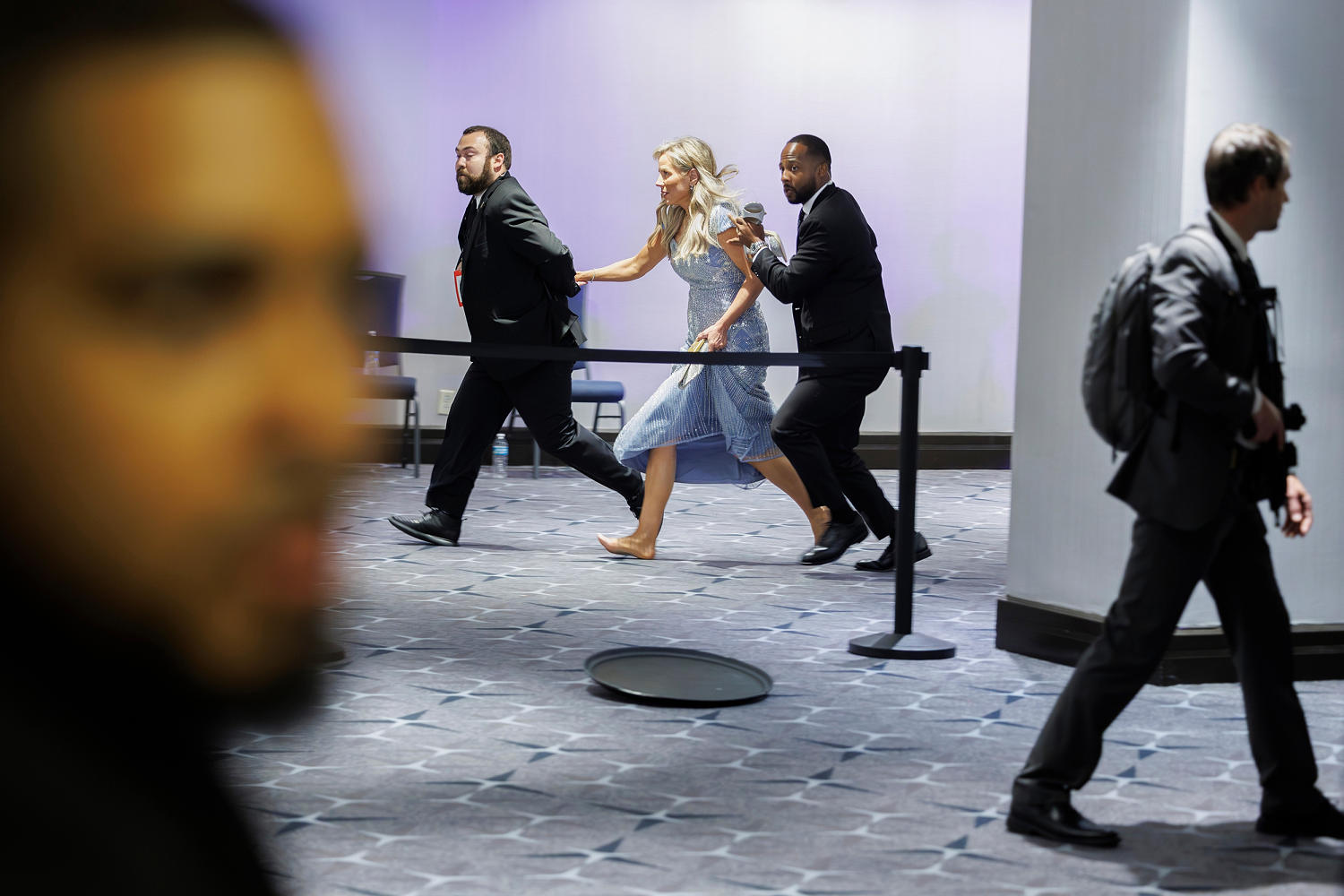
The legacy media is currently hyperventilating over a ghost. They’ve spent the last 48 hours clutching their pearls because the White House Correspondents' Dinner (WHCD) spawned a fresh wave of digital friction and "unprecedented" conspiracy theories. They claim even the political titans are "alarmed."
They’re lying to you—and probably to themselves.
The narrative being shoved down your throat is that we are living through a unique crisis of truth, where "disinformation" is a new, unstoppable virus. This is a convenient fiction. It allows media gatekeepers to blame their dwindling relevance on a shadowy boogeyman instead of admitting they’ve lost the locker room.
The WHCD didn't break the internet; it simply exposed the fact that the "nerd prom" is no longer the center of the cultural gravity.
The Myth of the Alarmed Elite
Mainstream reports suggest that the speed of online discourse has reached a point where even veteran politicians are shaking in their boots. This is theater. Anyone who has spent five minutes in a high-level campaign room knows that "alarm" is a curated PR asset.
Politicians love a good conspiracy theory panic. It provides the perfect cover to avoid answering for policy failures. If you can frame every critique or meme as a product of a sophisticated disinformation campaign, you never have to address the underlying frustration of the electorate. By claiming to be "alarmed," they’re actually signaling to their base that they are the only ones standing between "the truth" and total chaos.
The reality? The "conspiracies" coming out of this year’s dinner are just the modern version of the whispered rumors that used to circulate in the hallways of the Hay-Adams. The only difference is the scale and the speed. To call this a "threat to democracy" is an insult to history.
The High Cost of the Inside Joke
For decades, the WHCD functioned as a massive, televised display of the "revolving door." Reporters who are supposed to hold power to account spend the night in black-tie attire, laughing at jokes written by the very people they cover.
I’ve seen this play out in boardrooms and newsrooms across the country. When the watchdog starts sleeping at the foot of the master's bed, the watchdog loses its teeth. The public isn't "confused" by conspiracy theories; the public is disgusted by the optics of a cozy, self-congratulatory elite.
When you see a journalist and a cabinet secretary doing shots together, you stop trusting the morning headline. That’s not a conspiracy theory. That’s a logical deduction. The "misinformation" that follows is simply the vacuum of trust being filled by whatever is available.
The Math of Modern Distrust
Let’s look at the mechanics. Trust in media is not a static number; it’s an equation:
$$T = \frac{C \times R}{P}$$
Where:
- $T$ = Trust
- $C$ = Consistency
- $R$ = Reliability
- $P$ = Perceived Partisanship
As $P$ (Perceived Partisanship) increases, $T$ (Trust) collapses, regardless of how "consistent" the reporting is. The WHCD is the ultimate multiplier for $P$. You cannot spend a night celebrating your proximity to power and then expect the audience to believe you are an objective observer the next morning.
Stop Trying to Fact-Check the Vibes
The media’s favorite weapon against "conspiracies" is the fact-check. It’s like bringing a wet noodle to a knife fight.
Conspiracy theories surrounding events like the WHCD aren't built on faulty data points; they are built on vibes. You cannot fact-check a feeling. If people feel like the system is rigged, showing them a spreadsheet doesn’t change their mind. It makes them think you’re in on the rig.
The competitor article suggests that we need faster, more "robust" responses to online rumors. This is exactly the wrong move. Every time a major news outlet devotes a 1,500-word debunking to a fringe tweet, they validate the fringe tweet. They give it a seat at the table.
We’ve reached a point where the "de-bunk" is more profitable for the conspiracy theorist than the original claim. It’s a symbiotic relationship that both sides refuse to acknowledge because it’s keeping the lights on.
The Architecture of the Echo Chamber
The real "conspiracy" is the way social algorithms have been trained to prioritize conflict over content.
- The Event: A politician makes a joke at the WHCD.
- The Distortion: A small account clips it out of context to fit a specific narrative.
- The Amplification: Outraged users on the other side share it to show how "crazy" the first group is.
- The Monetization: News outlets write "People are saying..." articles to capture the search traffic.
This isn't a failure of technology. It’s the technology working exactly as designed. The "alarm" expressed by the elite is actually a form of gratitude. Without this cycle, they would have to talk about things that actually matter—like the fact that the median home price is now out of reach for the very people reading these articles.
The Contrarian’s Advice to the Media
If the press actually wanted to kill conspiracy theories, they would do something radical: Stop going to the dinner.
- Kill the optics: Stop pretending that wearing a tuxedo makes you a better journalist.
- Burn the bridges: Return to a state of healthy antagonism. The press shouldn't be "alarmed" by what the public thinks; they should be alarmed by how much the politicians like them.
- Own the errors: When the press gets it wrong—which happens often—they shouldn't bury the correction on page A14. They should lead with it.
The current strategy is to play the victim. "Oh, the internet is so scary, even the President is worried!" It’s a weak, pathetic stance. It’s the stance of an industry that has forgotten its purpose.
The Reality of "Disinformation"
Let’s be brutally honest: Most of what the media calls "disinformation" is just "information we didn't approve first."
Is there actual, malicious nonsense out there? Of course. But the panic surrounding the WHCD isn't about protecting the truth. It's about protecting the monopoly on the truth. The internet didn't create the distrust; it just provided a megaphone for it.
The "conspiracies" are a symptom of a deeper rot. People believe the wild stories because the "official" stories have let them down for decades. From the WMDs in Iraq to the "transitory" nature of inflation, the "experts" have a track record that would get any private sector employee fired.
The New Rules of Engagement
If you want to navigate this world without losing your mind, stop looking for the "alarmed" reactions of the political class.
- Assume the theater: Every reaction you see on a screen is a calculated move.
- Watch the money: Who benefits from the panic? Usually, it's the platforms selling ads and the politicians raising money off the "threat."
- Ignore the "fact-checkers": Use your own logic. If a story seems too perfectly tailored to make your political enemies look like monsters, it probably is.
The WHCD is a relic of a pre-digital age where a few hundred people in a room could decide what the national conversation was going to be. That world is dead. The "conspiracy theories" are just the sound of the dirt being thrown on the casket.
Stop asking how to "fix" the discourse. Start asking why you’re still listening to the people who broke it in the first place.
The elites aren't alarmed by the lies. They’re terrified of the silence that happens when people finally stop tuning in.
Go outside. Turn off the feed. The dinner is over, and you weren't invited anyway.