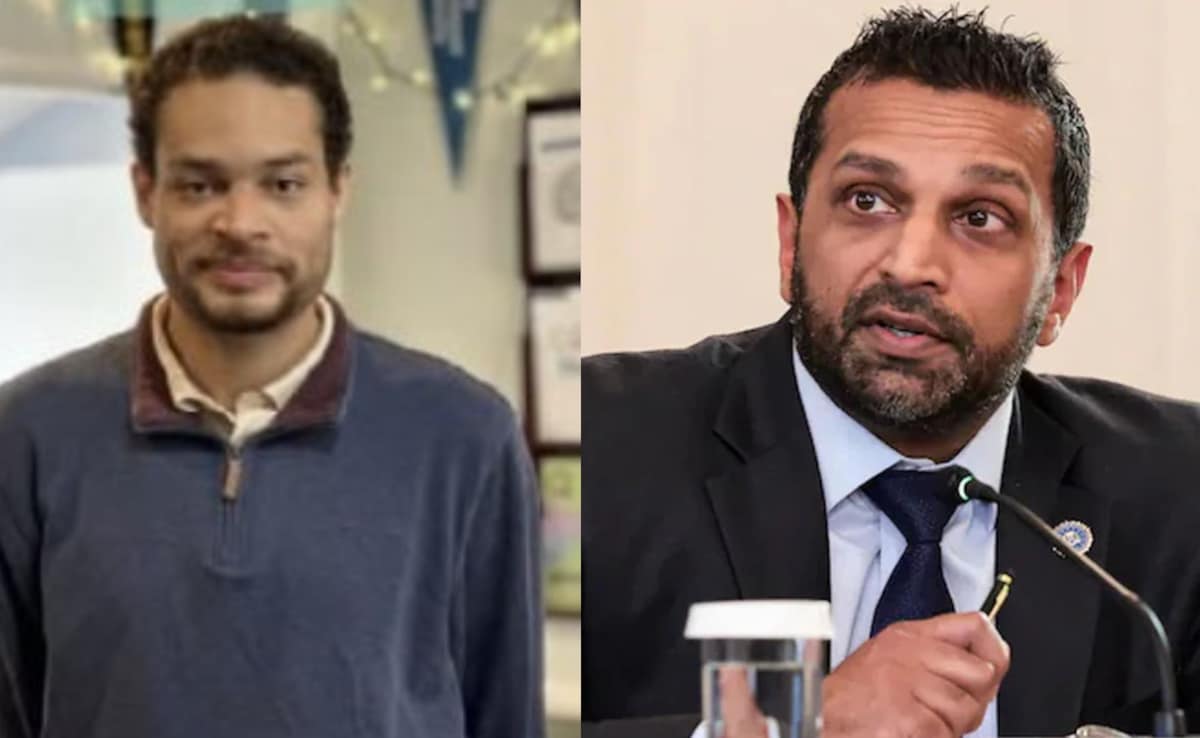
The chaos outside the Washington Hilton during the White House Correspondents’ Dinner wasn't just another security breach. It was a targeted assassination attempt that nearly decapitated the current administration. But as the smoke cleared and federal agents began dissecting the 1,000-word manifesto left behind by 31-year-old Cole Thomas Allen, one detail stood out like a sore thumb. He wanted almost everyone dead, except for FBI Director Kash Patel.
While the rest of the administration was "prioritized from highest-ranking to lowest" on a hit list, Patel was explicitly excluded. People are scrambling to figure out why. Is it a shared ideology? Is it a religious exemption? Or is it something much more calculated?
The Friendly Federal Assassin Manifesto
Cole Allen didn't just snap. He planned this. The Caltech graduate and former teacher from Torrance, California, took a train across the country with a shotgun, a handgun, and multiple knives. He sent his manifesto to his family just ten minutes before he tried to storm the gala. In it, he called himself the "Friendly Federal Assassin."
The document is a chilling mix of high-level engineering logic and radicalized theology. Allen claimed he was acting as a "true Christian" by refusing to "turn the other cheek" while people were being oppressed. He viewed the entire administration as "complicit" in crimes he couldn't ignore. Yet, in the middle of this screed against "pedophiles, rapists, and traitors," he wrote a very specific parenthetical:
"Administration officials (not including Mr. Patel): they are targets, prioritized from highest-ranking to lowest."
That single line has set off a firestorm of speculation. If Allen viewed the administration as a singular entity of corruption, why did he give the head of the FBI a pass?
Why Kash Patel Was the Only One Spared
There’s a theory floating around that Patel’s Hindu background played a role. It’s a reach, but in the world of online radicalization, it isn’t impossible. Allen’s manifesto leaned heavily on his personal, warped interpretation of Christian duty. Some analysts suggest Allen might have viewed Patel as an "outsider" to the specific brand of power he was trying to dismantle.
But if you look at the facts, the religious angle feels thin. Allen’s grievance wasn't about theology—it was about perceived betrayal. He was obsessed with the idea of "traitors" and "insiders."
The more likely reality? Patel has spent years positioning himself as the man "fighting the system" from the inside. Even as the FBI Director, he maintains a public image of a disruptor. To a radicalized mind like Allen’s, Patel might have appeared as the only "honest" actor in a room full of enemies. It’s a classic case of a lone wolf finding a hero in the very institution they claim to hate.
Security Failures and the Arrogance of Power
Allen didn't just want to kill; he wanted to embarrass the Secret Service. He mocked the "insane" lack of security at the Washington Hilton. He literally walked into the hotel with multiple weapons and noted that not a single person considered him a threat until he started shooting.
He used buckshot because he wanted to "minimize casualties" among the staff and guests, whom he viewed as secondary. His focus was laser-pointed at the high-ranking officials on his list. The fact that he was stopped by a metal detector and a quick-thinking officer doesn't change how close he actually got.
The Fallout for the FBI
This "exemption" puts Kash Patel in a bizarre, uncomfortable position. It’s never a good look when a would-be assassin thinks you’re the only guy worth saving. It fuels the fire for Patel’s critics who already claim he’s too close to the fringes of the political spectrum.
While the FBI’s Office of Public Affairs calls the situation "absurd," the reality is that the manifesto is now a piece of federal evidence. It’s being used to map out Allen’s radicalization path. Investigators are looking into whether Allen had any digital interactions with the types of "deep state" rhetoric that Patel frequently discusses.
What Happens Now
Cole Allen is facing federal charges for the attempted assassination of the President. He’s not going anywhere. But the conversation he started about who is—and isn’t—on the "list" isn't going away either.
If you're following this, keep your eye on the court filings. The full unredacted manifesto will eventually leak, and we’ll see exactly what Allen thought about the FBI's leadership. For now, the most important thing you can do is look at the security protocols being overhauled in D.C. The "Friendly Federal Assassin" proved that even the most elite security perimeters have holes large enough to walk through with a shotgun.
Check the latest updates from the DC Metropolitan Police and federal court records if you want the raw data. The narrative is still being written, but the target on the rest of the administration's back just got a lot more visible.