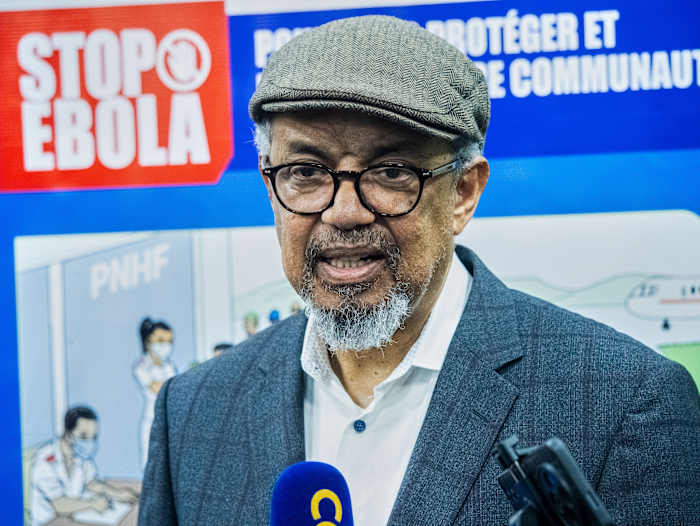
The Democratic Republic of the Congo is facing a terrifying reality. A rare and lethal strain of the Ebola virus is gaining ground in the country's conflict-torn eastern region. The situation has grown so severe that World Health Organization Director-General Tedros Adhanom Ghebreyesus recently bypassed his comfortable office in Geneva to land directly in the capital city of Kinshasa.
This isn't a routine diplomatic visit. It's a rescue mission for a collapsing containment strategy. Over 1,000 suspected cases and more than 230 deaths have been recorded, and the numbers are climbing.
The epicenter is Ituri province, a volatile area right next to the Ugandan border. The crisis has also trickled south into North and South Kivu provinces. The global community cannot afford to look away. If you think this is just a localized problem, you don't understand how quickly an uncontained viral outbreak can cross oceans.
The Invisible Enemy with No Weapon to Fight It
Most people hear "Ebola" and think of the massive West African outbreak from a decade ago or the standard Zaire strain that health officials have successfully beaten back with vaccines recently. This time, we're dealing with something entirely different.
The current crisis is driven by the Bundibugyo virus, a rare strain of Ebola.
Here is the brutal truth: there is no approved vaccine for the Bundibugyo strain. There is no approved antiviral treatment.
When health workers face the Zaire strain, they have a pharmaceutical arsenal. With Bundibugyo, they are basically relying on supportive care—keeping patients hydrated and praying their immune systems can fight it off.
Compounding this medical vulnerability is a catastrophic supply shortage. Doctors and nurses on the front lines in Ituri are working with scant supplies. In some clinics, medical personnel are actually wearing expired face masks while treating bleeding, highly infectious patients. This isn't just ineffective; it's a death sentence for the healthcare infrastructure. When doctors get infected, the entire defensive line collapses.
The Catastrophic Collision of Disease and War
If you wanted to design the perfect incubator for a global health nightmare, you would pair an untreatable virus with a violent civil war. That's exactly what's happening in eastern Congo.
Ituri and the Kivus are a patchwork of rebel-controlled territories and active war zones. The Allied Democratic Forces, a brutal rebel group allied with the Islamic State, recently slaughtered at least 40 civilians in Ituri. Meanwhile, the Rwanda-backed M23 rebel group controls massive swaths of land further south, including areas near major cities like Goma and Bukavu.
Ebola Outbreak Geographic Spread (May 2026)
├── Ituri Province (Epicenter - ADF Rebel Presence)
└── North & South Kivu Provinces (Spread Zone - M23 Rebel Control)
How do you track down a virus when you can't even walk down the street safely? You can't.
Active combat is driving mass civilian displacement. Nearly one million people in Ituri have fled their homes. They're crowding into makeshift camps with poor sanitation, creating the exact high-density environment that Ebola thrives on. Contact tracing—the bread and butter of epidemic control—is impossible when the person you're trying to track is fleeing mortar fire.
The WHO chief didn't mince words upon arrival, pleading for an immediate ceasefire from all warring factions. "We cannot build community trust or isolate the sick while bombs are falling," Tedros warned. He's entirely right. No cause or political grievance is worth letting a hemorrhagic fever mutate and migrate across borders.
Deep Distrust and the Battle Over the Dead
The medical community isn't just fighting a virus and rebel militias; they're also fighting deep-seated human fear and misinformation.
In Ituri province, local aid agencies report a stunning statistic: one in three people does not believe Ebola is real. They view health workers not as saviors, but as outsiders bringing trouble or fabricating a crisis for financial gain.
This distrust boils over into violence during the most sensitive part of the containment process: burials.
The body of an Ebola victim is a biohazard. It's heavily loaded with the virus, making traditional burial practices—which involve family members washing, touching, and kissing the deceased—incredibly dangerous. When specialized teams step in to conduct safe, dignified, but highly clinical burials, it tears at the fabric of local culture.
The backlash has been swift and destructive. Angry residents have launched multiple attacks on health centers. Just days ago, a crowd descended on a hospital in Mongbwalu, burning down isolation tents. In the chaos, 25 Ebola patients fled into the surrounding community. One person died of a hemorrhage while trying to escape. When infected individuals run away, the virus wins.
The Double Whammy of International Neglect
We need to talk about why the local response was so weak to begin with. This outbreak didn't just catch the region off guard; it caught them broke.
Between 2024 and 2025, international funding for the region evaporated. The United States slashed its assistance to the Congo by nearly 70 percent. The dismantling of key USAID programs left local health networks completely hollowed out.
International Response Metrics (May 2026)
• US Additional Funding: $80 Million (Totaling $112+ Million)
• European Union: Direct Medical Aid Shipments to Ituri
• Outbreak Impact: 1,077+ Suspected Cases / 238+ Suspected Deaths
Now, governments are scrambling to fix their mistake. The US just pledged an extra $80 million, pushing their total commitment over $112 million, and European Union medical aid is finally arriving in Ituri. But playing catch-up during an active epidemic is costly and inefficient. Money sent to prevent an outbreak goes a lot further than money sent to bury the victims of one.
To make matters worse, neighboring countries are panicking. Uganda has closed its border with the Congo after recording several cases tied to cross-border transit. While closing borders seems like common sense, the WHO actively discourages it.
When you shut official borders, people don't stop moving. They just stop using the official checkpoints. They slip through the bush, cross rivers undetected, and completely bypass health screenings. Border closures don't stop the virus; they just make it invisible.
Real Steps to Contain the Crisis
Stopping this Bundibugyo outbreak requires shifting away from generic health advice and focusing on immediate, tactical steps on the ground.
- Deploy Specialized PPE Units Immediately: The newly arrived US and EU funds must prioritize distributing current, high-grade personal protective equipment directly to rural clinics in Ituri. Giving doctors expired masks is unacceptable.
- Empower Local Youth Networks: Instead of relying solely on international faces to deliver health messages, local organizations must train and fund Congolese youth. When a teenager explains to their family how the virus spreads, it breaks down the walls of suspicion far better than a Western agency worker can.
- Establish Neutral Humanitarian Corridors: Independent intermediaries must negotiate localized, temporary truces with both the ADF and M23 rebels. These corridors will allow health workers to safely transport supplies and isolate patients without fear of ambush.
- Integrate Traditional Leaders into Burial Protocols: Stop locked-door medical burials that alienate the community. Include local elders and religious figures in the planning so that safety protocols respect spiritual traditions without exposing loved ones to infected fluids.
The crisis in the Democratic Republic of the Congo isn't just an African problem. It's a stark reminder that global health security is only as strong as its weakest link. If we leave frontline health workers to fight an untreatable virus with expired gear in a war zone, the virus will eventually knock on our door next.


.png?width=1200&auto=webp&trim=0%2C0%2C0%2C0)