Walk onto a car lot in Bangkok, Sao Paulo, or Oslo right now, and you'll see a takeover happening in real time. Chinese electric vehicles and hybrids aren't just competing anymore. They're dominating.
Yet if you fly to Shanghai or Shenzhen and talk to the executives running those exact same companies, nobody is celebrating. They're exhausted. Many of them are losing money on every single car they sell inside their own borders.
It sounds like a total contradiction. How can an industry become an unstoppable global export machine while tearing itself apart at home?
The short answer comes down to brutal domestic overcapacity, a multi-year price war that won't quit, and fat profit margins waiting overseas. When your home market becomes a financial meat grinder, shipping cars across the ocean isn't just an expansion strategy. It's survival.
The Domestic Price War Nobody Can Escape
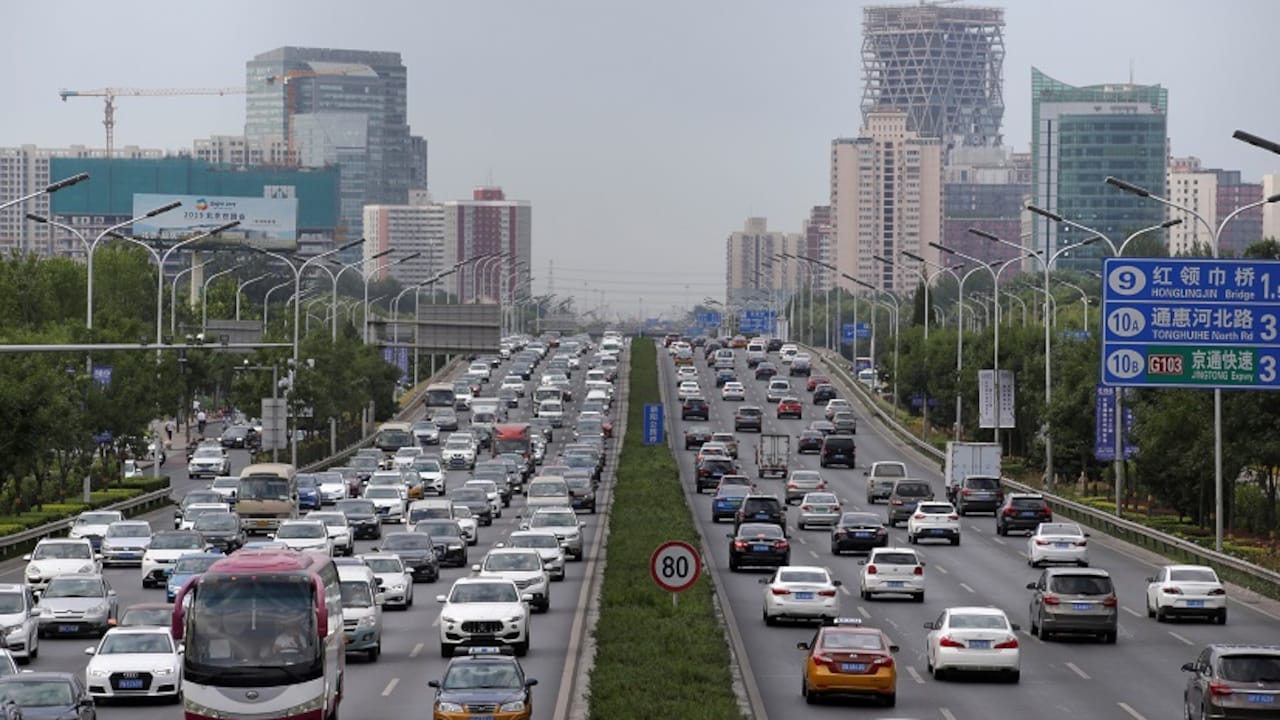
To understand why Chinese automakers are struggling at home, you have to look at how many of them actually exist. A few years ago, local governments across China handed out cheap land, tax breaks, and easy loans to anyone who promised to build an EV factory. They wanted local jobs and GDP growth. They got a massive bubble instead.
At the peak, China had over 100 electric vehicle brands fighting for shelf space. Even after several high-profile bankruptcies—like WM Motor and HiPhi—dozens of manufacturers are still cranking out cars in factories built to supply a market far bigger than current demand.
When supply dwarfs demand, prices collapse.
Tesla kicked off the modern price war in late 2022 by slashing prices on the Model 3 and Model Y in China. BYD responded immediately. Since then, the discounts haven't stopped. In 2024 and 2025, BYD rolled out its "Honor" and "Smart Driving" editions, dropping the entry price of its Seagull hatchback and Qin Plus sedan so low that traditional gas-powered cars couldn't even match them on sticker price.
Here's the problem with selling a decent car for under $10,000. Nobody makes money doing it.
According to data from the China Passenger Car Association (CPCA), the average profit margin across China's entire automotive manufacturing sector dropped below 5% in recent years, down from nearly 9% a decade ago. Strip out BYD and a few profitable state-backed joint ventures, and the picture gets bleak fast. Startups like Nio and Xpeng have burned billions of dollars trying to maintain market share while cutting prices to stay relevant.
If you're a Chinese automaker today, raising prices at home means watching your sales drop to zero overnight. Consumers have been trained to wait for the next discount.
Why Going Global Saves the Balance Sheet
Now flip the map over. Look at what happens when a Chinese automaker puts that exact same vehicle on a cargo ship bound for Europe, Latin America, or Southeast Asia.
Suddenly, the math works.
Take the BYD Atto 3 or the MG4. In China, intense competition forces manufacturers to sell these cars at razor-thin margins just to keep factory utilization rates high. Once those vehicles land in Germany, the UK, or Australia, they're priced against legacy brands like Volkswagen, Toyota, and Hyundai.
Even after paying shipping costs and import tariffs, Chinese automakers often price their exports 50% to 100% higher than what they charge domestic buyers for the exact same car. And they still undercut Western rivals on features and sticker price.
Rhodium Group, an independent research firm that tracks Chinese industrial policy, published a widely cited analysis showing just how stark this gap is. For many Chinese EV makers, export markets generate vastly higher per-vehicle profits than domestic sales. In some cases, overseas profits are literally subsidizing the losses incurred during the domestic price war.
This explains why China blew past Japan in 2023 to become the world's largest auto exporter, shipping nearly 5 million vehicles abroad, and kept climbing past 6 million units in subsequent years. Companies like Chery, SAIC, Geely, and BYD didn't go global just because they felt ambitious. They went global because that's where the actual cash is.
What Most People Get Wrong About Chinese Car Exports
If you read Western headlines, you'd think China is only exporting cheap electric hatchbacks to Europe. That's completely wrong.
First, a massive chunk of China's export boom consists of traditional internal combustion engine (ICE) vehicles. As Chinese drivers rapidly switched to EVs and plug-in hybrids—pushing domestic "new energy vehicle" penetration past 50%—Chinese factories were left with millions of units of idle gasoline-car capacity.
Where did those gas cars go? Russia, Mexico, the Middle East, and South America.
After Western automakers pulled out of Russia following the invasion of Ukraine, Chinese brands like Chery, Great Wall Motor, and Geely stepped in and captured over half the Russian market almost overnight. In Mexico and Saudi Arabia, affordable, tech-loaded Chinese gasoline SUVs have eaten directly into the market share of Nissan, Chevrolet, and Toyota.
Second, Chinese automakers aren't winning overseas just because they're cheap anymore. Five years ago, Chinese cars had a reputation for sketchy build quality and poor safety ratings. Today, models like the Zeekr 001, BYD Seal, and XPeng G6 regularly earn five-star Euro NCAP safety ratings.
When I look at the interior software and battery tech in a mid-tier Chinese EV compared to a similarly priced legacy rival, the difference is jarring. Chinese brands treat the car like a smartphone on wheels because domestic buyers demanded that years ago. The brutal competition at home forced Chinese engineers to iterate at breakneck speed. By the time those cars hit foreign shores, they feel a generation ahead of traditional automakers.
The Supply Chain Advantage Nobody Can Match
You can't talk about why China is winning globally without talking about batteries and vertical integration.
Roughly 70% to 80% of the world's lithium-ion battery manufacturing capacity sits inside China. Giants like CATL and BYD control the refining of lithium and cobalt, the production of cathodes and anodes, and the final assembly of battery packs.
BYD takes this vertical integration to an extreme. Aside from tires and windshield glass, BYD manufactures almost every major component in its vehicles—including the battery cells, electric motors, power semiconductors, and infotainment screens.
Compare that to a legacy Western or Japanese automaker. Traditional car companies rely on sprawling, multi-tiered networks of outside suppliers, each taking a cut of the margin at every step. When battery raw material prices swing wildly, legacy automakers absorb the shock. BYD just shifts costs internally.
That structural cost advantage means Chinese automakers can build a profitable EV at a price point where Ford, Volkswagen, or Stellantis would lose thousands of dollars per vehicle. Even when Western governments slap tariffs on Chinese imports, that underlying cost gap doesn't disappear.
Trade Walls Are Going Up Everywhere
Of course, the rest of the world isn't just sitting back and letting its domestic auto industries get wiped out.
The United States effectively locked Chinese EVs out of its market by quadrupling tariffs to 100% under the Biden administration, alongside strict rules on Chinese connected-vehicle software and battery components.
The European Union followed with its own anti-subsidy investigation, slapping countervailing duties of up to 35.3% on top of its existing 10% import tariff on Chinese battery-electric vehicles. Brazil, Turkey, and Canada have all introduced or raised tariffs to slow down the flood of Chinese imports.
If you're an investor or an industry watcher, here's what you need to pay close attention to next. Tariffs don't stop Chinese automakers—they just force them to change tactics.
Watch what BYD, Chery, and Geely are doing right now. Instead of exporting finished cars from Shanghai, they're building factories inside those tariff walls.
- Europe: BYD is building major assembly plants in Hungary and Turkey, giving it tariff-free access to the European Union single market. Chery partnered with Ebro-EV Motors to assemble vehicles at a former Nissan plant in Barcelona.
- Latin America: BYD took over an abandoned Ford factory complex in Bahia, Brazil, turning it into a massive regional manufacturing hub.
- Southeast Asia: Thailand has become the Detroit of Southeast Asia for Chinese brands, with BYD, Great Wall, Changan, and GAC Aion all opening local factories to serve right-hand-drive markets across ASEAN and Australia.
At the same time, because EU tariffs targeted pure battery-electric vehicles (BEVs) specifically, Chinese automakers immediately pivoted their European export mix toward plug-in hybrids (PHEVs), which face much lower tariff barriers while still appealing to European drivers worried about charging infrastructure.
What Happens When the Dust Settles
The current setup in China's auto industry isn't sustainable. You cannot run an entire national manufacturing sector on sub-5% margins forever without casualties.
Over the next few years, China's domestic market is going to go through a painful consolidation phase. Weak brands that lack scale, export channels, or deep-pocketed state backing will either get swallowed up or disappear completely. Industry analysts widely expect the number of viable Chinese passenger car brands to shrink from dozens down to a handful of dominant giants—led by BYD, Geely, Chery, SAIC, and tech-backed players like Huawei's Harmony Intelligent Mobility Alliance and Xiaomi.
For global automakers, though, that domestic shakeout is bad news. The Chinese companies that survive this brutal home-market war won't just be big. They'll be lean, battle-tested, and sitting on localized factories across Europe, Asia, and the Americas.
If you want to track where the global auto industry is actually heading, stop looking solely at quarterly EV delivery headlines in the US or Europe. Watch factory utilization rates in China, follow capital expenditure on overseas assembly plants in Hungary and Brazil, and track how quickly plug-in hybrid exports grow in tariff-heavy regions. That's where the real battle for the next decade of automotive dominance is being decided.