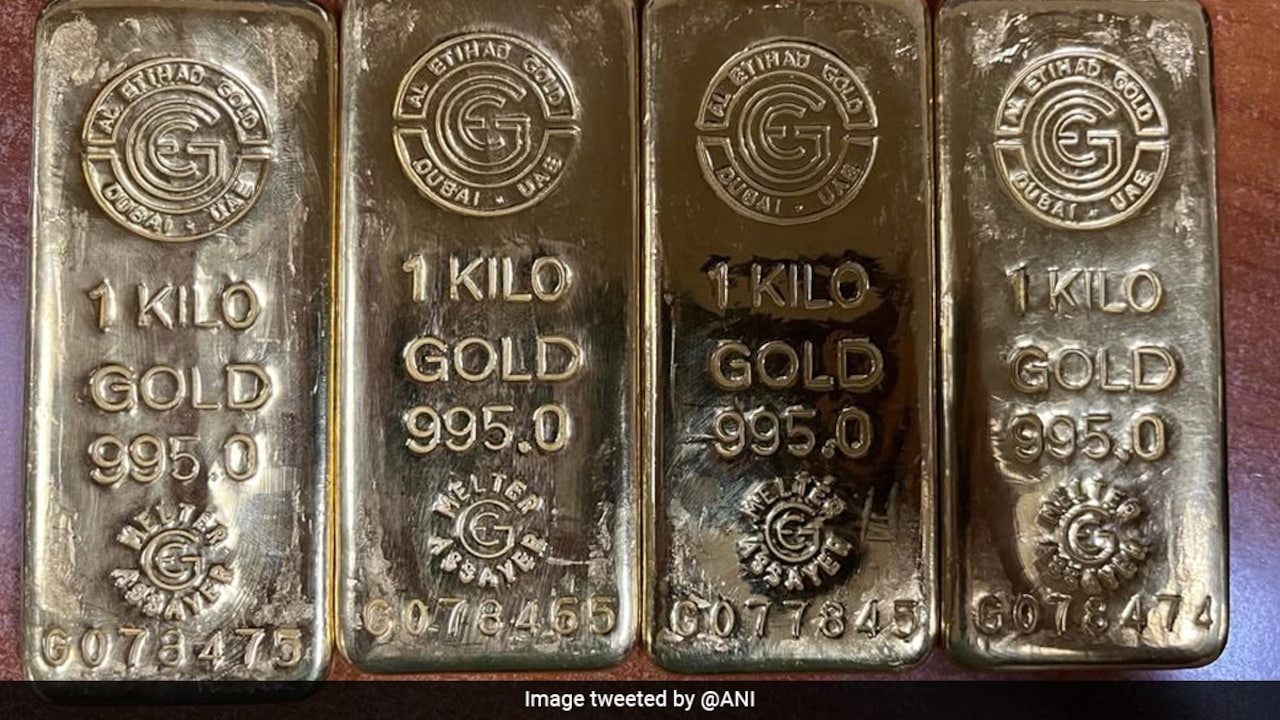
Two women walk through Hazrat Shahjalal International Airport in Dhaka with gold bars sewn into their underwear. Customs officials catch them, snap a few photos of the confiscated bullion on a stainless-steel table, and hand the press release to wire services. Within hours, the internet feasts on the spectacle.
And you fell for the oldest distraction in global finance.
The mainstream press treats these arrests like major victories in the war against illicit trade. They frame the story around the absurdity of the hiding spot, turning a high-stakes financial crime into cheap tabloid theater. By focusing on the sensationalism of underwear smuggling, standard news outlets completely miss the structural mechanics of the South Asian bullion trade. These couriers are not criminal masterminds. They are disposable, low-level logistics mules absorbing 100% of the physical risk for syndicates operating in plain sight.
If you want to understand why gold keeps flowing illegally across borders in Dhaka, Dubai, and Mumbai, stop looking at the airport scanners. Look at the tax codes, currency controls, and trade deficits that make smuggling the most rational economic choice on the board.
The Economics of the "Mule" Economy
Most readers assume smugglers hide gold in body cavities or undergarments out of sheer desperation or greed. That is a fundamental misunderstanding of how illicit supply chains price risk.
In the legitimate logistics world, companies pay for insurance, freight forwarders, and customs brokerage. In the illicit bullion trade, syndicates replace corporate insurance with human bodies. When a syndicate moves gold through Bangladesh—a country strategically wedged between major Middle Eastern bullion hubs and India, the world's second-largest consumer of gold—they are playing a pure numbers game.
Let's break down the math of cross-border arbitrage.
India and Bangladesh consistently impose heavy import duties, value-added taxes, and strict foreign exchange controls on gold to protect their domestic currency reserves. When the official landed cost of gold carries a 10% to 15% tax penalty, an immediate black-market spread opens up. If a kilogram of gold is worth $80,000 in Dubai, it is instantly worth $90,000 the moment it clears customs illegally in Dhaka or Kolkata.
Syndicates do not hire elite mercenaries to capture that $10,000 spread. They hire desperate travelers, migrant workers, and tourists.
- The Payout: A courier—often called a "carrier" in the trade—typically makes between $300 and $1,000 per trip, plus the cost of their economy airline ticket.
- The Loss Ratio: Syndicates factor a 5% to 10% seizure rate directly into their operating margins. If nine couriers walk through the green channel untouched and the tenth gets caught with gold in her underwear, the syndicate still clears massive net profits.
- The Insulation: The courier rarely knows the name of the financier in Dubai or the wholesale jeweler in Dhaka or Delhi. They receive a WhatsApp message with a photo of the person who will meet them outside the terminal, and a burner phone number. When customs snaps the handcuffs on, the supply chain simply routes the next batch through a different flight path.
I have spent years analyzing cross-border trade anomalies and supply chain vulnerabilities, and the pattern never changes. Whenever a government announces a splashy airport seizure, press releases celebrate the vigilance of border agents. Meanwhile, trade data from the World Gold Council and the Bank for International Settlements quietly confirms that hundreds of metric tons of unrecorded bullion still cross those exact same borders every single year.
Why Customs Enforcement is Fighting the Last War
If you ask the average person how to stop gold smuggling, they will tell you to buy better X-ray machines and hire more border guards. That answer is completely backwards.
You cannot scan your way out of an arbitrage problem.
Consider the sheer volume of passenger traffic moving through hubs like Dhaka, Chittagong, and Sylhet. Millions of migrant workers travel back and forth between the Gulf Cooperation Council (GCC) states and South Asia every year. These workers are the lifeblood of the Bangladeshi economy, sending home tens of billions of dollars in remittances. Customs officials face an impossible mandate: screen every passenger for contraband without causing a terminal-wide riot or delaying flights for hours.
Smuggling syndicates exploit this exact operational bottleneck. They know customs officers rely on behavioral profiling and basic metal detection. So, the syndicates adapt.
- Chemical Masking: Gold is rarely smuggled in pure, recognizable bar form anymore. Syndicates routinely mix gold dust with chemical compounds to create a brown, clay-like paste that mimics mud, cosmetics, or industrial grease. It passes standard visual inspections and baffles older X-ray machines.
- Alloy Dilution: Couriers wear heavy gold jewelry coated in cheap silver, nickel, or rhodium paint, passing off $50,000 worth of 24-karat bullion as $20 costume jewelry.
- Micro-Structuring: Instead of sending one mule with five kilograms of gold, syndicates put twenty mules on the same flight, each carrying 250 grams—an amount that often hovers dangerously close to legal personal-use allowances, blurring the line between a confused tourist and a criminal operative.
When two women get caught with gold bars stitched into their undergarments, they are using the most rudimentary, outdated concealment method in the playbook. Catching them is the equivalent of a cybersecurity firm bragging about blocking a 1998 phishing email while state-sponsored hackers drain the mainframe through an unpatched server.
The Hawala Connection Nobody Mentions
The biggest lie in mainstream crime reporting is that gold smuggling is about gold. It isn't. Gold is simply the vehicle. The real product is untraceable capital flight.
To understand this, you have to look at hawala (also known as hundi in Bangladesh and India)—an informal value transfer system that operates entirely outside the traditional banking sector.
Imagine a scenario where a wealthy businessman in Dhaka wants to move $2 million out of Bangladesh to buy real estate in London or Toronto, bypassing strict central bank capital controls. He cannot simply wire the money through a commercial bank without triggering regulatory alarms, tax audits, and outright rejection.
Instead, he hands $2 million in local currency (Bangladeshi Taka) to a local hundi broker in Dhaka.
That broker does not wire the cash abroad. He calls his partner in Dubai. The Dubai partner uses his own liquid cash reserves to buy $2 million worth of physical gold bullion on the open market, where gold is tax-free and largely unregulated. The Dubai broker then hands that physical gold to smuggling syndicates, who strap it onto couriers flying back to Dhaka.
Once the gold lands in Dhaka and is sold to local jewelry wholesalers for cash, the local hundi broker replenishes his Taka reserves. Meanwhile, the Dubai partner deposits the clean, liquid value of the original gold purchase into the businessman's offshore account in London.
No money ever crossed a border electronically. No SWIFT messages were generated. No bank compliance officer ever saw a red flag.
The gold hidden in a courier's underwear is just the physical settlement mechanism for a massive, invisible shadow banking system. According to financial crime researchers and organizations like the Financial Action Task Force (FATF), trade-based money laundering and informal value transfer networks account for hundreds of billions of dollars in illicit flows globally. Gold is the preferred currency of this shadow economy because it is dense, universally liquid, easily melted down to erase serial numbers, and immune to digital tracking.
The Policy Trap of Import Duties
Governments love taxing gold because it feels like a progressive, politically safe move. Politicians argue that gold is a luxury good bought by the wealthy, so slapping a hefty tariff on it protects domestic currency reserves and raises state revenue.
In reality, punitive gold tariffs are an open invitation to organized crime.
History proves this beyond a shadow of a doubt. In 2013, the Indian government panicked over a widening current account deficit and hiked import duties on gold from 2% to 10%. Did Indians stop buying gold? Not at all. Gold is deeply embedded in South Asian culture as both a generational wealth store and a mandatory wedding asset. Demand stayed inelastic.
What actually happened was an immediate, catastrophic collapse in official, taxed gold imports, paired with an explosion in smuggling. Overnight, legitimate bullion dealers were priced out of the market, and criminal syndicates took over national supply chains. The government collected less tax revenue, lost visibility into its own currency outflows, and flooded its airports with thousands of desperate couriers.
When authorities finally lower duties—as India eventually did in 2024 by slashing gold import taxes from 15% down to 6%—smuggling volumes plummet immediately. Why? Because when the profit margin drops below the cost of bribing officials, buying plane tickets, and paying couriers, the syndicates pack up and move to a different commodity.
Yet, regional neighbors frequently fail to synchronize their tax policies. If India lowers its tariffs while Bangladesh maintains high duties and strict foreign exchange shortages, the smuggling routes simply invert. Gold stops flowing from Bangladesh into India and starts flowing from India into Bangladesh. The mules just buy round-trip tickets in the opposite direction.
The Downsides of the Free-Market Fix
Now, let's be honest about the flaw in the pure free-market solution. If the answer to airport gold smuggling is simply eliminating import duties and liberalizing currency controls, why doesn't every developing nation do it tomorrow?
Because central bankers are fighting for survival.
Countries like Bangladesh face severe foreign exchange reserve pressures. Every dollar spent importing physical gold is a dollar that cannot be used to import liquefied natural gas, fertilizer, wheat, or life-saving pharmaceuticals. Gold is a "dead" asset from a macroeconomic perspective—once a family buys a gold necklace and locks it in a safe, that capital sits idle, generating zero industrial productivity or export revenue.
If a central bank opens the floodgates to duty-free gold imports while its currency is depreciating, wealthy citizens will convert their local cash into bullion en masse, triggering a full-blown balance-of-payments crisis.
Policymakers are trapped in a brutal dilemma:
- Keep tariffs high: You protect official foreign reserves on paper, but you hand a multi-billion-dollar monopoly to violent criminal syndicates and corrupt border officials.
- Drop tariffs to zero: You kill the black market overnight, but you risk draining your central bank's hard currency reserves to feed domestic retail demand.
There is no painless button to push. Anyone telling you that better border security or simple deregulation will easily solve the problem is selling you a fantasy.
How to Actually Dismantle the Syndicates
If governments want to stop seeing their airports turned into conveyor belts for contraband, they have to stop arresting the mules and start attacking the balance sheets of the wholesalers.
First, eliminate cash transactions in the domestic bullion market. Right now, smuggled gold enters the legitimate economy because local jewelers and refiners can buy melted-down bullion with untraceable cash, stamp a new hallmark on it, and sell it in retail showrooms with clean paperwork. Implementing mandatory digital tracking, strict Know-Your-Customer (KYC) thresholds for retail gold purchases, and aggressive forensic auditing of local refineries cuts off the syndicate's exit strategy. If you cannot sell the gold for clean cash, smuggling it becomes pointless.
Second, target the transit hubs through bilateral financial intelligence, not luggage searches. The financiers funding these operations live in plain sight in global financial centers. They use shell companies, legitimate import-export fronts, and commercial bank accounts to settle their hawala ledgers. Following the digital paper trail of the shell companies buying bulk bullion in the Middle East yields infinitely higher returns than frisking economy-class passengers in Dhaka.
Third, decriminalize low-level carriers in exchange for upstream testimony. Prosecuting two women caught with gold in their underwear takes years of court resources and ends with a minor fine or a brief prison sentence that accomplishes nothing. Offering immediate immunity and financial protection to couriers who hand over their phones, banking details, and handler contacts turns the syndicate's greatest asset—its army of disposable mules—into a massive intelligence liability.
Until enforcement agencies shift their focus from the airport arrivals hall to the corporate boardrooms and shadow banks financing the trade, the cycle will repeat. Tomorrow, another flight will land. Another courier will walk nervously toward the green channel. Customs will make another arrest, take another photo, and write another press release. And the people who actually own the gold will never even step foot in an airport.