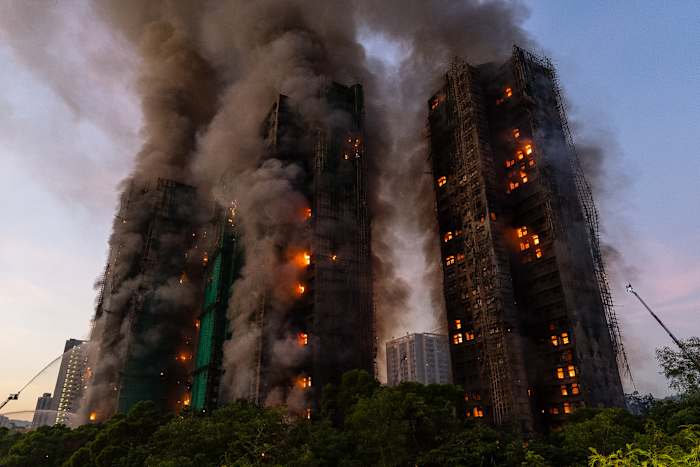
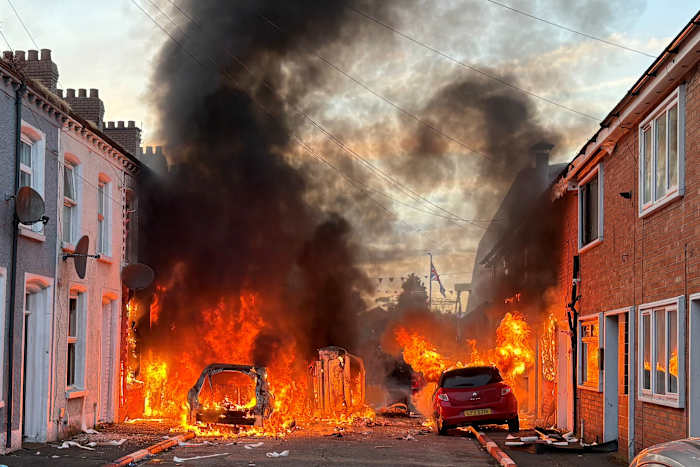
You've probably seen the graphic footage bouncing around your feeds. A brutal, stomach-churning knife attack on a north Belfast street on Monday night left a man in his 40s fighting for his life. Within hours, parts of Belfast were quite literally on fire.
A hijacked Glider bus was torched in east Belfast. Masked men kicked down doors on the Lower Newtownards Road. Bricks flew, smoke choked the streets, and families from ethnic minority backgrounds watched from upstairs windows as mobs attacked their homes.
This isn't just a local police matter anymore. It has spiraled into a full-blown national crisis that stretches from the Stormont executive all the way to Westminster and Downing Street. If you're trying to make sense of how a single horrific crime triggered widespread rioting across Northern Ireland, you need to look at exactly what happened, who is stoking the flames, and what the authorities are actually doing about it.
The Spark That Ignited the Streets
Let's look at the facts of the crime itself, because a lot of garbage information is circulating right now. On Monday, June 8, 2026, around 10:30 p.m., a man named Stephen Ogilvie was viciously attacked outside a block of flats in north Belfast. The attacker used a kitchen knife, repeatedly striking Ogilvie in the head, face, and neck. It was a chaotic scene; local bystanders actually stepped in to confront the knifeman, including one brave resident who fought the attacker off with a hurling stick.
Ogilvie survived, but his injuries are life-altering. He lost his left eye and sustained deep wounds to his face and back.
The Police Service of Northern Ireland (PSNI) quickly arrested a 30-year-old suspect named Hadi Alodid. He was held at the Musgrave Serious Crime Suite and has been charged with attempted murder, possession of a knife in a public place, and making threats to kill an NHS worker. Assistant Chief Constable Ryan Henderson confirmed that police aren't looking for anyone else and that there's no evidence pointing to a terrorism motive. It was a brutal, isolated act of violence.
But the detail that turned this horrific crime into a political flashpoint was the suspect's background. Alodid is an asylum seeker from Sudan.
The Online Megaphone and the Travel Loophole
The moment the suspect's nationality leaked, the internet did what it always does. It exploded. Far-right agitators and global tech billionaires immediately seized on the incident to fuel an anti-immigration narrative.
Elon Musk took to X, sharing a list of potential protest locations across the UK and telling his millions of followers that "only by protesting REPEATEDLY and LOUDLY will there be any change." High-profile figures like Tommy Robinson and Reform UK leader Nigel Farage immediately demanded answers about the suspect’s immigration status.
Here is what we actually know about how the suspect ended up in Belfast, courtesy of PSNI Chief Constable Jon Boutcher. Alodid entered the UK legally under a five-year visa granted back in September 2023. He didn't cross the English Channel on a small boat. Instead, he traveled from Sudan to Paris, then to Dublin, and finally caught a bus straight across the open Irish border into Belfast, where he claimed asylum. He had no prior criminal record with the Northern Irish police.
This specific route highlighted what critics call an asylum loophole, giving political leverage to parties like Reform UK. Their home affairs spokesperson, Zia Yusuf, pinned the blame directly on Westminster, claiming the horror was a result of treacherous immigration policies and reiterating Reform's demand for a total ban on visas for anyone coming from Sudan. Democratic Unionist Party (DUP) leader Gavin Robinson also jumped in, demanding the government immediately curb what he called "uncontrolled immigration."
From Online Fury to Urban Riots
While politicians debated visas in Parliament, the situation on the ground turned ugly fast. By Tuesday evening, June 9, the digital anger manifested as physical violence on the streets of Belfast.
It wasn't a peaceful policy protest. It was opportunistic thuggery. Masked groups of men in black hoodies blocked roads and set cars and trash bins on fire. In central Belfast, Sudanese business owners on Sandy Row were forced to pull down steel shutters by 4:00 p.m. and hide in their homes. The Belfast Islamic Centre had to cancel its evening prayers out of sheer fear for its congregants' safety.
The violence wasn't even confined to Northern Ireland. The tension acted as a secondary trigger for existing anger across the Irish Sea. Protesters marched in Southampton, England, outside a hotel used to house asylum seekers, carrying signs reading "Illegal Migration Is Destroying Our Civilisation."
The Southampton situation is particularly ironic. That protest was ostensibly linked to the recent murder sentencing of a university student named Henry Nowak, who was killed with a Sikh dagger by Vickrum Digwa. Both the victim and the killer in the Southampton case were British citizens, yet anti-immigration groups welded the two distinct events together online to create a singular narrative of a country under siege.
How Leadership is Responding
The political reaction across the UK has been swift, but words don't easily clean up burnt-out buses or heal a divided community. Prime Minister Keir Starmer called the Belfast stabbing "sickening" and "abhorrent," stating his government has zero tolerance for violence on the streets. His office pleaded for calm, asking the public to give the police space to investigate without distraction.
In Northern Ireland, the response showed a rare moment of total cross-party unity. The leaders of all five main political parties—Sinn Féin, the DUP, the Ulster Unionist Party, the Alliance Party, and the SDLP—issued a joint statement condemning both the knife attack and the subsequent riots.
First Minister Michelle O’Neill didn't mince words, calling the actions of the masked mobs "nothing less than disgusting cowardice" and pointing the finger squarely at faceless online trolls who stoke hatred from the comfort of their keyboards. Deputy First Minister Emma Little-Pengelly echoed the plea for calm, while acknowledging that people are feeling a "bag of emotions." However, she also validated some of the underlying frustration, noting that the UK must find ways to deport dangerous foreign nationals much more swiftly so communities feel protected.
Northern Ireland Secretary Hilary Benn reminded everyone that rioting does nothing but stretch police resources thin. True to his word, the PSNI confirmed that two officers were injured during Tuesday night's chaos.
Navigating the Fallout in Your Community
If you are living in Belfast or any of the affected UK cities, you shouldn't let the online frenzy dictate your reality. The goal of far-right digital agitators is to make you feel like your neighborhood is a war zone so you react with fear or anger.
First, stop sharing the graphic video of the attack. Police and families have explicitly asked people to pull it down. Circulating it does nothing but traumatize people and give the attacker the notoriety or political symbolic status the far right wants him to have.
Second, verify what you read before you click share. The suspect was initially reported online as Somali; he is Sudanese. The attack was rumored to be a terrorist hit; it wasn't. Check local, reputable news outlets or official PSNI press releases rather than taking a random X account's word for it.
Finally, support your local independent businesses. The shops closing early on Sandy Row and around the Newtownards Road are run by your neighbors. The best way to counter community division is to show up, buy your morning coffee or groceries from them, and prove that the masked mobs don't speak for the city.