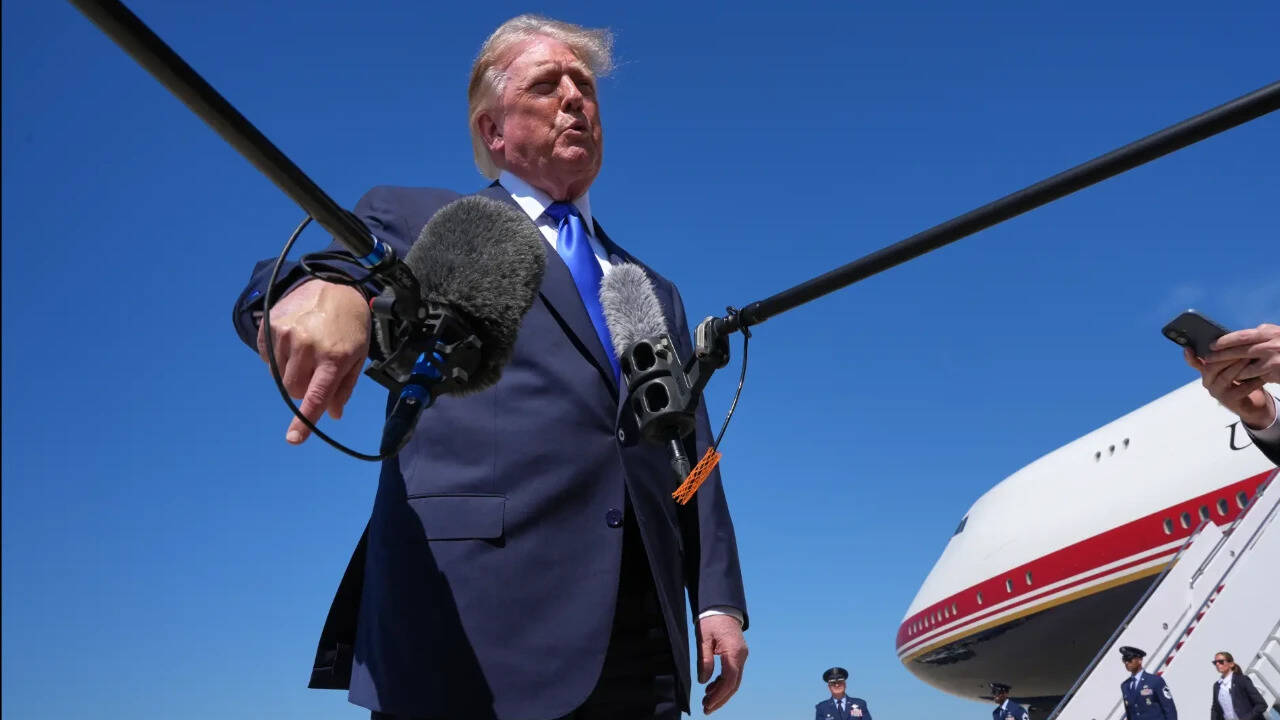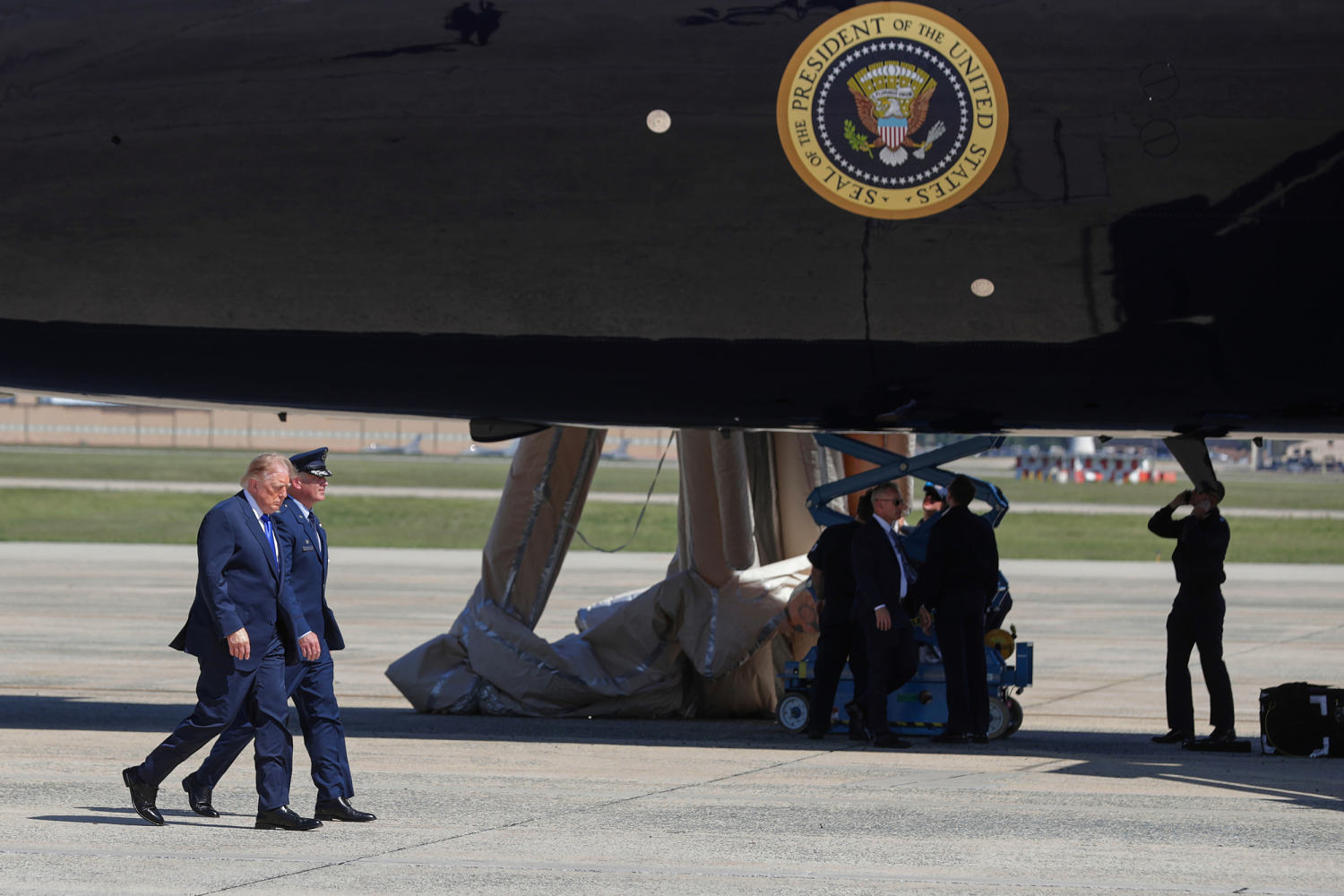
The unexpected inflation of an emergency evacuation slide on the newly integrated, Qatar-gifted Boeing 747 serving as Air Force One at Joint Base Andrews exposes critical vulnerabilities in the mechanical turnover and operational protocols of VIP transport. While public commentary focuses on the political symbolism of the aircraft, a rigorous analysis of the event reveals standard human-factor engineering failures and the friction inherent in rushing non-standard assets into high-stakes executive service.
The Mechanics of Accidental Deployment
Emergency evacuation slides on commercial and widebody aircraft are engineered for rapid egress under high-stress conditions, utilizing compressed gas cylinders—typically nitrogen or carbon dioxide—housed within the door assembly or fuselage fairing. Mechanical arming levers, safety girt bars, and electronic proximity sensors dictate whether a door is in "automatic" or "manual" mode.
When a ground crew member inadvertently triggers a slide deployment, the root cause invariably traces back to a breakdown in procedural compliance or a design mismatch between legacy Boeing architecture and custom interior retrofits. The conversion of a luxury widebody jet into a presidential transport demands extensive interior reconfiguration. If cabin pressure differentials, door latch linkages, or girt bar indicators are altered during custom builds without standardizing the tactile feedback loops familiar to elite military ground crews, the probability of human error spikes.
The incident at Joint Base Andrews demonstrates a classic operational bottleneck:
- Procedural Disconnect: Ground handlers operating under compressed timelines prior to executive boarding face heightened cognitive loads.
- Hardware Ambiguity: Non-standard cabin layouts on gifted or heavily modified aircraft obscure standard visual and physical cues for door arming states.
- Mitigation Latency: The time required to deflate, detach, and clear an accidental slide deployment introduces a mandatory operational pause, directly disrupting tight executive movement schedules.
The Cost Function of Rapid Integration
Integrating an ad-hoc aircraft into the presidential fleet bypasses the decades-long institutional muscle memory built around traditional VC-25 platforms. The strategic rationale for utilizing a bridging asset stems from delays in official presidential aircraft procurement pipelines. However, speed introduces distinct structural costs.
The cost function of accelerating fleet adoption is measured not just in direct financial expenditure for luxury retrofits and security enhancements, but in operational risk multiplication. Every custom modification creates a unique configuration footprint. Maintenance technicians cannot rely solely on standard technical manuals; they must navigate bespoke wiring diagrams and non-standard interior assemblies. This variance increases mean time to diagnostic, elevating the risk of oversight during pre-flight checks.
[Standardized Fleet Protocol]
       ↓
   High Predictability / Low Error Variance

[Bespoke / Bridging Fleet Integration]
       ↓
   Custom Retrofits + Compressed Timelines = Elevated Human Error Risk
When an asset deviates from baseline military specifications, the margin for error narrows. The inadvertent slide deployment functions as a visible symptom of a deeper systemic challenge: maintaining absolute operational integrity within a fleet configuration that lacks long-term standardization.
Human Factors and Ground Crew Dynamics
Ground operations around presidential aircraft involve a multi-layered matrix of Secret Service details, military flight crews, and contracted maintenance specialists. Clear chains of command are essential, yet physical access to the aircraft during pre-boarding phases creates spatial competition on the tarmac.
The pressure to maintain punctuality for domestic political travel—such as the flight to the Republican midterm convention in Dallas—creates an environment ripe for procedural shortcuts. When senior leadership is transferred via Marine One directly to the tarmac, the synchronization between helicopter arrival and fixed-wing departure must execute with absolute precision. If a ground technician is forced to rush a cabin check or door security verification due to converging arrivals, the cognitive bandwidth dedicated to verifying safety pin placements or girt bar statuses is compromised.
Strategic Fleet Vulnerabilities
The deployment event highlights the friction points that emerge when political expediency intersects with aviation logistics. Fleet transitions require a delicate balance between modernization demands and risk management.
To mitigate systemic failures during high-profile operational windows, aviation management must enforce strict procedural freezes on non-standard assets. Maintenance schedules must account for the unique vulnerabilities of heavily modified cabins, ensuring that human-factor engineering controls compensate for the lack of standardized design elements across transitional aircraft. The primary operational objective remains uninterrupted executive mobility, yet achieving this requires insulating technical ground crews from the temporal pressures of the political calendar.