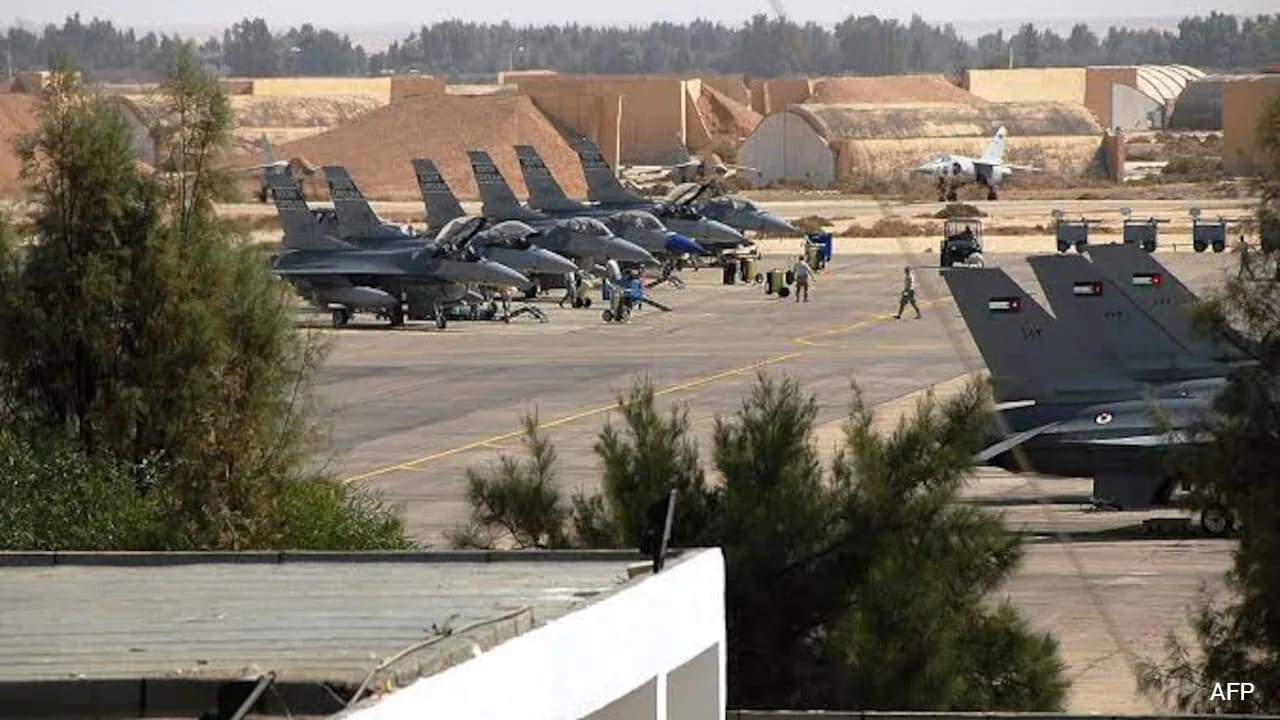
The operational cost of regional force projection hinges on the vulnerability of fixed-site infrastructure. When ballistic missile volleys penetrate layered air defense architectures, the immediate physical toll on parked tactical aircraft reveals critical systemic friction points within expeditionary logistics. Recent reporting regarding the Iranian strike on Muwaffaq Salti Air Base in Jordan, which damaged an A-10 Thunderbolt II and roughly eight F-15E Strike Eagle fighters, provides a concrete baseline to evaluate asset attrition, missile defense economics, and the limits of base hardening.
Deconstructing the tactical reality requires separating confirmed structural damage from operational status. Reports indicate that the A-10 sustained severe wing damage, rendering the airframe structurally compromised and non-mission capable pending heavy depot-level intervention or write-off. Conversely, the approximately eight F-15E platforms sustained light shrapnel or concussive damage that permitted rapid clearance for return to service. This divergence highlights two distinct mechanical thresholds under ballistic bombardment: catastrophic structural failure from direct or near-adjacent kinetic impact, and superficial degradation that absorbs maintenance bandwidth without permanently subtracting hulls from the active inventory.
The strategic equation driving these exchanges is defined by an asymmetric cost function. Intercepting incoming ballistic and cruise missile packages requires high-tier air defense assets, notably Patriot batteries. Reports noted that forces in Jordan expended upwards of thirty Patriot interceptors during the engagement. This expenditure rate accentuates an ongoing strategic bottleneck regarding the shrinking global supply of precision interceptors. When state actors or proxy forces utilize saturation volleys against fixed hubs like Muwaffaq Salti, the economic defender's dilemma takes effect. Each defensive firing cycle burns finite high-cost inventory to protect multi-million dollar airframes that remain vulnerable while parked on open tarmac or inside unreinforced revetments.
Air base vulnerability modeling relies on three operational variables: shelter density, active warning timelines, and saturation capacity. Muwaffaq Salti Air Base serves as a primary hub for regional airpower operations, concentrating high-value assets within a finite perimeter. Fixed installations inherently possess zero geographic maneuverability. Unlike naval strike groups capable of evasive vectoring, an air base presents a stationary coordinate set. When incoming ballistic vectors exceed the saturation ceiling of local point-defense systems, shrapnel dispersion and secondary blast effects inevitably translate into collateral damage on exposed flightlines.
The physical mechanics of aircraft skin and structural members expose them to high-velocity fragmentation even in near-miss scenarios. Modern tactical jets utilize composite materials and thin skin panels designed for aerodynamic efficiency rather than blast resistance. An incoming warhead detonating within close proximity generates high-energy shrapnel fields that pierce hydraulic lines, shatter avionics bays, and compromise load-bearing spar structures. The loss of an A-10 wing demonstrates that older, ruggedized airframes designed for austere environments still succumb to modern precision explosive yields if caught unprotected on the ramp.
Logistical resilience dictates the speed at which damaged platforms transition back to operational readiness. While the F-15E fleet recovered quickly due to minor component impacts, the cumulative man-hours required for inspection, non-destructive testing, and minor repairs place an immediate strain on forward-deployed maintenance squadrons. Expeditionary wings operate with lean logistical footprints, meaning that concurrent repair demands on multiple airframes temporarily reduce sortie generation rates. This downtime represents a silent metric of attrition that traditional battle damage assessments frequently overlook.
Future adjustments to regional force posture will depend on decentralization strategies and structural hardening upgrades. Consolidating high-value tactical aircraft at primary hubs maximizes administrative efficiency but creates single points of failure susceptible to massed missile salvos. Mitigating this risk requires expanding dispersal options across secondary and tertiary landing sites to lower asset density per square kilometer. Accelerating the construction of hardened aircraft shelters capable of withstanding direct ballistic overpressure remains the primary structural remedy to neutralize the asymmetric advantage of low-cost strike volleys against parked air assets.