When Volodymyr Zelenskyy told the world that war will "always return to where it began," he wasn't offering poetic philosophy. He was stating a military reality right after Ukrainian forces struck the Chonhar bridge, a vital artery connecting occupied Crimea to the southern mainland.
Most coverage of that moment got bogged down in diplomatic soundbites. People read the quote, nodded, and moved on to the next headline without grasping what actually changed on the ground. That's a mistake. If you want to understand how Ukraine approaches its counteroffensive strategy—and why Crimea sits at the absolute center of it—you have to look past the rhetoric and examine the geography, the logistics, and the psychological warfare playing out across the peninsula.
The Geography That Dictates Everything
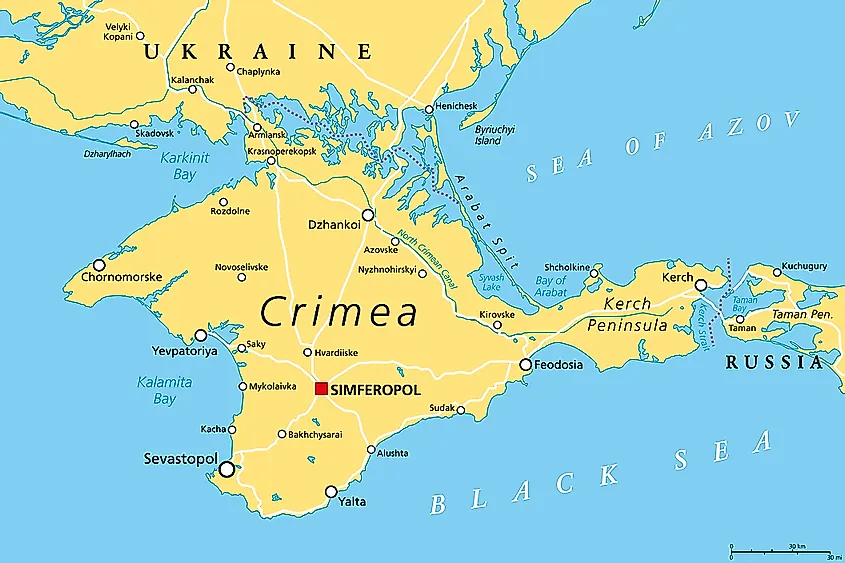
Look at a map of southern Ukraine. You'll notice right away that Crimea isn't a true island, though it basically functions like one when you're trying to move thousands of tons of artillery shells and fuel.
Russia relies on a handful of narrow chokepoints to keep its southern front alive. You've got the Kerch Strait Bridge to the east, which connects Crimea directly to mainland Russia. Then you've got the northern land bridges—specifically the Chongar (or Chonhar) bridge and the crossing near Armyansk—which link the peninsula to the Kherson region.
When Ukrainian missiles hit the Chonhar bridge in June 2023, they punched holes straight through the asphalt and damaged the underlying structure. Russian occupation authorities in Crimea and Kherson immediately scrambled to reroute heavy military traffic. Why did that single strike trigger such a pointed warning from Kyiv? Because without those bridges, Russia's entire southern defensive line turns into a logistical nightmare.
Think about how an army fights. Soldiers don't just need rifles; they need diesel, spare tank parts, medical supplies, food, and thousands of rounds of ammunition every single day. For months, Moscow used Crimea as an untouchable rear base—a giant warehouse where troops could rest and equipment could be stockpiled safely before rolling north into Zaporizhzhia and Kherson.
Strikes on the Crimean bridges shattered that illusion of safety. Suddenly, detouring around Chonhar meant sending convoys along longer, slower routes through Armyansk, adding hours to every supply run and burning through precious fuel. Every extra hour on the road gives Ukrainian reconnaissance drones more time to spot a convoy and call in precision strikes.
What Zelenskyy Meant by Where It Began
To understand why Zelenskyy framed the strike around the origins of the war, you have to rewind to February 2014.
Before the trenches in Donbas, before the siege of Mariupol, and before the full-scale invasion in 2022, there were the "little green men" in Crimea. Russia's illegal annexation of the peninsula wasn't just a land grab; it was the opening shot of a decade-long conflict. For years, Western policymakers treated Crimea as a separate, almost untouchable issue—something to be resolved through decades of quiet diplomacy rather than force.
Kyiv rejected that framework completely. From Zelenskyy's perspective, leaving Crimea in Russian hands guarantees future wars. The Black Sea Fleet uses Sevastopol to launch cruise missiles at Ukrainian cities hundreds of miles away. Russian fighter jets take off from Crimean airfields like Saky and Belbek to patrol the southern skies.
When Zelenskyy said the war would return to where it began, he was sending two distinct messages at once:
- To Moscow: Your rear bases aren't safe, your supply lines are exposed, and the annexation of 2014 won't protect your forces in 2023 or beyond.
- To Western allies: Don't pressure us into trading land for a temporary ceasefire, because Crimea is the launchpad for the entire invasion.
Honestly, it's a blunt argument, and it works because the military logic backs it up. You can't secure southern Ukraine while an adversarial military fortress sits right on its doorstep.
How Long-Range Weapons Changed the Math
For the first year of the full-scale invasion, Ukraine simply couldn't reach deep into Crimea with reliable, heavy firepower. They had to rely on daring covert operations, naval drones, and modified Soviet-era hardware.
Everything shifted when the United Kingdom and France supplied Storm Shadow and SCALP-EG air-launched cruise missiles.
Suddenly, Ukrainian Su-24 bombers had a weapon capable of flying low to evade radar, packing a warhead designed to punch through reinforced concrete, and hitting targets well over 150 miles away. The Chonhar bridge strike bore the unmistakable signature of Western-supplied cruise missiles—clean, circular entry holes punched right through the bridge deck, leaving the supporting pillars intact enough to show the precision of the hit while rendering the roadway unusable for heavy armor.
Military analysts at institutions like the Institute for the Study of War (ISW) noted at the time that these strikes weren't meant to permanently wipe the bridges off the map in a single afternoon. Instead, they were part of a deliberate interdiction campaign.
Interdiction is basically death by a thousand cuts for military logistics. You hit a bridge, forcing the enemy to spend weeks repairing it while traffic backs up on secondary roads. While those secondary roads are jammed, you hit fuel depots and ammunition dumps nearby. You force the enemy's commanders to choose between starving their frontline troops of supplies or concentrating their air defenses around bridges—which leaves their frontline troops exposed to aerial attack.
It's a classic bind. No good options exist once your supply arteries start bleeding.
The Common Misconception About Retaking Crimea
Whenever news breaks about a strike on a Crimean bridge, armchair commentators immediately jump to one extreme or the other. Either they claim Ukraine is about to launch an amphibious assault across the Sivash lagoon tomorrow morning, or they dismiss the strike as meaningless pinpricks because Russian crews can lay down pontoon bridges in a few days.
Both takes miss the point entirely.
First, pontoon bridges are a terrible substitute for permanent concrete spans. They have strict weight limits, they slow traffic to a crawl, and they're sitting ducks for artillery and missile strikes. If you're trying to move 50-ton main battle tanks and heavy self-propelled howitzers across a floating pontoon bridge while drones are watching overhead, your operational tempo drops off a cliff.
Second, Ukraine doesn't necessarily need to storm every beach in Crimea with infantry to make the peninsula untenable for Russia. Military historians often point to the liberation of Kherson city in November 2022 as the real blueprint.
In Kherson, Ukrainian forces didn't win by charging headfirst into fortified urban streets. They won by systematically destroying the Antonivskyi Bridge and the Nova Kakhovka dam crossing using HIMARS rockets. Once Russia could no longer ferry enough ammunition and food across the Dnipro River to sustain 20,000 troops, Moscow had no choice but to withdraw.
Crimea is vastly larger and harder to isolate than the right bank of the Dnipro, of course. Russia still has ferry systems, the Kerch Bridge, and the land corridor along the Sea of Azov coast through Mariupol and Melitopol. Nobody who understands modern warfare thinks isolating Crimea is easy or quick. Yet the underlying principle remains identical: sever the arteries, choke the logistics, and force the garrison into an impossible position.
Why Bridge Strikes Hit Russian Morale So Hard
Wars aren't fought solely with steel and high explosives; they're fought in the minds of soldiers and civilians. And in Russian political culture, the bridges linking Crimea to the outside world carry massive symbolic weight.
Vladimir Putin personally drove a truck across the Kerch Strait Bridge when it opened in 2018, framing it as the physical cement binding Crimea permanently to Russia. Every time an explosion rocks that bridge—or rips through the northern crossings at Chonhar—it humiliates the Kremlin in front of its own domestic audience.
Think about the ordinary Russian tourists who spent years vacationing on Crimean beaches, treating the war as something distant happening on television. When bridges get hit, traffic jams stretch for miles. Air raid sirens interrupt beach days. Military convoys clog the highways alongside family sedans.
For Russian soldiers fighting in the trenches of Zaporizhzhia, the psychological toll is even sharper. Nothing destroys frontline morale faster than wondering if your escape route is being cut off behind you. When troops hear that the bridges back to Crimea are full of craters, they start looking over their shoulders instead of focusing forward.
Tracking Developments on the Southern Front Without the Noise
If you follow this conflict closely, you know how quickly social media fills up with unverified claims, recycled explosion videos, and wild speculation whenever a major target gets hit. Cutting through that fog takes a disciplined approach to how you consume war reporting.
Start by separating tactical damage from strategic impact. When a bridge gets hit, don't just look at dramatic photos of smoke rising into the sky. Check satellite imagery from commercial providers like Planet Labs or Maxar, which usually surfaces within 24 to 48 hours through open-source intelligence researchers. Look at whether the support piers were damaged or just the road deck, and watch how long it takes for pontoon crossings to appear next to the span.
Pay close attention to Russian military bloggers on Telegram as well. While they're fiercely pro-war, many of them complain openly when logistics break down or when air defenses fail to intercept incoming missiles. Their frustration often reveals more about the real damage on the ground than official defense ministry briefings from either side.
Cross-reference every major claim against daily assessments from credible analytical groups like ISW or the UK Ministry of Defence intelligence updates. That habit alone will save you from falling for exaggerated headlines and give you a clear, grounded picture of how the battle for Crimea's supply lines actually unfolds.