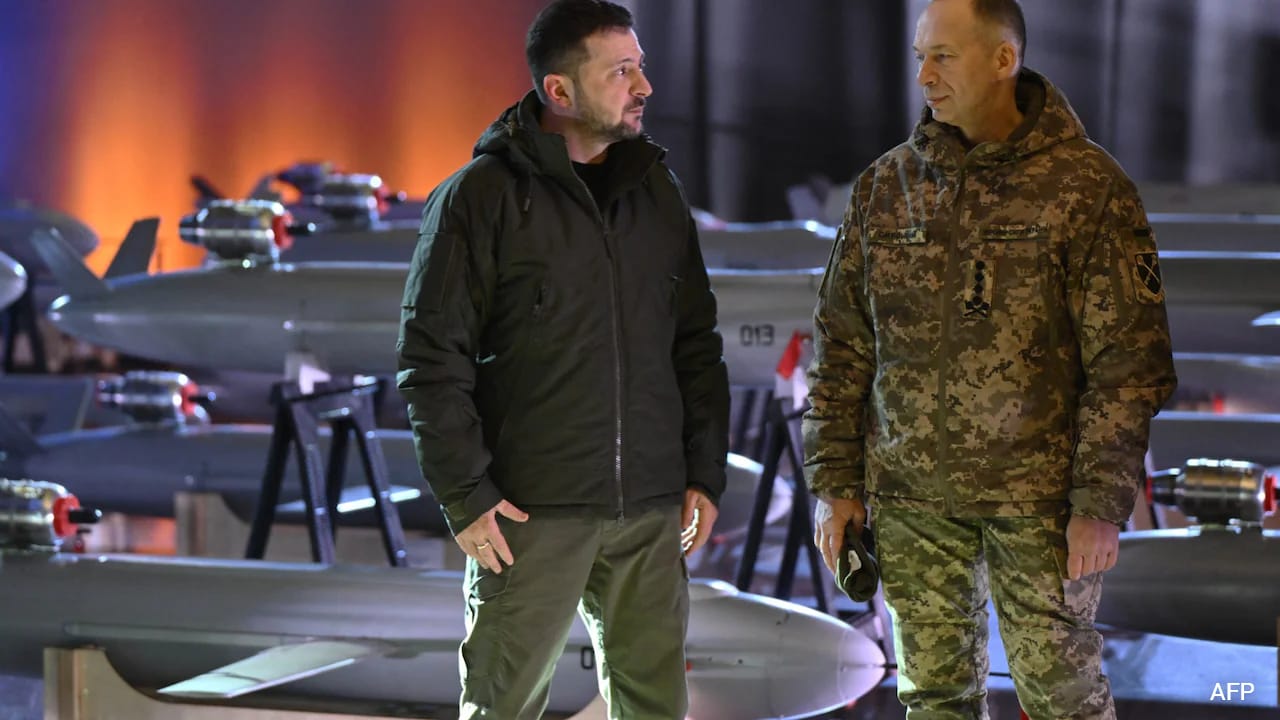
When Ukrainian President Volodymyr Zelensky decided to remove General Valeriy Zaluzhnyi from his position as head of the military, it shocked observers around the world. The move came during an intense phase of the war with Russia, pulling back the curtain on months of political friction in Kyiv.
People across the country held Zaluzhnyi in high regard. Troops knew him as the "Iron General" who helped save Kyiv in early 2022 and pushed back Russian forces in Kharkiv and Kherson. Replaced by General Oleksandr Syrskyi, the change marked the biggest shakeup in Ukraine military leadership since the full-scale invasion began.
War is brutal. Command decisions carry life-and-death consequences. Behind the public handshakes, a deep strategic split had formed between civilian leadership and military commanders over how to break a grinding frontline standstill.
Why Ukraine Zelensky Sacks Army Chief During High-Stakes Conflict
Tensions had been quietly building for over a year before the formal announcement. The core disagreement centered on strategy, public communication, and military recruitment.
The failed 2023 southern counteroffensive changed everything. Ukrainian forces faced deep Russian minefields, heavy artillery, and entrenched defenses without air superiority. Expectation was high in Kyiv and among Western allies, but progress ground to a halt. When the push failed to yield a breakthrough, blame started shifting between top officials.
[Image of Ukraine frontline map]
Communication style created another major point of friction. Zaluzhnyi published an essay in The Economist pointing out that the war had hit a technological standstill, comparing the frontline fight to the trench warfare of World War I. Zelensky publicly pushed back on that description, worried that talk of a stalemate would weaken domestic morale and prompt Western allies to slow down weapons deliveries.
Political risk was another factor. Zaluzhnyi enjoyed immense popularity among citizens, rivaling or exceeding the president's approval numbers. Though the general repeatedly insisted he had no political aspirations, figures inside the presidential administration grew increasingly wary of his public stature.
The Friction Over Mobilization Numbers
Battles are won with equipment, but holding trenches requires boots on the ground. Drafting men into combat quickly became a political flashpoint between civilian leadership and military brass.
Military commanders argued that Ukraine needed to mobilize up to 500,000 new soldiers to replenish exhausted units on the front line and build rotation cycles for weary troops. Armed forces leaders wanted aggressive recruitment policies and lower draft age limits.
Zelensky hesitated to enforce sweeping draft policies without a fully funded logistics framework. Calling up half a million men carries enormous economic costs and creates intense social strain on local communities. The president insisted that army leadership needed to present a clear plan showing how these troops would be trained, equipped, and deployed before asking the public to bear such a heavy burden.
That impasse over draft policy made a leadership change almost inevitable. Zelensky wanted new leadership willing to rethink troop rotation, modern training programs, and frontline management without demanding immediate massive mobilization figures that the nation's budget could barely sustain.
Oleksandr Syrskyi and the Battle for Morale
Replacing an icon like Zaluzhnyi required choosing a commander with a proven track record. Zelensky turned to General Oleksandr Syrskyi, who had previously served as commander of Ukrainian ground forces.
Syrskyi was no stranger to high-stakes defense. He planned the defense of Kyiv in the opening weeks of the invasion and led the swift counteroffensive in Kharkiv region during autumn 2022. He brought deep operational experience, but his leadership style differed sharply from his predecessor.
Where Zaluzhnyi was viewed as a modern commander open to decentralized tactics, critics often labeled Syrskyi as a commander accustomed to rigid, traditional Soviet-style methods. His decision to defend Bakhmut at a severe cost in personnel drew sharp criticism from some frontline soldiers and foreign military experts, who argued that holding the city was politically driven rather than strategically vital.
Taking over the top spot placed immense pressure on Syrskyi. He had to rebuild trust among fatigued frontline units, shore up defensive positions, and demonstrate to Western donors that Ukraine could still adapt its tactical approach under new command.
Battlefield Reality and the Technological Shift
Tactics on the ground changed dramatically during the war. Drones, electronic warfare, and long-range precision strikes redefined how both sides fought across the front.
Ukraine could no longer rely solely on massed infantry charges or standard artillery duels against a larger enemy. The shift in military leadership reflected a urgent need to integrate new warfighting technologies faster than before.
- First-person view (FPV) drones replaced traditional artillery barrages in many sectors where ammunition ran low.
- Electronic jamming equipment became essential for protecting armor and infantry positions from targeted aerial attacks.
- Deep-strike operations aimed at energy infrastructure and military depots inside Russian territory grew increasingly important for disrupting supply chains.
The change at the top was designed to clear out bureaucratic bottlenecks that slowed down the deployment of drone units and modern electronic defenses. The government created a dedicated Unmanned Systems Force within the armed forces to accelerate drone warfare development.
Strategic Lessons for Modern Wartime Leaders
Civilian control over the military remains a core principle in democratic nations, even during full-scale war. When political objectives and military assessments clash, the head of state holds final authority.
Managing military operations requires balancing battlefield demands with economic reality, international diplomacy, and public morale. Leaving generals to operate in a vacuum without political alignment creates dangerous splits in national messaging.
Track operational priorities closely if you follow national security or defense policy developments:
- Watch how frontline rotations are managed to assess whether new army leadership is reducing infantry exhaustion.
- Monitor draft legislation changes to see how civilian and military officials handle manpower requirements.
- Observe tactical adjustments on the ground, particularly the adoption of drone technology and defensive fortification building along contested borders.
Zelensky took a massive political and military risk by changing his top army chief during an active conflict. Whether that decision helped stabilize the front lines or created deeper internal friction depends on how effectively the current command structure adapt to shifting frontline demands and continuous shortages in hardware and personnel.