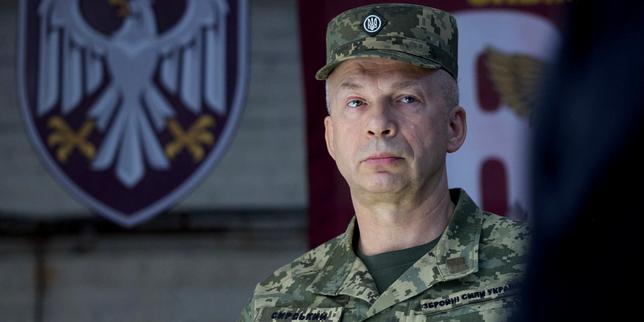
Ukrainian President Volodymyr Zelensky ousted his top military commander, General Oleksandr Syrsky, on July 21, 2026. Replacing him is 43-year-old Major General Mykhailo Drapatyi, a commander known for his field leadership and open support for rapid technological adaptation.
The high-stakes move came after a week of intense political drama in Kyiv. Public protests spilled into the streets following the abrupt firing of Defense Minister Mykhailo Fedorov, a 35-year-old technology advocate who openly clashed with Syrsky over military bureaucratic delays and drone strategy.
By replacing the 60-year-old Soviet-trained Syrsky with Drapatyi, Zelensky isn't just swapping names at the top of the chain of command. He's choosing a side in a fundamental dispute about how Ukraine must fight.
The Clash That Sparked a Political Crisis
The leadership shake-up began a week earlier when Zelensky removed Defense Minister Mykhailo Fedorov after just six months in office. Fedorov, former Minister for Digital Transformation, brought a Silicon Valley mindset to the defense department. He pushed hard for automated battlefield systems, rapid software iterations, and direct drone integration into every frontline unit.
That vision ran headfirst into General Syrsky's traditional command structure. Fedorov publicly accused Syrsky of blocking essential reforms, punishing field officers who challenged orders, and relying on outdated tactics that cost too many lives.
"Drone architecture evolves at least four times a year," Fedorov told reporters after his dismissal. "The command-and-control system has changed. We can't keep relying on what worked back then."
Syrsky defended himself publicly in a rare op-ed, expressing surprise over the conflict and offering an apology for any personal friction. But the rift had already fractured the government. Demonstrators gathered outside the presidential office in Kyiv, carrying signs demanding Syrsky's removal and calling for Fedorov's return.
Zelensky recognized that the breakdown between his civilian defense chief and top military commander was paralyzing decision-making during a crucial phase of the war.
Two Generations of Warfare
To understand why this change happened, you have to look at the massive gap in military philosophy between Syrsky and the younger generation of commanders.
Syrsky earned respect for orchestrating the defense of Kyiv in early 2022 and leading the successful Kharkiv counteroffensive later that year. He's a veteran who spent decades in traditional military structures, graduating from the Moscow Higher Military Command School in the late 1980s.
Yet his command style drew heavy criticism from soldiers on the ground. During the brutal fighting in Bakhmut and Avdiivka, troops criticized his rigid adherence to position defense and unwillingness to cede territory even when tactical retreats made operational sense. Critics dubbed him "General 200," referring to the Soviet military code for casualties.
Drapatyi represents the exact opposite approach. At 43, he belongs to a generation of Ukrainian officers whose operational experience was forged entirely in combat against Russian forces since 2014, rather than in Soviet military academies.
Who Is Major General Mykhailo Drapatyi
- Early Prominence: Drapatyi first gained national attention in May 2014 during the defense of Mariupol, when video captured his infantry fighting vehicle smashing through a pro-Russian barricade.
- Frontline Repair: In 2024, he was brought in to stabilize the northeastern Kharkiv front after Russian forces launched a surprise border crossing, successfully halting their momentum.
- Command Ethos: He commanded the Ground Forces and Joint Forces, earning a reputation for taking accountability. In 2025, he briefly offered his resignation following a Russian strike on a training area, stating that senior officers must take personal responsibility for systemic failures.
When news of Fedorov's dismissal broke, Drapatyi didn't stay silent. He publicly noted that military change without justice makes no sense to the soldiers carrying the war on their shoulders every day.
What Changes on the Ground Right Now
Drapatyi's appointment signals a direct alignment between the top military leadership and Ukraine's long-range drone program.
Over recent months, Ukrainian deep-strike operations against Russian oil refineries, ammunition depots, and airfields have inflicted heavy financial and logistical damage on Moscow. Fedorov built much of the technological pipeline that enabled those strikes. With Drapatyi taking command, the military hierarchy will integrate these unmanned strategies directly into general planning rather than treating them as auxiliary support.
This means several immediate operational pivots are underway:
Accelerated Drone Integration
Unit commanders will get more autonomy to procure and deploy custom electronic warfare gear and strike drones without waiting weeks for central approval from Kyiv.
Decentralized Command
Younger brigade leaders who demonstrated initiative in recent defensive operations will likely move into senior operational roles within the General Staff.
Emphasis on Troop Survival
Drapatyi has repeatedly stressed that holding a line on paper means nothing if it destroys the combat effectiveness of a brigade. Expect more flexible maneuver tactics rather than static defense of compromised positions.
Concrete Steps for Ukraine's New High Command
The immediate burden on Drapatyi is heavy. He must calm internal tensions, restore confidence among infantry units, and maintain momentum along a 1,200-kilometer frontline.
Here is what the new leadership must execute immediately to stabilize the military structure:
- Rebuild the Defense Ministry Partnership: Drapatyi must establish a seamless working link with whoever permanently fills the defense minister position, ensuring technology procurement matches tactical frontline needs.
- Streamline Bureaucracy: Eliminate redundant approval layers inside the General Staff that delay field modifications for electronic warfare units.
- Formalize Unit Rotations: Rest structure around the newly formed corps to ensure exhausted frontline brigades receive predictable rest cycles rather than piecemeal reinforcements.
- Expand Long-Range Strike Capabilities: Direct more resources toward deep precision strikes targeting Russian logistics networks, reducing pressure on defensive lines.
Zelensky took a massive political risk by shaking up the military command during active combat. By picking a respected commander from the younger generation, he bet that flexibility and technological speed will matter far more than traditional military hierarchy in the months ahead.