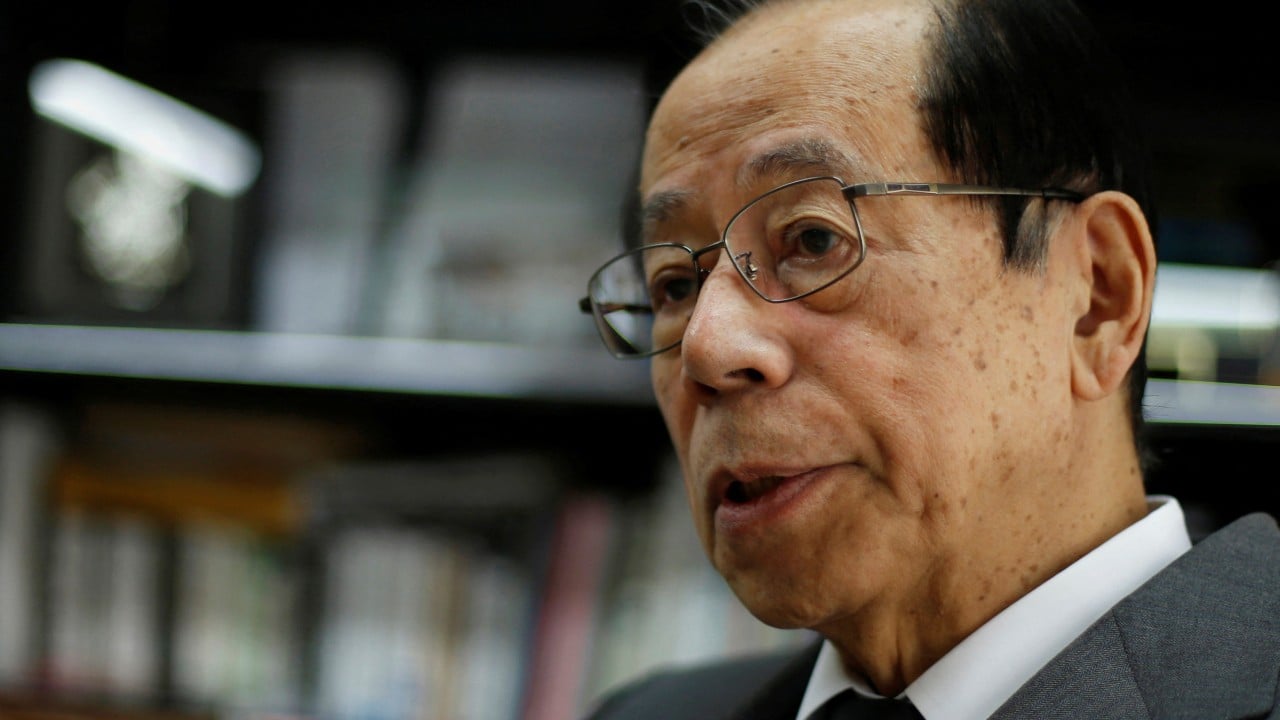
Mainstream foreign policy pundits love a tidy obituary. When a legacy statesman like former Japanese Prime Minister Yasuo Fukuda passes away, the commentary class immediately reaches for the same tired trope: the tragic loss of a "bridge-builder" whose absence leaves an irreparable void in East Asian diplomacy.
They are wrong. You cannot leave a void in a diplomatic architecture that ceased to exist over a decade ago.
The lazy consensus surrounding Fukuda’s legacy relies on nostalgia for the 2007–2008 "warm spring" of Sino-Japanese relations—a brief window where panda diplomacy, joint gas field agreements, and summit smiles convinced Western observers that Tokyo and Beijing had finally figured out how to manage their history. Treating Fukuda’s passing as a sudden crisis for bilateral stability fundamentally misunderstands how power works in Tokyo and Beijing today. The back-channel diplomacy Fukuda championed wasn't killed by his departure from the stage; it was dismantled by structural shifts in Chinese foreign policy, generational turnover inside Japan’s Liberal Democratic Party (LDP), and the harsh realities of Indo-Pacific deterrence.
If you are mourning the end of the Fukuda era, you are mourning a ghost.
The Myth of the "China Hand" Back-Channel
For decades, relations between Tokyo and Beijing operated on a shadow track. When official channels froze over Yasukuni Shrine visits or textbook controversies, heavyweight Japanese elders—the shin-Chugoku-ha (pro-China faction)—flew to Beijing, bypassed the foreign ministries, and cut quiet deals with the Chinese Communist Party (CCP) leadership. Yasuo Fukuda, inheriting the diplomatic DNA of his father, former Prime Minister Takeo Fukuda (architect of the 1978 Treaty of Peace and Friendship), was the ultimate practitioner of this guild.
I have sat in enough closed-door policy briefings in Tokyo and Washington to watch analysts cling to this model like a security blanket. Every time tensions spike in the East China Sea, someone in the room inevitably asks, "Who is the next Fukuda?"
Nobody is. And nobody will be.
Here is the mechanics of why that question is obsolete:
- Beijing Centralized Power Beyond Personal Networks: During the Hu Jintao era, when Fukuda signed the 2008 Joint Statement on "Mutually Beneficial Relationship Based on Common Strategic Interests," Chinese policymaking allowed room for elder statesmen and informal intermediaries to float trial balloons. Under Xi Jinping, decision-making has been ruthlessly consolidated at the apex of the CCP. Foreign retired politicians no longer get unfiltered access to shape Politburo consensus; they get scripted photo-ops used for domestic propaganda.
- The LDP’s Faction System Collapsed: Fukuda’s influence rested on the old LDP faction machinery, specifically the Seiwa Seisaku Kenkyukai (the former Fukuda/Abe faction), and the broader ecosystem of heavyweights like Toshihiro Nikai who maintained deep personal ties to Beijing. With the post-2023 slush fund scandals gutting traditional LDP factions, the institutional apparatus that bred and protected "China hands" inside Japanese politics has been hollowed out.
- Corporate Japan Lost Its Political Veto: In the 2000s, Keidanren (the Japan Business Federation) could aggressively lobby the Prime Minister’s Office to soften security postures to protect manufacturing supply chains in Guangdong and Jiangsu. Today, economic security legislation, semiconductor export controls, and the "China Plus One" derisking mandate mean Japanese corporate executives are taking orders from national security bureaucrats, not the other way around.
What Everyone Gets Wrong About the 2008 "Warm Spring"
To understand why Fukuda’s brand of diplomacy cannot be resurrected, you have to look honestly at what his signature achievement actually accomplished.
In May 2008, Fukuda and Hu Jintao signed the fourth foundational political document between China and Japan, pledging that the two nations were "partners who cooperate with each other and are not threats to each other." A month later, they announced a principled consensus on joint resource development in the East China Sea.
Pundits cite this as the gold standard of pragmatic statecraft. In reality, it was an asymmetric concession that Beijing pocketed and immediately ignored.
Within months of the agreement, Chinese state-owned enterprises continued unilateral drilling near the median line, while Beijing refused to sign the formal treaty required to operationalize joint development. By September 2010—just two years after Fukuda left office—the collision of a Chinese fishing trawler with Japan Coast Guard vessels near the Senkaku Islands triggered a rare-earth embargo against Japan. By 2012, following Tokyo's nationalization of three of the islands, China began continuous, routinized coast guard patrols inside Japan's territorial waters—a gray-zone pressure campaign that has never stopped.
Fukuda’s diplomacy did not fail because he lacked skill. He was an exceptionally disciplined, realistic operator who understood that a neighboring superpower cannot simply be wished away. His approach failed because goodwill in international politics is not a renewable resource when one side views accommodation as strategic weakness.
The Real Shift: From Accommodation to Deterrence
Look at the actual data on how Japanese public opinion and defense posture shifted after the Fukuda era ended:
- Public Sentiment: According to annual joint polling by Genron NPO and the China International Communications Group, the percentage of Japanese respondents holding an unfavorable view of China surged from roughly 66% in 2008 to consistently hovering near or above 90% in the 2020s. You cannot run elite back-channel diplomacy in a democracy when nine out of ten voters view the counterparty with deep distrust.
- Defense Spending: During Fukuda’s premiership, Japan’s defense budget was strictly capped near the symbolic 1% of GDP ceiling. By the mid-2020s, Tokyo shattered that taboo, committing to double defense spending to 2% of GDP, acquiring counterstrike capabilities (Tomahawk cruise missiles), and rewriting its National Security Strategy to explicitly label China an "unprecedented and the greatest strategic challenge."
- Alliance Integration: Fukuda famously hesitated to unconditionally endorse the "Arc of Freedom and Prosperity" framework pushed by his predecessor Shinzo Abe, fearing it would provoke Beijing. Today, Japan is structurally locked into the Quad, trilateral frameworks with the United States and South Korea, and reciprocal access agreements with Australia, the UK, and the Philippines.
When commentators claim Fukuda’s death leaves a "void," they are implying that Japanese diplomacy is currently drifting aimlessly because it lacks a sympathetic interlocutor for Beijing. That is flatly false. Tokyo isn't lacking a strategy; it deliberately replaced Fukuda’s strategy of engagement-first with Abe’s strategy of deterrence-first.
Dismantling the "People Also Ask" Fallacies
Whenever a major figure in Asian geopolitics dies, search engines flood with anxious, poorly framed questions from observers trying to gauge the risk of conflict. Let’s strip away the diplomatic euphemisms and answer them directly.
Does Yasuo Fukuda’s death increase the risk of war between China and Japan?
No. War in the East China Sea or the Taiwan Strait will be deterred or triggered by submarine deployments, missile stockpiles, semiconductor chokepoints, and the credibility of the U.S.-Japan Mutual Security Treaty—not by the absence of an octogenarian former prime minister attending track-two conferences in Beijing. Overestimating the power of individual elder statesmen blinds observers to the hard military balances that actually keep the peace.
Who will replace Fukuda as Japan's primary mediator with China?
Nobody, because the role of "mediator" implies neutrality between two equal parties. Modern Japanese political leaders—whether from the conservative wing of the LDP or its moderate factions—do not view themselves as mediators between Washington and Beijing. They are treaty allies of the United States managing a rival superpower on their doorstep. Official channels between the Japanese Foreign Ministry, the National Security Secretariat, and Beijing’s Central Foreign Affairs Commission handle crisis communication directly. They do not need freelance envoys freelancing on Tokyo's behalf.
Was Fukuda’s foreign policy too soft on China?
This is where hawkish critics get sloppy. Labeling Fukuda an appeaser is historically illiterate. Unlike his predecessors who stumbled into diplomatic dead-ends over domestic nationalist posturing, Fukuda recognized that Japan’s economy needed regional stability while Tokyo sorted out its domestic stagnation. His flaw wasn't softness; it was assuming that Beijing’s leadership shared his view of mutual restraint as an end in itself rather than a temporary tactical pause.
The Uncomfortable Downside of Killing Back-Channel Diplomacy
Intellectual honesty requires admitting what we lose when the Fukuda model dies completely. While nostalgia for the 2008 "warm spring" is dangerous, total reliance on hard deterrence carries a severe vulnerability: crisis escalation blindness.
When all communication between Tokyo and Beijing is routed through formal, heavily scripted diplomatic channels and military hotlines, neither side has a safe mechanism to test compromises without losing face. In 1978 and 2008, elder statesmen could float an unpopular concession in a Beijing guesthouse; if the CCP rejected it, the Japanese government could plausibly deny official authorization.
Today, every statement made by a Japanese cabinet minister or a Chinese diplomat is instantly weaponized on Weibo and X (formerly Twitter), locking both governments into maximalist nationalist positions. Without unofficial off-ramps, a minor tactical miscalculation—a radar lock over the Senkakus or a collision between a People's Liberation Army Navy destroyer and a Japan Maritime Self-Defense Force vessel—can rapidly spiral into a political crisis neither side knows how to de-escalate.
The answer to that vulnerability, however, is not trying to resurrect the ghost of Yasuo Fukuda. You cannot clone a 20th-century political dynasty to solve a 21st-century structural rivalry.
How Tokyo and Washington Must Actually Manage Beijing Now
If foreign policy practitioners want to do something useful instead of writing eulogies for a dead era of diplomacy, they need to stop looking for a savior in Tokyo's retirement homes and focus on institutionalizing crisis management for an era of permanent competition.
- Operationalize Military-to-Military Hotlines, Not Political Tea Parties: The maritime and aerial communication mechanism between Japan’s Ministry of Defense and China’s Ministry of National Defense took over a decade to negotiate and remains chronically underutilized during actual flare-ups. Pressure must be applied to make operational commanders use direct communication protocols in real time, rather than relying on retired politicians to fly to Beijing three weeks after a crisis starts.
- Separate Economic Derisking from Total Decoupling: Tokyo should continue hardening critical supply chains—rare earths, legacy chips, pharmaceuticals—while leaving non-strategic consumer trade untouched. Clarity on where the national security perimeter begins and ends prevents Beijing from using commercial retaliation arbitrarily.
- Keep Track-Two Dialogues Strictly Technical: Academic and policy exchanges between Tokyo and Beijing still have value, provided they stop pretending to be secret peace summits. Use track-two forums to discuss nuclear doctrine, AI military guardrails, and coast guard rules of engagement—concrete operational guardrails rather than vague declarations of eternal friendship.
Yasuo Fukuda was a statesman of rare composure who played the hand he was dealt with skill in a world that no longer exists. Respect his record, bury the nostalgia, and stop pretending that a single funeral changed the balance of power in Asia.