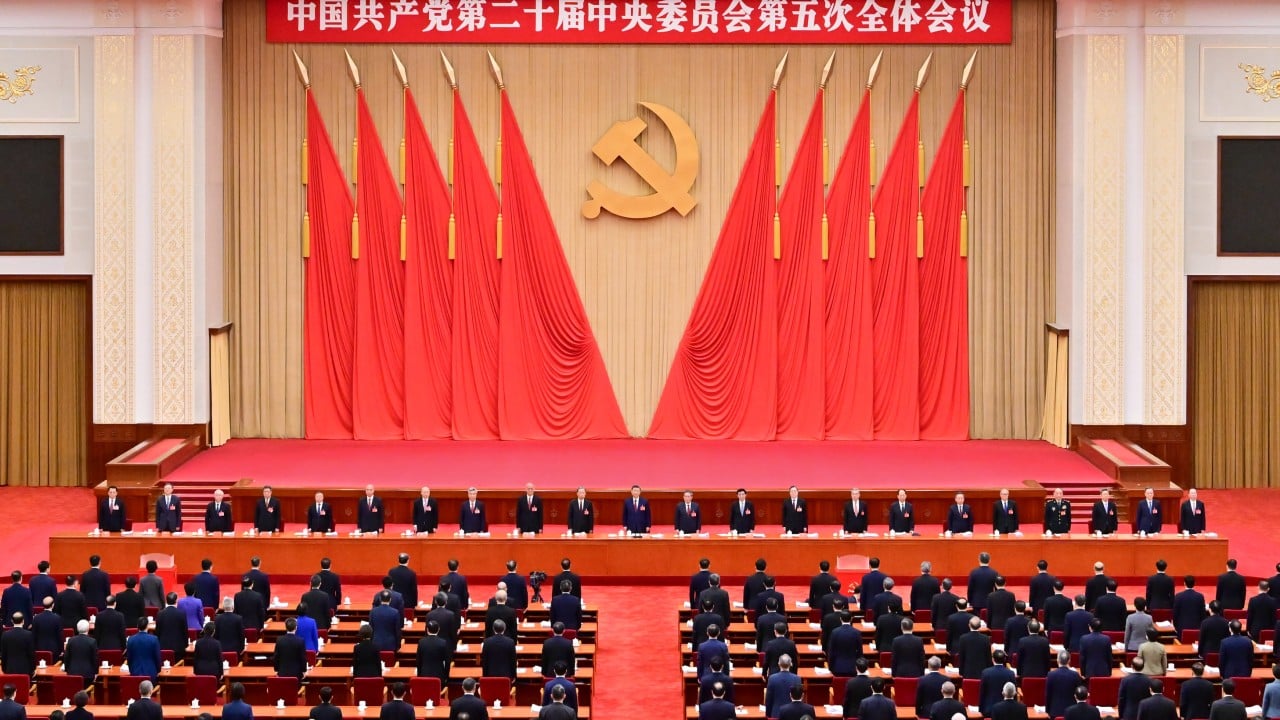
Mainstream diplomatic reporting treats summit attendance like high school roll call. When reports surfaced that Chinese President Xi Jinping might skip the ASEAN Summit in Manila, wire services and geopolitical commentators immediately dusted off the same tired script: it is a snub, a sign of deteriorating South China Sea tensions, or an admission of diplomatic weakness in the face of Manila's alignment with Washington.
That reading gets the mechanics of Indo-Pacific statecraft completely backward.
In Beijing’s diplomatic playbook, physical absence from a multilateral forum hosted by a rival claimant is rarely an act of avoidance. It is a calculated exercise in asymmetric leverage. By potentially declining to appear on Philippine soil, Xi Jinping is not retreating from Southeast Asia; he is refusing to grant host-nation legitimacy to President Ferdinand Marcos Jr. while simultaneously reminding the rest of the Association of Southeast Asian Nations where the actual center of economic gravity sits.
The Myth of Multilateral Optics
Watch enough international summits and you start seeing the pattern. Western media outlets obsess over the "family photo"—who stands next to whom, who shakes hands on the tarmac, and who sends a premier instead of a president. Analysts routinely burn millions of words dissecting seating charts as if proximity on a stage dictates trade flows or naval deployments.
It doesn't.
When a Chinese head of state skips an ASEAN-related summit, the lazy consensus frames it as Beijing isolating itself. Look closer at the historical record. At the 2023 East Asia Summit in Jakarta, Premier Li Qiang attended in Xi’s place. Did Beijing’s influence across Southeast Asia evaporate? Not remotely. Bilateral trade between China and ASEAN continued to outpace ASEAN's trade with the United States and the European Union, anchored by the Regional Comprehensive Economic Partnership (RCEP) and deep supply-chain integration across Vietnam, Malaysia, and Indonesia.
The misconception stems from assuming that Beijing values multilateral validation the same way Washington does. For the United States, showing up to ASEAN summits is essential proof of commitment because American power in the region is largely security-based and alliance-driven; if the U.S. president skips, allies worry about abandonment. China is a permanent geographic neighbor with inescapable economic gravity. Beijing does not need a podium in Manila to prove it is in the room.
Why Manila Is the Wrong Stage for Beijing
To understand why Xi Jinping would bypass a Manila summit, you have to look at the host's incentives, not just the guest's.
Under the Marcos Jr. administration, the Philippines has fundamentally shifted its South China Sea strategy. Instead of quiet bilateral management, Manila has embraced "assertive transparency"—publishing high-resolution footage of China Coast Guard water-cannon incidents at Second Thomas Shoal and Sabina Shoal, expanding U.S. military access under the Enhanced Defense Cooperation Agreement (EDCA), and hosting trilateral summits with Washington and Tokyo.
If Xi Jinping flies to Manila, he walks directly onto a stage curated by a government actively internationalizing the South China Sea dispute. Every camera lens in the press pool would focus on the handshake between Xi and Marcos, framing the Chinese leader as either walking into a diplomatic ambush or validating Manila's narrative of standing toe-to-toe with a superpower.
Skipping the trip denies Marcos Jr. that domestic and international photo-op. Sending Premier Li Qiang—the official constitutionally responsible for economic management and routine multilateral diplomacy—allows Beijing to engage with the other nine ASEAN members on trade, infrastructure, and green energy without elevating the bilateral friction with Manila to the head-of-state level.
How Beijing Actually Splits the ASEAN Consensus
Critics of this view argue that Xi’s absence hands a free propaganda victory to the United States and allows the Philippines to rally ASEAN unity against Chinese maritime claims.
That argument misunderstands how ASEAN operates. ASEAN runs on strict consensus, and its ten members do not share a unified threat perception regarding China.
- The Maritime Claimants: The Philippines and, to a lesser, quieter degree, Vietnam have direct territorial overlaps with China's nine-dash (or ten-dash) line.
- The Economic Pragmatists: Indonesia, Malaysia, and Thailand maintain vast commercial, infrastructure, and industrial ties with Beijing. Malaysian Prime Minister Anwar Ibrahim has repeatedly pushed back against Western pressure to treat China as an adversary, emphasizing non-alignment and economic cooperation.
- The Continental Partners: Cambodia and Laos rely heavily on Chinese capital, Belt and Road infrastructure, and political backing.
When Xi stays in Beijing and hosts individual ASEAN leaders bilaterally—rolling out the red carpet at the Great Hall of the People for prime ministers from Kuala Lumpur, Jakarta, or Hanoi—he deals with them one-on-one, where China’s economic asymmetry is absolute. In a multilateral hall in Manila, China is one voice among many, subject to joint communiqués and collective framing. In Beijing, China sets the agenda, controls the protocol, and signs the checks.
As Singaporean diplomat and scholar Bilahari Kausikan has long observed, Southeast Asian states are acutely aware of the realities of power in their neighborhood; they will not sacrifice their economic lifelines for abstract Western principles, nor will they allow any single dispute to derail their broader development goals.
What Observers Get Wrong About "Diplomatic Isolation"
Let's address the core questions people actually ask when headlines like this drop—and dismantle the flawed assumptions baked into them.
Does skipping the summit weaken China's position in the South China Sea?
No. Maritime control in the South China Sea is determined by persistent physical presence, coast guard hulls, logistics hubs on artificial islands, and escalation dominance—not by summit attendance. Beijing has spent over a decade building dual-use runways, radar arrays, and deep-water ports across the Spratly and Paracel islands. Whether Xi Jinping attends a three-day conference in Manila changes zero facts on the water.
Is this a sign of domestic instability in Beijing?
Every time Xi Jinping skips an international gathering—whether the G20 in New Delhi in 2023 or an ASEAN summit in Manila—commentators speculate about internal purges, economic stress, or health issues. While domestic economic headwinds in China, such as the property sector downturn and local government debt, demand intense leadership focus, selective foreign travel is a deliberate filter. Xi prioritizes summits where China shapes the architecture—like BRICS expansions, Shanghai Cooperation Organization meetings, or the Forum on China-Africa Cooperation—over forums hosted by U.S. treaty allies.
Doesn't absence give Washington an uncontested field?
Washington’s presence at ASEAN summits has been inconsistent across administrations, and even when top U.S. officials attend, Southeast Asian leaders routinely note the gap between American security rhetoric and American market access. The United States has not joined RCEP or the Comprehensive and Progressive Agreement for Trans-Pacific Partnership (CPTPP). As long as Washington declines to offer broad tariff reductions and trade agreements, showing up to Manila with security pledges alone will not displace Chinese economic centrality.
The Real Risk to Beijing's Strategy
Acknowledging the logic behind a potential skip does not mean the tactic is without cost. The downside to Beijing's selective absence is cumulative alienation among Southeast Asian publics and younger policy elites.
When China relies heavily on bilateral muscle and coast guard coercion while skipping regional forums hosted by smaller neighbors, it reinforces the perception that Beijing views ASEAN as a collection of subordinate markets rather than an equal regional institution. Over time, that perception erodes soft power. Polling by the ISEAS–Yusof Ishak Institute in Singapore has consistently shown deep-seated anxiety among Southeast Asian respondents over China's growing strategic and economic clout, even when they acknowledge its economic necessity.
If Beijing appears unwilling to face uncomfortable rooms, it risks pushing fence-sitting nations toward quieter, deeper hedging—buying more defense hardware from South Korea, Japan, and Europe, and welcoming more frequent joint patrols in regional waters.
Stop Reading Summits Like Scoreboards
If you analyze geopolitics, corporate risk, or regional supply chains in Asia, stop treating summit guest lists as a scoreboard of diplomatic wins and losses.
- Track Premier-level travel, not just Presidential travel. In the Chinese system, the Premier runs the economic engine. Where Li Qiang goes, capital, customs agreements, and industrial supply chains follow.
- Watch bilateral visits to Beijing. The real temperature of China-ASEAN relations is measured by which Southeast Asian leaders fly to Beijing in the months immediately before and after a summit, and what infrastructure or green-tech deals they sign while there.
- Separate rhetoric from maritime reality. Joint statements in Manila will call for restraint and adherence to international law, including the 1982 UN Convention on the Law of the Sea (UNCLOS). Meanwhile, coast guard deployments and gray-zone patrols will continue uninterrupted until a binding Code of Conduct is actually signed—a document that has remained stalled for over two decades.
Xi Jinping does not need a plane ticket to Manila to shape the future of Southeast Asia. If he stays home, it will not be because he lacks the diplomatic capital to show up—it will be because he has already calculated that the host needs the photo far more than he does.