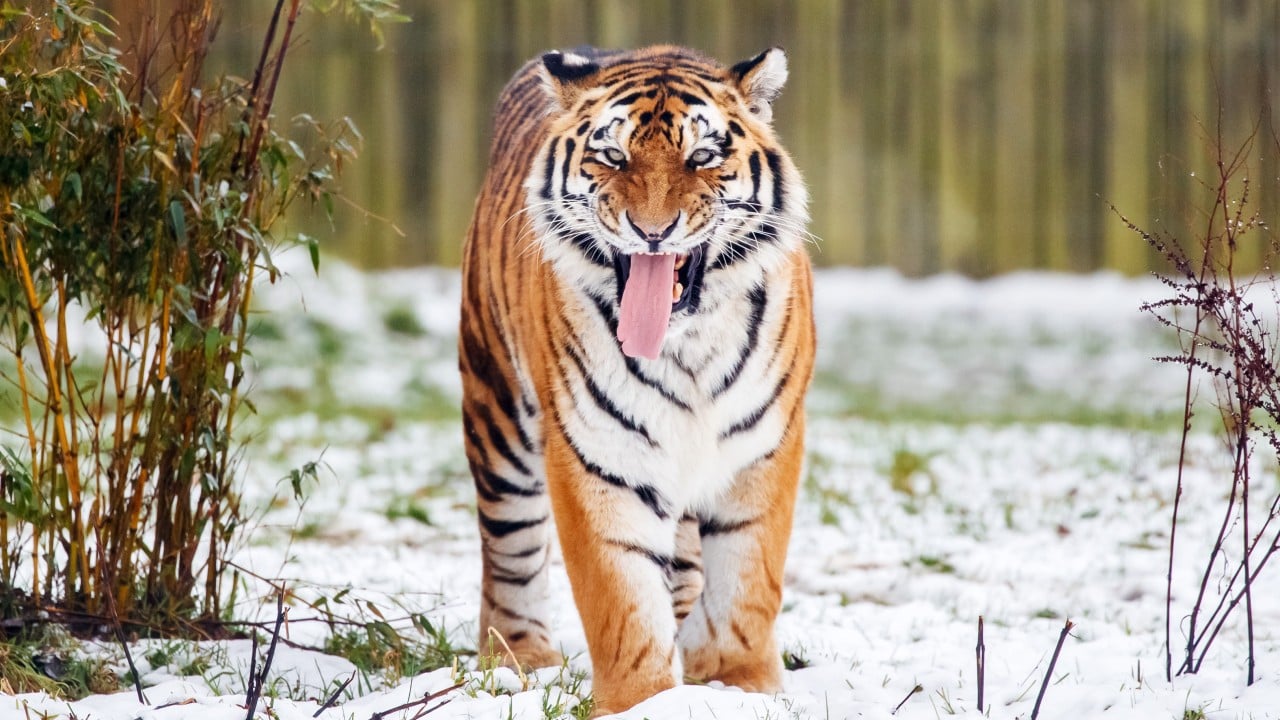
Safety barriers exist for a reason. Too often, people treat them as optional guidelines rather than hard limits protecting them from apex predators. When someone breaches a big cat enclosure at a wildlife park, the outcome rarely leaves room for second chances.
Wildlife park security protocols are built around predictable animal behavior and basic human restraint. When human error or reckless behavior enters the equation, systems fail instantly. Let's look at why these incidents happen, how modern zoos handle high-security habitats, and what needs to change to protect both humans and captive wildlife. For another look, consider: this related article.
The Anatomy of a Zoo Security Breach
Zoos don't just put up standard chain-link fences and hope for the best. Modern enclosures rely on layers of psychological and physical deterrents. You usually find deep dry moats, electrified wires, thick laminated glass viewing panes, and double-gate airlock systems for keepers.
Despite these measures, breaches still happen. Most incidents trace back to intentional rule-breaking. Visitors climb fences, bypass warning signs, or ignore staff instructions to get a better photo or feed an animal. Captive big cats like tigers aren't domesticated house pets. They operate on raw predatory instinct. When an unauthorized person steps into their territory, the animal reacts to an intruder in its domain. Similar analysis on the subject has been published by The Washington Post.
Years ago, high-profile incidents at facilities like the Cincinnati Zoo or various international wildlife parks showed how quickly a controlled environment turns catastrophic. The margin for error stands at zero. A tiger can cross a thirty-foot enclosure in seconds, leaving keepers and security personnel with milliseconds to respond.
Understanding Captive Tiger Behavior
Wild animals in captivity live in heavily structured environments. They know their feeding schedules, their territory boundaries, and the presence of familiar keepers. When a stranger invades that space outside of normal protocols, it triggers defensive or predatory aggression.
Many people assume zoo animals lose their edge. That belief gets people killed. A tiger maintains every ounce of its raw evolutionary power, powerful bite force, and lightning-fast reflexes regardless of whether it was born in a concrete habitat or the wild.
Keeper protocols emphasize strict separation for a reason. Experienced staff members follow rigorous drills every single day to ensure doors lock before entry. Visitors lack this training, lack situational awareness, and completely underestimate the speed and agility of a large feline.
The Legal and Ethical Aftermath
Every time a security breach ends in tragedy, a fierce public debate follows. People immediately point fingers at the facility, demanding stricter barriers or questioning why the animal had to be put down to save an intruder.
Zoological institutions face intense scrutiny over enclosure design. Regulators check whether perimeter fencing meets international standards set by organizations like the Association of Zoos and Aquariums. If a facility shows negligence, the legal consequences are severe.
Yet, shifting all blame to the zoo ignores personal responsibility. Zoos operate under the assumption that adult humans possess basic common sense. When someone chooses to scale a perimeter fence, they override every safeguard engineered to keep them alive.
The ethical dilemma surrounding the animal's fate hits hard every time. Conservationists rightly point out that the tiger committed no crime by acting on natural instincts inside its own home. Killing an endangered animal because a visitor broke the rules is a tragic double loss.
How Modern Facilities are Upgrading Security
Forward-thinking wildlife parks are moving away from traditional wire barriers entirely. Heavy-duty laminated glass provides crystal-clear viewing while creating an impenetrable wall between visitors and predators.
Motion-sensor cameras and automated alarms now monitor buffer zones. If a visitor crosses a primary safety line, automated alerts notify security teams immediately, cutting response times down to seconds.
Public education also plays a massive role. Clear, blunt signage works better than polite requests. People need to understand that ignoring zoo boundaries has lethal consequences.
Protecting wildlife and keeping the public safe requires a strict zero-tolerance approach to boundary violations. If you visit a wildlife park, respect the barriers. The fences aren't there to ruin your photos. They are there to keep you alive.