The dust in Ouagadougou does not settle; it merely waits. It hangs in the dry Sahelian air, coating the windshields of military pickups and the steps of the mosques, a silent witness to a quiet, fracturing peace. For months, the capital of Burkina Faso has operated under a tense equilibrium. The young soldiers who seized power in the September 2022 coup promised security, sovereignty, and a return to dignity. But dignity is a fragile currency when the state begins to turn its gaze inward, transforming former ideological allies into immediate liabilities.
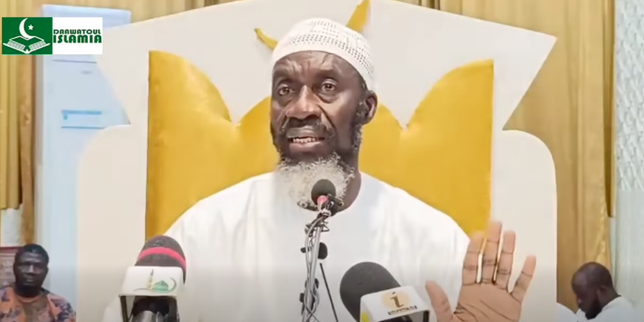
The arrest of a prominent, ultra-conservative Wahhabi imam in the heart of the country has shattered the carefully curated illusion of a unified front. This was not just a routine law enforcement action. It was a tremor that exposed the deep, structural fault lines running straight through the heart of Captain Ibrahim Traoré’s ruling military junta. Discover more on a connected issue: this related article.
To understand how a single religious figure could destabilize a heavily armed government, one must look past the official press releases and enter the cramped, high-stakes corridors of Sahelian politics.
The Alliance Born of Desperation
When Captain Traoré took the reins of power, he did not just inherit a country; he inherited a multi-front war against jihadist insurgencies that had already swallowed more than forty percent of Burkina Faso's territory. The state was bleeding. The conventional military was exhausted, outmaneuvered, and desperate for structural support. More reporting by TIME highlights comparable perspectives on the subject.
In this climate of existential survival, the junta looked for leverage wherever it could find it.
Consider the anatomy of a grassroots mobilization. The military needed eyes on the ground, cultural legitimacy, and a pipeline of young men willing to join the Volontaires pour la défense de la patrie (VDP)—the civilian auxiliary militias that now form the backbone of the state’s counter-insurgency strategy. The traditional, secular elite in the capital could not provide this.
But the conservative religious leaders could.
For a time, an unwritten pact existed. The junta granted these influential, hardline religious figures a long leash, allowing them to preach their rigorous interpretations of Islam with unprecedented freedom. In return, these leaders used their massive pulpits to legitimize the military regime, framing the fight against insurgent groups not just as a nationalist duty, but as a moral imperative. It was an alliance of convenience, forged in the fires of a national crisis.
Then, the preaching changed.
The Line in the Sahelian Sand
The trouble with leveraging religious fervor for political stability is that faith rarely obeys the shifting boundaries of state policy. Over the recent months, the rhetoric radiating from certain conservative mosques began to pivot. The critique was no longer just aimed at the foreign terrorists in the bush or the former colonial powers in Europe. It started to creep closer to home.
The arrested imam, a man whose words carry immense weight across thousands of followers in the urban peripheries, began to openly question the junta’s strategic direction. He critiqued the secular nature of the state's administration. He questioned the rising influence of foreign secular mercenaries, specifically the Russian paramilitary forces that the junta had brought in to replace French troops.
In a military regime, criticism does not sound like political dissent. It sounds like treason.
The junta's reaction was swift, silent, and severe. The imam was taken. No grand public trial. No lengthy explanation broadcast on the national television network, RTB. Just a sudden absence where a powerful voice used to be.
But a voice that loud cannot be silenced without creating a vacuum. Almost immediately, the murmurs began in the markets of Ouagadougou and the military barracks of Bobo-Dioulasso.
The Fractured Barracks
The real danger for Captain Traoré does not lie in a popular uprising on the streets. The true peril is much closer, sitting at the desks next to him.
The Burkinabè military is not a monolith. It is a complex ecosystem of competing factions, generational divides, and varying ideological loyalties. Within the lower ranks—the young soldiers and non-commissioned officers who actually executed the coup—sympathies for religious conservatism run deep. Many of these soldiers come from the very regions hardest hit by the conflict, areas where strict religious identity has become a shield against chaos.
By arresting a figurehead of this conservative movement, the junta leadership has inadvertently thrown a match into a room filled with fumes.
Imagine a young officer, stationed at an isolated outpost in the north, listening to a recording of the imam’s sermon on his phone, only to learn the next morning that the government he risks his life for has locked that preacher away. The internal calculation changes instantly. Trust evaporates. The question shifts from "How do we defeat the enemy?" to "Who, exactly, is the government protecting?"
This internal friction is the invisible crisis plaguing the junta. The arrest has alienated a crucial segment of the military’s own support base, creating an atmosphere of intense paranoia within the presidential palace. Security cordons around Captain Traoré have tightened. Rumors of counter-coup plots drift through the city like harmattan dust.
The Mirage of Absolute Control
The regime's current strategy relies heavily on a narrative of absolute control and uncompromising nationalism. Every setback is blamed on external manipulation or internal saboteurs. But this latest domestic crackdown reveals a deeper, more troubling reality: the state is running out of partners.
When you alienate the secular political class, jail civil society activists, crack down on independent journalists, and finally, arrest the religious leaders who helped you secure popular legitimacy, you find yourself on a very small, very lonely island.
The state’s iron fist is efficient at removing immediate threats, but it cannot govern the space left behind. Every arrest requires more guards. Every suppressed sermon requires more surveillance. The resources diverted to maintaining internal regime security are resources stolen from the actual frontlines of the war against the insurgents, who watch these developments from the fringes with quiet satisfaction.
The Echoes in the Night
As evening falls over Ouagadougou, the neon lights of the roadside stalls flicker against the darkening sky. On the surface, the city moves with its usual, frantic energy. Motorbikes weave through traffic; the smell of grilled meat and exhaust fumes fills the air.
But beneath the noise, the silence of the missing imam is deafening.
In the neighborhoods where his sermons used to echo through tin-horn loudspeakers, groups of men sit on plastic chairs, speaking in hushed, hurried tones. They are watching the military patrols pass by with a new expression—not of reverence, or even of fear, but of profound calculation.
The junta wanted to send a clear message that no one is above the state. Instead, they may have simply demonstrated how fragile the state's foundations truly are, proving that the most dangerous enemies to a regime are often the ones it helped create.