Western finger-pointing over India purchasing Russian oil just hit a massive reality check. For years, European commentators and political figures have tried to guilt-trip New Delhi for refusing to stop its energy trade with Moscow. But that narrative completely fell apart during the Kultaranta Talks in Finland, and it happened in the most unexpected way possible.
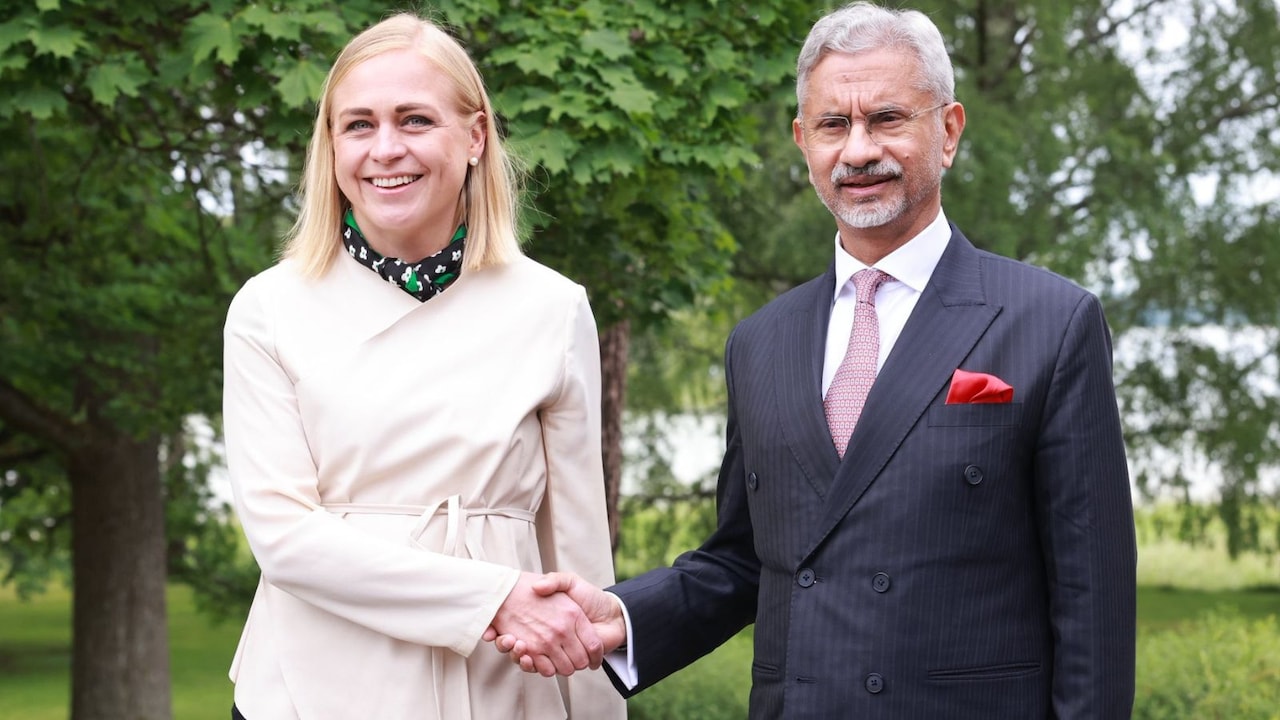
Finland Foreign Minister Elina Valtonen openly defended India's actions. Sitting right next to India External Affairs Minister S. Jaishankar, Valtonen stated bluntly that India has operated entirely within the rules of the Western-imposed price cap.
"In India's defence, it has bought oil under the price cap. That was the intention," Valtonen remarked during a panel discussion.
This admission punctures the regular waves of criticism leveled against New Delhi. It reveals a truth that Western capitals often prefer to ignore in public. The system was engineered to keep Russian crude flowing to prevent a global economic meltdown, and India simply played the game exactly how the West drew it up.
The Real Rules of the Western Energy Game
Let's strip away the moral posturing and look at how the energy markets actually function. When the G7 and its allies implemented the $60-per-barrel price cap on Russian crude, they weren't trying to cut off Russian oil completely.
If Russian oil vanished overnight, global supply would crater. Prices would skyrocket past $150 a barrel, triggering global inflation and a catastrophic recession.
Valtonen explicitly acknowledged this reality. She explained that when the West introduced the oil price cap, they never prohibited the world from buying Russian oil. The main target was to avoid disrupting the oil market while squeezing Russia's profit margins.
By purchasing oil below that cap, India helped achieve both goals. It kept global energy supply stable while denying Moscow the massive windfall profits it would have made at peak market rates.
Europe Created the Shortage India Had to Fill
During the same panel, Jaishankar didn't hold back when addressing the structural hypocrisy of the European position. He pointed out a basic mathematical reality of supply and demand that Western critics conveniently overlook.
When European nations swiftly cut themselves off from Russian pipeline oil and gas, they rushed to the Middle East to secure alternative supplies. That sudden shift forced prices up and effectively crowded developing nations out of their traditional supply chains.
"I buy oil based on cost and availability," Jaishankar said, explaining the pragmatic calculation. He noted that much of the available market oil became Russian because Europeans bought up Middle Eastern oil, which had been India's traditional supplier.
Market forces, heavily warped by European policy choices, pushed India toward Russian crude. Expecting a country of 1.4 billion people to intentionally starve its economy of energy to fix a supply crunch caused by European decisions is completely unrealistic.
Washington Chose Stability Over Sentiment
There's another layer to this situation that rarely gets honest airtime in European debates. The United States actively wanted India to buy this oil.
Jaishankar reminded the audience that Washington explicitly requested New Delhi to keep purchasing Russian crude during the initial shock of the conflict. The White House knew that if India walked away from Russian supplies and joined the bidding war for Middle Eastern oil, prices would have become completely uncontrollable for American consumers at the pump.
Yet, despite these quiet requests for market stabilization, the public rhetoric from various Western officials has frequently shifted toward criticism. This inconsistency shows that the outrage is largely performative, aimed at domestic political audiences rather than grounded in actual global economic strategy.
Shifting Alliances and Geopolitical Realities
The energy landscape has transformed dramatically over the last few years, and India has used this period to aggressively rewrite its economic playbook. The old assumptions about where nations get their power no longer apply.
- Russia has become India's largest supplier of crude oil.
- The United States has stepped up as its largest supplier of natural gas, a slot held by Qatar until earlier this year.
- The Gulf nations remain deeply tied to New Delhi, but that relationship has evolved far beyond basic oil imports into broader technology and infrastructure investments.
This diversification isn't about choosing sides in a European conflict. It is about cold, hard national interest. New Delhi has made it clear that its primary duty is ensuring domestic energy security, not adhering to shifting Western political litmus tests.
Security Hypocrisy on the Global Stage
Jaishankar also took a direct swipe at the deeper double standards embedded in European foreign policy critiques. When pressed on India's balanced diplomatic stance, he turned the security argument back on his hosts with an incredibly sharp observation.
He reminded the audience that European nations have spent decades selling advanced weaponry to regimes that actively targeted and attacked India. Conversely, India has never engaged in actions that threatened or endangered the security of Europe.
This context explains why India refuses to accept moral lectures from European capitals. For decades, Western foreign policy operated on the assumption that Europe’s problems are the world’s problems, but the world’s problems are not Europe’s problems. That era is over.
How to Read the New Diplomatic Reality
The public defense by Finland's foreign minister shows that European leadership is slowly acknowledging reality. The attempts to isolate India over its energy choices have failed because those choices were built on economic necessity and the West's own regulatory frameworks.
For corporate strategists, energy analysts, and observers tracking global supply chains, the takeaway here is obvious. Do not mistake public political rhetoric for actual policy boundaries. India will continue to prioritize strategic autonomy, leveraging its massive market size to secure the cheapest raw materials available, regardless of external pressure.
To navigate this shifting landscape, expect New Delhi to double down on long-term supply contracts with a mix of American, Russian, and Middle Eastern partners. The strategy works, the rules allow it, and even the architects of the sanctions are now forced to admit it.