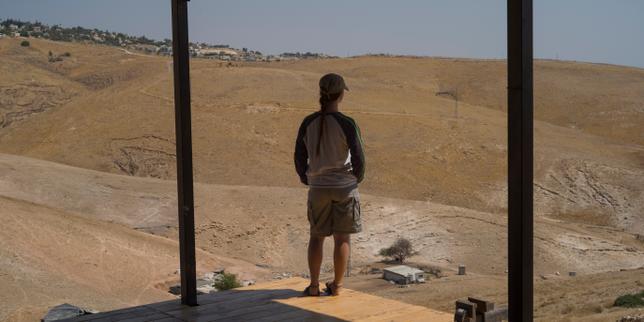
The headlines focus entirely on Gaza, but a quieter, structural transformation unfolds across the hills of the West Bank. Out of sight from major international broadcasts, pastoral settlements and makeshift herding outposts have become instruments of territorial expansion. This isn't just about localized friction. It's a calculated reshaping of rural geography, accelerated by the distraction of a multi-front regional war.
To understand how land changes hands here, you have to look at the landscape of the South Hebron Hills and the Jordan Valley. Traditional Palestinian herding communities, who have grazed sheep and goats on these arid slopes for generations, now find themselves systematically boxed in. Small clusters of caravan structures appear overnight on strategic hilltops. Within weeks, tracks are cleared, fences go up, and grazing zones that once sustained local families become off-limits.
The Strategy of the Hills
The mechanics of this expansion rely heavily on physical presence rather than formal legal decrees. Young settlers establish agricultural outposts—often starting with little more than a tent, a generator, and a flock of sheep. These pastoral points act as anchors. From these elevated positions, settlers exert pressure on neighboring Palestinian villages, cutting off access to water cisterns, olive groves, and traditional pastures.
Data compiled by human rights organizations and UN monitors reveals a sharp escalation in these tactics. Incidents of settler violence and movement restrictions have risen dramatically since late 2023, transforming daily life for rural communities into an unsustainable endurance test. Entire hamlets, such as Khirbet Zanuta, have experienced complete displacement as families abandon their homes after facing relentless intimidation and restricted access to basic necessities.
The strategy exploits a legal and administrative vacuum. While international law considers all settlements in the occupied territories illegal under the Fourth Geneva Convention, local dynamics operate on a different tier. Unsanctioned outposts frequently receive retroactive authorization or implicit backing from state infrastructure, creating a persistent cycle where temporary camps harden into permanent facts on the ground.
Economic and Social Strangling
Physical displacement is only one half of the equation. The economic lifeline of these pastoral communities is agriculture and livestock. When grazing routes are blocked by armed patrols or newly erected barbed wire, herders can no longer feed their flocks. Selling off livestock at a fraction of their value becomes the only option, destroying the economic independence of families who have lived off the land for decades.
International diplomatic pressure occasionally results in statements of concern or targeted sanctions against specific violent actors, yet these measures do little to halt the daily progression of the outposts. The asymmetry of power on the ground remains absolute. Local residents report that military forces often intervene not to protect Palestinian farmers, but to secure the perimeter around the newly established settler camps.
As the conflict in the Middle East enters its third year of intense regional escalation, the demographic reality of the West Bank shifts irreversibly. The strategy of the hills proves remarkably effective: create enough pressure, isolate the communities, and watch the landscape empty out block by block.