Headline news treats a territorial lockdown as a single executive decree triggered by an isolated shooting. In reality, sealing off the occupied West Bank after a deadly checkpoint clash operates as a multi-layered control system with sharp economic, operational, and political trade-offs that surface coverage rarely maps.
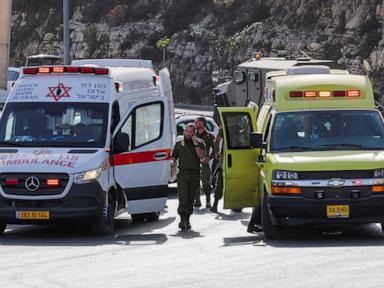
To understand what actually happens when authorities order a full closure following the killing of suspects in an attack, analysts must separate immediate kinetic enforcement from structural friction. Standard dispatches list who was killed, who ordered the closure, and which diplomatic bodies expressed alarm. That sequence explains the spark, not the mechanics. When a checkpoint shooting near Hebron leaves two Israeli soldiers dead and two Palestinian gunmen killed, the immediate response combines perimeter sealing, search-and-arrest operations, home demolitions, and territory-wide movement restrictions—making it the fourth major wave of restrictions within a month.
Why Headline Narratives Miss the Mechanics
Conventional news framing relies on a linear cause-and-effect chain: attack occurs, suspects are killed, lockdown is ordered. That model leaves out three structural realities that govern outcomes on the ground.
- Asymmetric friction: A territorial closure does not freeze all activity evenly. While Palestinian commuters, commercial trucks, ambulance routes, and students face hundreds of closed gates, flying checkpoints, and sudden detentions, movement pathways for military units and Israeli settlers remain far less constrained.
- Recursive security feedback: Sweeping restrictions are intended to isolate militant networks and deter follow-on attacks. Yet severing wages, medical access, and normal routines across entire governorates compounds economic strain and grievance, which can feed future recruitment and unrest once gates reopen.
- Domestic signaling incentives: Security measures in the West Bank rarely serve external security goals alone. Leaders calibrate force posture and public rhetoric to project resolve to domestic constituencies—especially around election cycles or coalition pressures—even when tactical gains are temporary.
Consider the difference between sealing a single neighborhood for a targeted search and imposing a sweeping lockdown across an entire territory. A narrow cordon concentrates forces on a specific suspect trail. A broad closure converts administrative geography—hundreds of checkpoints, bypass roads, and municipal crossings—into an immediate compliance filter affecting millions of residents at once.
The Four Pillars of a Territorial Lockdown
A rigorous breakdown of a West Bank lockdown requires examining four distinct operational pillars rather than treating the order as one uniform action.
Perimeter and Internal Chokepoint Control
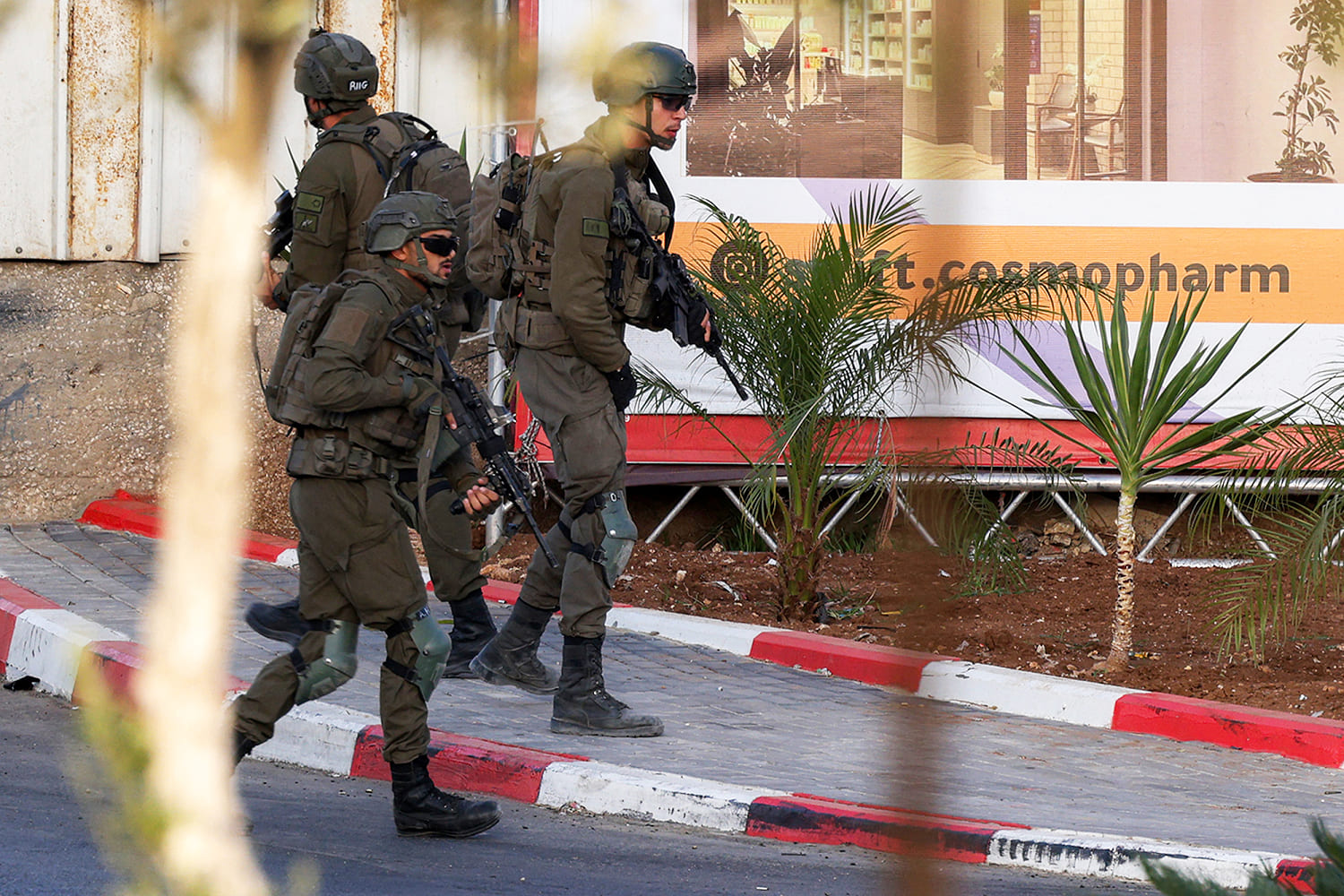
The first pillar is spatial containment. Rather than an airtight wall springing up overnight, enforcement relies on activating or tightening an existing matrix of gates, earth mounds, military checkpoints, and mobile patrols linking cities, towns, and rural villages.
The operational mechanism works through throughput throttling. Even when a full lockdown is declared, enforcement varies by sector and hour. Commercial freight, cross-governorate labor commutes, and routine municipal travel slow to a crawl or halt altogether, turning short trips into multi-hour detours or impossible journeys.
Raids, Arrests, and Structural Deterrence
The second pillar is coercive enforcement inside the sealed zone. Following a deadly attack, security forces conduct raids, detentions, building searches, and property or home demolitions aimed at dismantling suspected cells and imposing punitive costs.
Here, known facts must be separated from educated hypotheses. It is a documented fact that military operations following major attacks involve arrests, infrastructure damage, and displacement. By contrast, claiming that any specific demolition or mass arrest permanently eliminates future attacks is a hypothesis rather than a settled law: militant cells adapt through decentralized planning, while broad sweeps risk sweeping up uninvolved residents and eroding local institutional legitimacy.
Economic and Service Bottlenecks
The third pillar is civilian friction. When movement freezes, microeconomic activity contracts immediately. Daily-wage earners cannot reach job sites; suppliers cannot move perishable goods; clinics and schools face staffing and attendance disruptions.
A practical illustration shows how fast a lockdown compounds household stress. Suppose a family depends on a construction or service job two governorates away, while an elderly relative needs regular dialysis or pharmacy access. A three-day or ten-day closure does not just delay a paycheck—it depletes cash buffers, forces families to borrow or skip non-urgent care, and leaves lingering arrears even after checkpoints reopen.
Political Timing and Escalation Risk
The fourth pillar is strategic signaling. Announcements of sweeping closures, major military preparations, or unprecedented operations shape perceptions both inside Israel and across the region.
Politically, a forceful response signals toughness to hardline allies and anxious voters. Strategically, however, frequent lockdowns carry diminishing returns. When restrictions recur repeatedly within weeks, each new closure has less shock value as a standalone deterrent while adding to cumulative instability across the West Bank.
The Cost Function of Collective Restrictions
Economists and security analysts can model a lockdown through a cost function rather than a moral slogan. Every day a broad closure remains active alters four variables:
- Direct security cost ($C_s$): Troop hours, fuel, vehicle wear, intelligence processing, and force-protection exposure during raids and checkpoint operations.
- Economic output loss ($C_e$): Lost labor days, stalled trade, higher transport costs, and supply-chain delays across interconnected local markets.
- Humanitarian and service strain ($C_h$): Delayed medical appointments, interrupted schooling, displacement, and psychological toll on residents caught in curfews or raids.
- Escalation risk ($C_r$): The probability that friction in one area—such as clashes at checkpoints, settler-Palestinian confrontations, or protests—triggers wider violence elsewhere.
The core analytical trap in short-term crisis management is discounting $C_e$, $C_h$, and $C_r$ because their costs accrue gradually or outside the immediate perimeter of the original attack. A measure that looks decisive on day one can raise total system cost by day ten if civilian desperation and secondary clashes expand the operational footprint.
Limits of Purely Kinetic Containment
No security playbook is a silver bullet, and over-reliance on blanket lockdowns runs into clear operational ceilings.
First, intelligence precision is limited by scale. Sealing off hundreds of internal routes creates massive administrative noise. Troops spend substantial capacity managing queues, enforcing closures, and clearing protests—bandwidth that can compete with pinpoint intelligence-led operations.
Second, blanket restrictions blur boundaries between combatants, non-violent protesters, and everyday civilians. When daily life becomes punitive across entire towns, local actors lose incentives to cooperate with de-escalation efforts, and outside observers—from international agencies to regional neighbors—view the policy as unsustainable collective punishment.
Third, lockdowns do not resolve underlying political and territorial disputes. Even when a military operation winds down after a set number of days, the structural drivers of friction—settlement expansion, checkpoint geography, weak governance capacity, and unresolved political status—remain intact.
How to Audit Coverage and Track Real Impact
Readers and analysts evaluating reports on a West Bank lockdown can apply a four-step verification routine to separate noise from signal:
- Distinguish declared scope from actual enforcement: Check whether a "full lockdown" applies across the entire West Bank, concentrates heavily on one governorate such as Hebron, or includes carved-out exceptions and rolling openings.
- Track duration and operational shifts: Note the exact start date, whether operations escalate into multi-day raids or building demolitions, and when restrictions ease.
- Separate verified counts from early claims: Treat initial casualty, arrest, and displacement figures as provisional until cross-checked across military statements, local health or municipal reports, and international agencies.
- Watch second-order indicators: Monitor hospital access, school closures, commercial movement, and incidents in adjacent areas over the following two to four weeks to see whether containment held or displaced friction elsewhere.
Strategic Play for Decision-Makers
For security planners and policymakers seeking durable stability rather than recurring cycles of shock and reprisal, the decisive strategic move is to decouple tactical suspect interdiction from territory-wide civilian paralysis, pairing targeted, intelligence-driven operations with strict accountability against unauthorized violence and predictable humanitarian corridors. Blanket lockdowns may project immediate resolve, but sustainable security depends on precision enforcement that isolates armed actors without manufacturing broader instability across millions of lives.