Power is quiet before it roars.
In the high-ceilinged corridors of Washington, behind heavy mahogany doors where the air smells faintly of old paper and filtered coffee, decisions are rarely made amid Hollywood explosions. They are made in whispers. They are made over lukewarm cups of tea while a map glows softly on a secure screen. A finger traces a red boundary line. Someone asks a quiet question about casualties, about oil prices, about the exact distance between a deterrence strategy and an irrevocable mistake.
History turns on hinges like these.
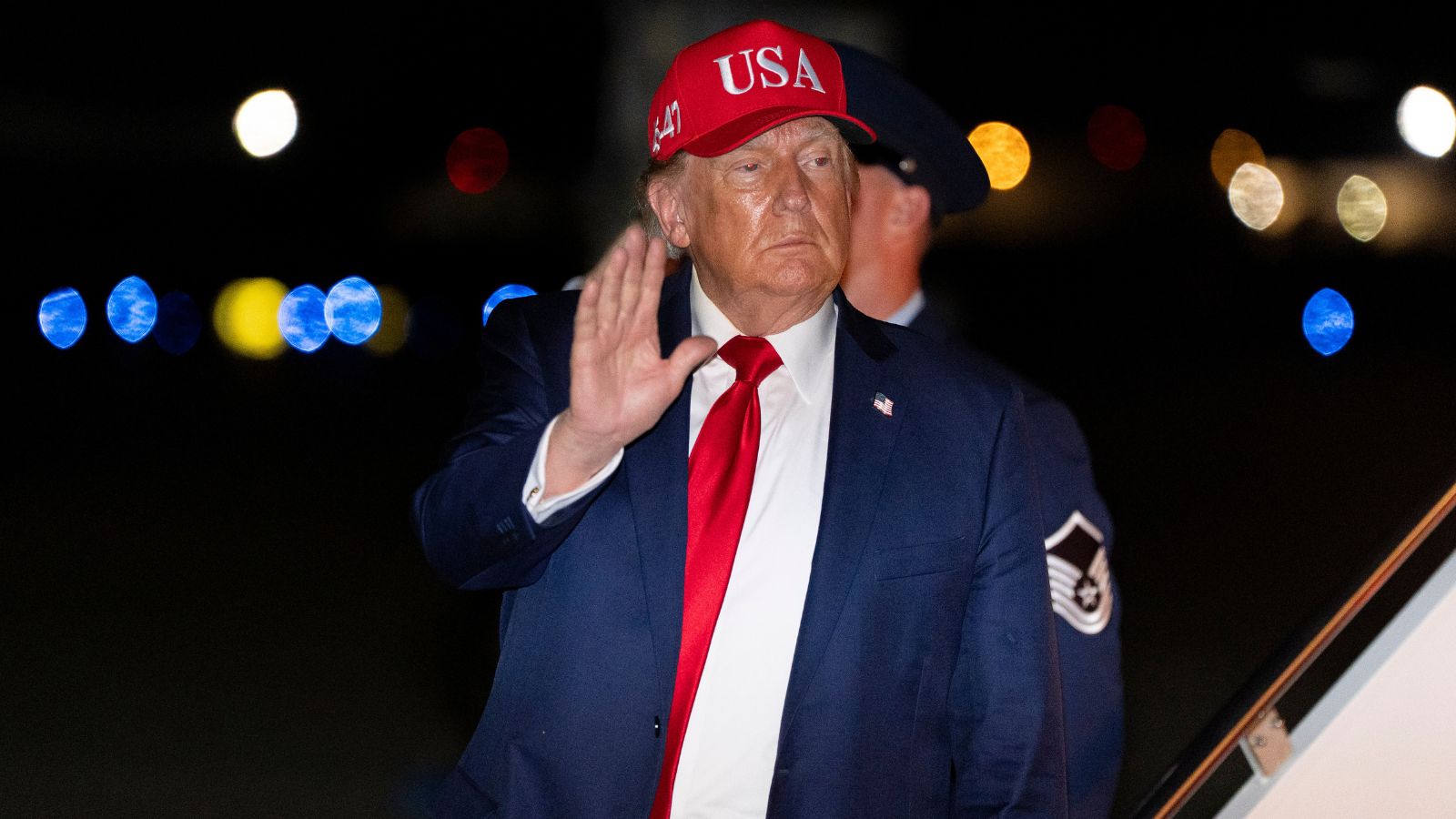
When Donald Trump sat down with reporters from Axios to discuss the shifting dynamics of the shadow war with Iran, he did not speak with the bluster of a campaign rally. He spoke of a crossroads. That singular word hangs heavy in the diplomatic ether. A crossroads implies motion, speed, and above all, a choice. You cannot stand still at a junction where asphalt splits toward two entirely different futures. One path leads down the familiar, terrifying slope of escalation—where retaliation breeds counter-retaliation until neither side remembers who struck the first match. The other path requires an awkward, politically perilous pivot toward restraint, asking a superpower to pause at the precipice and look down into the abyss.
To understand why this moment matters, we have to strip away the glossy punditry on cable news and look at the raw mechanics of modern hostility. For decades, the friction between Washington and Tehran has operated like an intricate, deadly game of chess played in the dark. Sanctions, cyberattacks, proxy skirmishes, and targeted strikes have formed a grim rhythm. Both nations have danced along the edge of open warfare, testing each other's nerves, calculating tolerance thresholds, and betting that the other guy will blink first.
But games of chicken have an expiration date. Eventually, someone stops swerving.
Imagine a radar operator sitting in a dimly lit bunker overlooking the Strait of Hormuz. The hum of cooling fans fills the room. It is three in the morning local time. On the green phosphorescent glow of the monitor, a blip appears. Is it a routine patrol or an incoming strike? The operator has seconds to interpret the data, seconds to wake a superior, seconds to feed information up a chain of command that stretches all the way to the Oval Office.
At that exact moment, abstract geopolitical strategy dissolves into raw, beating hearts. It becomes about the nineteen-year-old sailor on a grey carrier deck staring out into black, churning waters, wondering if home is a place he will ever see again. It becomes about a mother in Isfahan buying medicine for her diabetic son while the local currency collapses under the crushing weight of renewed sanctions, wondering if the rumbling outside is thunder or something much worse.
The public often views foreign policy as a scoreboard. Who is winning? Who is looking strong? Who blinked? Yet leaders caught in the center of these crises experience a very different reality. They face a cascading waterfall of imperfect choices. Every option carries a grotesque price tag paid in human currency.
If you strike hard, you project strength and deter future aggression, but you risk igniting a regional conflagration that could close shipping lanes, spike global energy markets, and trap thousands of American service members in the crosshairs. If you hold back, you risk projecting weakness, emboldening adversaries, and inviting a more reckless provocation tomorrow. There is no clean, painless exit. There is only the management of catastrophe.
When a former president—one who famously ordered the strike that eliminated Qasem Soleimani, pushing the two nations closer to the brink of direct war than they had been in a generation—acknowledges a crossroads, it signals a rare moment of clarity. It is an admission that the old playbook is burning out. The incremental escalation model is reaching its mathematical limit. You can only squeeze a balloon so hard before it pops in your hand.
Yet, recognizing a crossroads and choosing the right road are two entirely different things.
Political gravity in Washington exerts a relentless pull toward toughness. To hesitate in the face of provocation is often branded as cowardice by political rivals and media commentators who bear none of the responsibility for the caskets draped in flags. The incentives are skewed toward action, toward noise, toward looking immovable. Standing down, seeking a diplomatic off-ramp, or accepting a messy compromise requires a different kind of courage—one that rarely wins applause on election night.
Consider the historical echo chamber we are trapped inside. Every generation believes its conflict is unprecedented, yet the choreography is ancient. Leaders stumble into crises because they misread intentions, miscalculate resolve, or assume that minor provocations will remain contained. In 1914, monarchs and ministers walked sleepwalking into a global slaughterhouse because they thought honor and deterrence required them to keep marching forward until the ground gave way beneath their feet.
We are not in 1914, but human nature has not evolved nearly as fast as our weaponry.
A modern conflict with Iran would not resemble the swift, decisive campaigns of the late twentieth century. It would be a messy, protracted entanglement involving asymmetric warfare, cyber warfare crippling critical infrastructure from power grids to financial institutions, and proxy forces activating across multiple continents. The ripple effects would hit the grocery store aisle in Ohio, the heating bill in Berlin, and the stability of global markets for a decade.
This is the invisible architecture of the crossroads Trump described. It is not just about a headline or a negotiation tactic. It is about whether the architects of power still possess the imagination to step back from a mechanical escalation that threatens to consume them both.
The irony of superpower status is that the nation with the most powerful military often feels the least secure. Every threat must be met; every challenge must be answered; every loss of face feels catastrophic. But true strength sometimes looks like restraint. It looks like the willingness to absorb a blow or pursue a quiet diplomatic backchannel when the loudest voices in the room are screaming for blood.
As the political cycle churns and the drums of crisis beat with familiar rhythm, the choice remains suspended in the air. The map is still on the desk. The red line is still drawn.
Somewhere in the desert night, the wind shifts, carrying the scent of dust and distant sea salt. In the quiet hours before dawn, the world waits to see which way the heavy boots will step. The road ahead is shrouded in fog, and the margins for error have vanished entirely.