The air does not just sit above us anymore. It presses down. On a Tuesday afternoon in the middle of July, the atmosphere becomes a physical entity, a heavy, wet wool blanket draped over the shoulders of ninety million people. You step outside, and the breath catches in your throat. It feels less like weather and more like an intervention.
We look at meteorological maps and see angry splashes of red and neon green covering the midsection of the country, stretching down to the Gulf and creeping up the Atlantic coast. The television meteorologist points to a high-pressure system, a "heat dome," explaining the mechanics of sinking air and trapped radiation. But the data fails to capture the quiet panic of an old air conditioning unit rattling in a third-floor apartment, or the sound of a dry creek bed turning into a roaring flume in less than twenty minutes.
The reality of modern extreme weather is its duality. We are simultaneously drying out and drowning. It is a strange, cruel paradox where the planet suffers from both a desperate thirst and an overwhelming deluge, sometimes within the exact same zip code.
The Invisible Weight
Consider a hypothetical resident named Clara. She lives in a brick row house in Baltimore. Brick is beautiful, but it is also a thermal sponge. By day, it drinks the sun. By night, while Clara tries to sleep, the brick breathes that heat back inward.
The thermostat reads ninety-two degrees at midnight.
For Clara, and millions like her, the danger is not a sudden, dramatic event. It is cumulative. The human body is a magnificent heat engine, constantly shedding warmth through the skin to maintain a strict internal baseline. But when the ambient air matches your body temperature, and the humidity hangs at eighty percent, the physics of evaporation break down. Sweat stays on the skin. The internal cooling mechanism stalls.
This is where the true crisis of a heat wave hides. It is not found on the sun-baked asphalt of empty highways, but in the soaring heart rates of elderly citizens sitting in darkened living rooms. When the nighttime temperatures do not drop below eighty degrees, the body never gets a chance to recover. The heart pumps faster, trying desperately to push blood to the skin to cool down. It is an invisible marathon, run while lying completely still in bed.
Medical data consistently shows that emergency room admissions do not spike on the first day of a heat wave. They spike on day three, day four, and day five. That is when the stamina of the human cardiovascular system finally falters under the relentless, silent pressure.
When the Sky Collapses
A thousand miles away, the opposite side of this atmospheric coin drops.
For every one-degree Celsius increase in global temperatures, the atmosphere can hold roughly seven percent more water vapor. The sky becomes a sponge that has been squeezed tight and then dipped into an ocean. When that moisture-laden air hits a cold front or is forced upward by a mountain range, it does not just rain. It unloads.
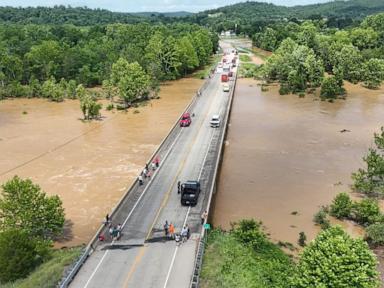
Let us use another hypothetical scenario to understand how this manifests on the ground. Picture a small town in eastern Kentucky or the valleys of West Virginia, where a young mechanic named Jim is working underneath a truck. He hears the thunder, but thunder is normal in July. What is not normal is the volume of water that follows. Three inches of rain fall in less than ninety minutes.
The soil, baked hard by weeks of early summer sun, cannot absorb it. The ground acts like concrete. The water runs off the hillsides, gathering speed, carrying topsoil, twigs, and eventually logs and vehicles. A local creek, usually a lazy ribbon of water where kids look for crayfish, rises six feet in an hour.
Jim notices the water when it swirls around his boots. By the time he clears his tools and climbs out from under the truck, the road outside his shop is a chocolate-brown river.
Flash flooding is a deceptive killer because it lacks the slow, cinematic buildup of a rising river. It gives no warnings, sends no scouts. It simply arrives, transforming familiar streets into deadly traps. The weight of moving water is astonishing; just two feet of it can sweep away a full-sized pickup truck. When that water mixes with debris, it becomes a battering ram, capable of knocking homes off their foundations.
The Broken Baseline
The fundamental problem we face is that our infrastructure was built for a world that no longer exists.
Our culverts, storm drains, electrical grids, and building codes were designed using historical averages from the mid-twentieth century. Engineers looked at data from 1950 and decided that a "one-hundred-year storm"—an event with a one percent chance of happening in any given year—meant four inches of rain in twenty-four hours.
Now, those one-hundred-year storms are happening every few summers. Sometimes twice in a month.
Our cities are paved with asphalt and concrete that absorb heat and repel water, exacerbating both sides of the summer crisis. We have created environments that maximize the danger of the very weather patterns we are now experiencing. The urban heat island effect can make a downtown core ten to fifteen degrees hotter than the surrounding countryside, while the lack of permeable green space ensures that heavy rainfall has nowhere to go but into basements and subway stations.
It is easy to feel overwhelmed by the scale of these events. The numbers are too big, the geography too vast. But the solution begins with recognizing that weather is no longer just a background setting for our lives. It is an active participant.
Restoring the Balance
To survive this new era of atmospheric volatility, the approach to urban planning and community resilience must change. We cannot simply build higher walls or buy bigger air conditioners.
Many cities are beginning to experiment with "cool pavements"—coatings that reflect sunlight rather than absorbing it. Others are tearing up unused parking lots to create urban wetlands that act as natural sponges during a flash flood. These are not aesthetic choices; they are survival strategies.
We also have to change how we look out for one another. During a severe heat wave, the most effective life-saving intervention is often a simple phone call or a knock on a neighbor’s door. Checking on the elderly, ensuring that those without working cooling systems have access to designated community spaces, and understanding the early signs of heat exhaustion are actions that require no engineering degrees.
The sky will continue to throw these dual tantrums. The heat will come, thick and suffocating, and the rain will follow, sudden and violent. We cannot stop the air from holding more water, nor can we easily cool the oceans overnight. But we can change how we respond. We can adapt our homes, reinforce our valleys, and recalibrate our expectations of what a summer day can do.
The water will keep rising, and the air will keep pressing down. The only question left is whether we will continue to be surprised by it, or if we will finally start building for the world we actually live in.