History has a funny way of bunching up. Some weeks pass by without leaving much of a mark on the human story, while others seem packed with events that alter our trajectory forever. If you look closely at the calendar between July 19 and July 25, you quickly realize this seven-day stretch holds an astonishing amount of historical weight. We aren't just talking about dry dates in a textbook. We're talking about the moments humans broke out of earth's orbit, shattered political glass ceilings, and completely redefined the limits of science and power.
When we look back at this week in history, it becomes obvious that these days serve as a masterclass in human ambition. They show what happens when grit meets opportunity. From the dusty plains of the lunar surface to the grand halls of political power in New Delhi, the events of this mid-July window continue to shape how we live, think, and look at the night sky. You might also find this related story insightful: The Myth of Iranian Unity Why the Supreme Leaders Call for Calm Signals Chaos Not Control.
The Day the Moon Became Real Estate
On July 20, 1969, a quarter of a million miles away from the comforts of home, Neil Armstrong and Buzz Aldrin guided the Apollo 11 Lunar Module toward a boulder-strewn crater. It's easy to look back now and view the moon landing as a flawless victory, a smooth inevitability of American engineering. It wasn't. It was an incredibly close call that almost ended in disaster.
As the Eagle descended, the onboard computer began flashing alarms. The 1202 program alarm signaled that the primitive system was overloaded with data. Instead of aborting, guidance controller Steve Bales made the gutsy call to keep going. Then came the fuel issue. The autopilot was steering them toward a massive boulder field. Armstrong had to take manual control, hovering the lander like a helicopter while searching for a flat patch of lunar soil. When the Eagle finally touched down in the Sea of Tranquility, they had less than 30 seconds of landing fuel left. As reported in latest articles by NBC News, the implications are significant.
Apollo 11 Fuel Status at Touchdown: ~25 seconds remaining
Onboard Computer Memory: 72 kilobytes
Distance from Earth: 238,900 miles
Armstrong's boots hitting the fine dust changed everything. The phrase "one small step for man, one giant leap for mankind" is ingrained in our global consciousness. But the real triumph was the sheer audacity of the attempt. We managed to send humans to another celestial body using technology less powerful than a modern car key fob.
The geopolitical ripple effects were massive. The Soviet Union had dominated the early stages of the Space Race with Sputnik and Yuri Gagarin. Apollo 11 effectively ended that specific sprint, establishing American dominance in space tech for the next several decades. It also changed our cultural perspective. For the first time, humanity looked back at earth and saw a fragile blue marble floating in a void.
India Claims Its Seat at the Lunar Table
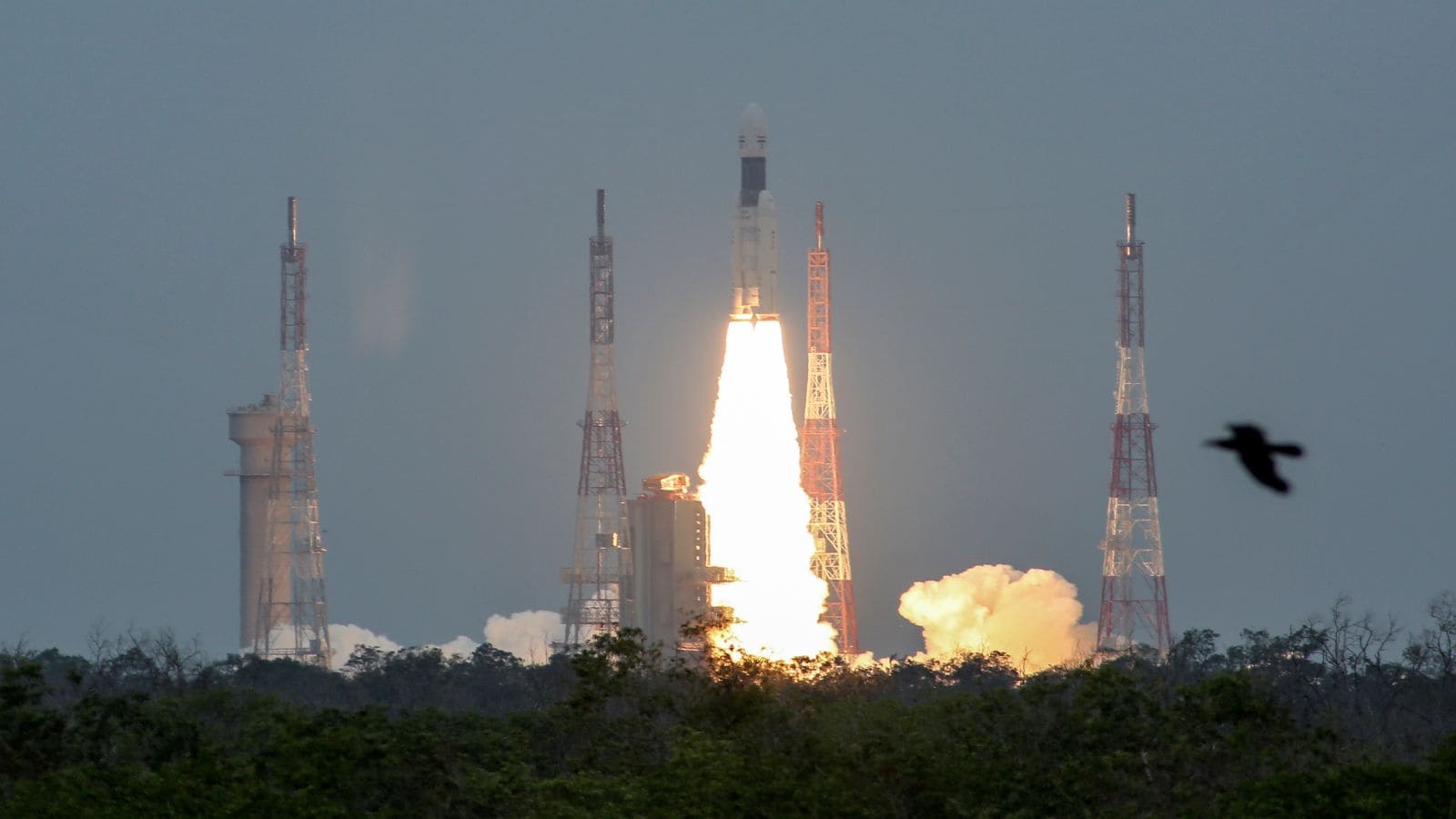
Fifty years after Apollo 11, another nation stepped up to challenge the moon. On July 22, 2019, the Indian Space Research Organisation launched Chandrayaan-2. The mission didn't grab the same frantic headlines in the West as the old Cold War races, but it represented something entirely new: the democratization of deep space exploration.
Chandrayaan-2 was designed to do what no mission had done before. It aimed for the lunar south pole, a rugged, shadowy region believed to hold vast deposits of water ice. Finding water on the moon isn't just about hydration. Water means hydrogen and oxygen, the raw ingredients for rocket fuel. If you can harvest fuel on the moon, it becomes a literal stepping stone to Mars and beyond.
The launch itself was a triumph of frugality and engineering. The entire mission cost roughly 140 million dollars. To put that in perspective, Hollywood spent more money making the space movie Interstellar. India utilized its most powerful rocket, the GSLV Mk III, to fling the orbiter, lander, and rover toward the moon.
Chandrayaan-2 Mission Breakdown:
- Orbiter: Still functioning perfectly in lunar orbit
- Vikram Lander: Lost communication during final descent
- Mission Cost: $140 million (approximate)
The story of the Vikram lander is heartbreaking but vital. During the final descent phase in September, a software glitch caused the lander to lose control and crash into the surface. The control room in Bengaluru went dead silent. The disappointment was palpable. But true space exploration thrives on failure. The data gathered by the functioning Chandrayaan-2 orbiter laid the groundwork for the roaring success of Chandrayaan-3 years later. It proved that India possessed the domestic technical capability to run highly complex interplanetary missions on a fraction of the budget used by NASA or Roscosmos.
A Revolution in New Delhi
Space exploration expands our physical boundaries, but true societal progress happens on the ground. On July 25, 2007, Pratibha Patil was sworn in as the 12th President of India. She was the first woman to hold the highest constitutional office in a nation of over one billion people.
To understand the magnitude of this moment, you have to look at the political environment of the time. India has long been a country of deep contradictions regarding gender. It had seen a powerful female Prime Minister in Indira Gandhi decades earlier, yet systemic barriers, low literacy rates among girls in rural areas, and deep-seated patriarchal structures remained widespread. Patil’s ascension to the presidency wasn't just a political victory for her coalition. It was a massive symbolic shift.
During her five-year term, Patil faced her share of scrutiny and political battles, as any leader does. Her presidency drew debates over clemency petitions and official foreign travel expenditures. But her presence at the top of the state apparatus sent a clear signal to millions of young girls across the subcontinent. It proved that the ultimate seat of power was no longer an exclusive boys' club. Her presidency opened the door wider for future leaders, paving the way for Droupadi Murmu, India's second female president, to take office years later.
The Spark That Burned the Ancient World
If we slide much further back along the timeline of this week in history, we encounter an event that reshaped the Western world. On July 19, 64 AD, the Great Fire of Rome broke out.
The fire started in the merchant shops around the Circus Maximus. Driven by strong summer winds, the flames tore through the densely populated, wooden apartment blocks of the city. The blaze raged for six straight days, died down, and then reignited. By the time the smoke cleared, ten out of Rome's fourteen districts were severely damaged or completely ruined.
The Wreckage of 64 AD:
- Districts destroyed completely: 3
- Districts severely damaged: 7
- Total days of burning: Over 9 days combined
The historical myth is that Emperor Nero played his fiddle while the city burned. That's almost certainly propaganda. Nero wasn't even in Rome when the fire started; he was in Antium. He rushed back to organize relief efforts, opening his palaces to shelters and funding food distribution.
The real historical impact was what happened after the embers cooled. Nero used the devastation as a giant real estate clearance project. He seized vast swaths of destroyed land to build his sprawling golden palace, the Domus Aurea. To deflect public anger away from his blatant land grabs, Nero found a convenient scapegoat: a small, obscure religious sect called the Christians. The post-fire persecutions marked the first major Roman crackdown on Christianity, setting off centuries of conflict that ultimately ended with the religion transforming the entire Roman Empire.
The Birth of Organized Women's Rights
On July 19, 1848, a group of activists gathered in a chapel in Seneca Falls, New York. Organized by figures like Elizabeth Cady Stanton and Lucretia Mott, the Seneca Falls Convention was the first formal gathering dedicated entirely to the civil, social, and religious rights of women.
At the time, married women had virtually no legal existence. They couldn't own property, keep their own wages, or sign contracts. If a marriage failed, fathers automatically got custody of the children. The convention produced the Declaration of Sentiments, modeled deliberately after the Declaration of Independence. It boldly stated that "all men and women are created equal."
The most controversial part of the document wasn't the call for property rights or education. It was the demand for the right to vote. Many attendees, including Mott herself, thought the demand was too radical and would make the movement look ridiculous. It only passed because Frederick Douglass, the legendary abolitionist who attended the meeting, stood up and argued passionately that political power was meaningless without the ballot. Seneca Falls didn't grant women the vote overnight. It took another 72 years of grueling activism to achieve that goal. But it lit the fuse for the modern feminist movements that reordered society.
Actionable Lessons from the Past
Looking back at this specific week isn't just an exercise in nostalgia. History leaves clues. If you look closely at these disparate events, you see clear patterns that apply directly to how we tackle modern challenges.
- Normalize failure as a data point. The crash of the Vikram lander during the Chandrayaan-2 mission felt like a disaster in the moment. Instead of giving up, the engineers treated the failure as a diagnostic tool. They fixed the software, reinforced the legs, and nailed the landing on the next attempt. When projects stall, don't scrap the goal. Use the wreck to build a better version.
- Push past consensus. If the organizers at Seneca Falls had listened to the cautious voices who wanted to drop the demand for voting rights, the movement would have lacked its sharpest edge. True progress requires making demands that make the current establishment uncomfortable.
- Prepare for the resource bottleneck. The Apollo 11 crew didn't turn back when the computer overloaded or when their fuel dwindled to less than half a minute. They relied on their training and kept cool heads. Success usually happens right at the edge of your resources.
If you want to put these historical insights into practice today, start small. Take a project you've abandoned because of a recent failure. Audit the data from that failure, adjust the parameters, and relaunch it. History isn't something that just happens to people. It's built by people who refuse to stop driving forward when the dashboard lights start flashing.