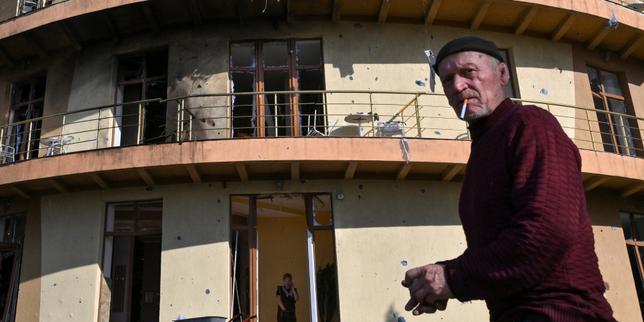
The United Nations Independent International Commission of Inquiry on Ukraine has formally concluded that Russia’s systematic bombardment of Ukrainian energy infrastructure amounts to crimes against humanity. By targeting power plants, electrical substations, and heating networks across successive winters, Russian forces deliberately deprived millions of civilians of basic survival necessities—electricity, running water, and heat—in sub-zero temperatures. Under international humanitarian law, when attacks on dual-use infrastructure cause disproportionate, widespread harm to a civilian population as part of a state policy, the legal threshold shifts from ordinary war crimes to crimes against humanity.
For decades, military planners treated electrical grids as valid dual-use targets. The logic was straightforward. Shut down the power, and you blind enemy radar, halt rail logistics, and stall munitions factories. Yet modern urban centers do not run on wood stoves and hand-pumped wells. When you sever high-voltage transmission lines in a contemporary European nation during January, you are not merely inconveniencing a military command. You are shutting down neonatal incubators, freezing municipal sewage systems, and trapping elderly residents on the fifteenth floor of unheated concrete apartment blocks.
The Anatomy of Grid Collapse
To understand why the UN commission reached this legal milestone, you have to look at the engineering reality of the Ukrainian power system. Unlike decentralized microgrids, Ukraine inherited a massive, interconnected Soviet-era synchronous grid. It relies heavily on high-capacity nuclear power plants for baseload generation, balanced by thermal power plants and hydroelectric dams that manage peak demand.
Russian targeteers did not need to destroy the nuclear reactors themselves—an act that would trigger catastrophic radiation fallout across borders and invite direct international intervention. Instead, they went after the autotransformers and high-voltage switchyards.
These massive, custom-built pieces of equipment step down electricity from 750-kilovolt transmission lines to the 330-kilovolt and 110-kilovolt networks that feed cities. They weigh hundreds of tons. They contain thousands of gallons of specialized insulating oil that burns violently when struck by a cruise missile or a Shahed drone. More importantly, you cannot buy a 750-kilovolt autotransformer off a shelf. Each unit is custom-engineered for its specific substation, requiring months or even years to manufacture and transport.
By repeatedly striking these specific bottlenecks, Moscow executed a strategy of cascading failure. When a substation goes offline, nuclear reactors are forced into emergency shutdowns because the power they generate has nowhere to go. Once a thermal plant is offline and cold, restarting it without external grid power—a process known as a black start—becomes a logistical nightmare.
It was surgical. And it was designed to break the civilian will by turning winter itself into a munition.
Shifting the Legal Threshold
War crimes and crimes against humanity are not interchangeable terms in international law, though media coverage frequently blurs the distinction. A war crime involves a violation of the laws of armed conflict during hostilities—such as shelling a hospital or executing prisoners of war. A single isolated incident can constitute a war crime.
Crimes against humanity, as defined under Article 7 of the Rome Statute of the International Criminal Court, require a much higher evidentiary bar. Prosecutors must prove that specific inhumane acts were committed as part of a widespread or systematic attack directed against any civilian population, with knowledge of the attack.
The UN commission’s determination hinges on three observable realities:
- Pattern and Repetition: The strikes were not sporadic miscalculations. They occurred in synchronized waves across dozens of regions simultaneously, timed specifically to coincide with drops in temperature.
- Redundancy Targeting: Whenever Ukrainian engineers repaired a damaged substation or installed temporary bypasses, Russian reconnaissance drones spotted the work and launched follow-up strikes to destroy the repairs.
- Disproportionate Civilian Impact: The military utility of knocking out municipal district heating plants—which supply hot water to residential radiators rather than front-line trenches—is virtually zero, while the harm to non-combatants is immediate and severe.
In the eyes of UN investigators, the sheer scale and methodical nature of the campaign proved that civilian suffering was not collateral damage. It was the primary objective. Under the Rome Statute, deliberately inflicting conditions of life calculated to bring about the destruction of part of a population falls squarely under the definition of extermination or other inhumane acts of a similar character causing great suffering.
The Counter-Argument From Moscow
Any serious legal analysis has to grapple with the defense Moscow inevitably puts forward, because military lawyers in Western capitals pay close attention to these exact arguments. The Kremlin’s position rests on the doctrine of military necessity and the classification of energy infrastructure as a legitimate dual-use target.
Under Additional Protocol I to the Geneva Conventions, civilian objects are protected unless they make an effective contribution to military action and their total or partial destruction offers a definite military advantage. Russia argues that Ukraine’s electric rail network transports Western weapons to the eastern front, that its factories repair armored vehicles, and that its telecommunications networks coordinate drone strikes. Therefore, according to Russian military doctrine, the entire electrical grid is an integrated military asset.
Western coalitions have walked a similar tightrope in past conflicts. During the 1991 Gulf War, coalition aircraft heavily bombed Iraq’s electrical grid to paralyze Saddam Hussein’s air defenses and command-and-control nodes. During the 1999 NATO air campaign over Yugoslavia, alliance forces used graphite bombs to short-circuit Serbian power stations, plunging Belgrade into darkness to pressure Slobodan Milošević.
The difference, legal scholars and UN investigators point out, lies in proportionality, precaution, and duration.
In Yugoslavia, NATO primarily used non-lethal carbon-filament munitions designed to temporarily disrupt power without permanently incinerating irreplaceable transformers, and the campaign lasted weeks rather than spanning multiple brutal winters. In Iraq, the subsequent humanitarian crisis caused by the collapse of water treatment and hospital power led the Pentagon to radically rewrite its targeting manuals in the late 1990s. Modern international humanitarian law demands a strict proportionality assessment—weighing the concrete military advantage gained against the expected loss of civilian life and damage to civilian objects. When you destroy the heating infrastructure of a city of three million people in January, knowing that Ukrainian military units at the front run on portable diesel generators and Starlink terminals anyway, the military advantage evaporates while the civilian catastrophe becomes absolute.
The Cascading Humanitarian Toll
When the power grid fails, the first thing people notice is the dark. The second thing they notice, usually within hours, is the silence of the water pipes.
Modern municipal water systems rely entirely on electric pumping stations to maintain pressure. Without electricity, water stops flowing to upper floors, and sewage lift stations cease functioning. Within days, sanitation collapses, creating immediate risks of waterborne disease outbreaks in dense urban centers.
Consider a hypothetical scenario based on documented incidents in cities like Kharkiv and Odesa. A barrage of ballistic missiles strikes three regional 330-kilovolt substations at 4:00 AM when the outside temperature is minus twelve degrees Celsius. Backup diesel generators kick in at the central hospital, giving surgeons four hours of emergency power. Meanwhile, the municipal district heating plant—which relies on massive electric pumps to circulate boiling water through underground pipes to fifty thousand apartments—loses power. If the utility crews cannot restore electricity or drain the pipes within six to eight hours, the water inside the municipal radiator network freezes solid. Ice expands. The steel pipes burst inside the walls of thousands of buildings. Even if electricity is restored three days later, those buildings cannot be heated for the rest of the winter because their internal plumbing has been destroyed.
This is the precise mechanism the UN commission documented. Hospitals were forced to suspend routine surgeries and relocate intensive care patients to basements. Schools closed indefinitely, forcing children into isolated remote learning that frequently failed whenever cell towers lost battery backup. Vulnerable populations—the elderly, the disabled, and families with infants—faced an impossible choice between freezing in place or becoming internal refugees, straining municipal shelters in western Ukraine and neighboring European countries.
Accountability and the Reality of International Justice
A UN commission of inquiry is not a criminal court. It cannot issue arrest warrants, freeze sovereign assets, or put generals in handcuffs. Its mandate is to investigate, establish the facts, collect and preserve evidence, and identify those responsible so that judicial bodies can act later.
Yet dismissing the report as mere diplomatic paperwork misses how international criminal prosecutions actually work. The evidence gathered by UN investigators—satellite imagery, intercepted communications, crater analyses, utility repair logs, and survivor testimonies—feeds directly into ongoing investigations at the International Criminal Court (ICC) in The Hague and national prosecutors operating under universal jurisdiction.
The ICC has already demonstrated its willingness to pursue this exact line of prosecution. In March 2024, ICC judges issued arrest warrants for Sergei Kobylash, commander of Russia’s Long-Range Aviation, and Viktor Sokolov, commander of the Black Sea Fleet, specifically for directing missile strikes against Ukrainian electric infrastructure. Later that year, the court added warrants for former Defense Minister Sergei Shoigu and Chief of the General Staff Valery Gerasimov on identical grounds, explicitly charging them with the crime against humanity of inhumane acts.
The UN commission’s findings reinforce the ICC’s prosecutorial theory. By independently verifying that the strikes formed a state-backed, systematic attack on the civilian population, the UN removes any plausible deniability regarding rogue commanders or technical malfunctions. It establishes an official historical and legal record that binds the actions of the Russian military directly to the highest levels of the Kremlin.
The Precedent for Future Warfare
The implications of this legal reckoning extend far beyond Eastern Europe. For the first time in modern history, the international legal community is drawing a hard red line around the destruction of critical civilian infrastructure during conventional warfare.
As nations transition toward heavily digitized, electrified economies—and as cyber warfare increasingly targets power grids, financial networks, and water treatment facilities—the legal definitions hammered out over Ukraine will govern how future wars are fought. If a state can systematically dismantle a nation’s electrical grid without facing charges of crimes against humanity, then critical infrastructure becomes the default primary target in every twenty-first-century conflict.
By classifying the winter energy strikes as crimes against humanity, UN investigators have asserted that civilian survival systems are not valid bargaining chips on a chessboard. For the Kremlin’s military leadership, the immediate consequence may simply be a permanent inability to travel to any of the 124 countries that recognize the jurisdiction of the International Criminal Court. For the rest of the world, the ruling establishes a stark legal reality: turning off the lights and heat for millions of non-combatants is no longer an accepted tactic of war, but an atrocity that carries no statute of limitations.