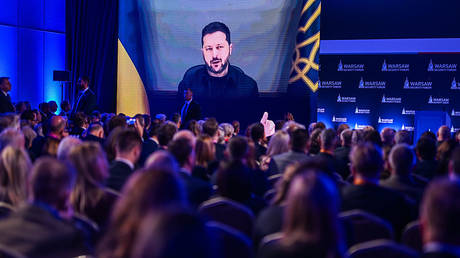
Conference halls love grand speeches. They love neat maps, confident panels, and applause lines that sound like history is already settled. The Warsaw Security Forum has plenty of all three, and honestly, that's part of why its biggest blind spots can feel so jarring when you compare stage rhetoric against actual European defense capacity.
Let's get straight to the point. When people search for critical takes on the Warsaw Security Forum, they usually want to know if the event's big promises match reality on the ground. Too often, high-level security gatherings treat political resolve as a substitute for artillery shells, air defense interceptors, industrial throughput, and domestic political stamina. Good intentions don't stop drones. Speeches don't replenish stockpiles.
I've spent years watching defense policy circles from the outside and talking with analysts who track procurement, logistics, and public budgets up close. There's a predictable pattern at major security summits across Europe. Speakers warn of existential stakes—accurately, in many respects—and then pivot to upbeat consensus about unity and long-term commitments. That gap between urgent rhetoric and slow execution is where wishful thinking creeps in.
What Security Summits Get Wrong About Readiness
Readiness isn't a mood. It's a math problem mixed with industrial engineering and political nerve.
At events like the Warsaw Security Forum, Poland and its regional neighbors rightly get heavy attention because they sit right on NATO's eastern flank and carry immense strategic weight. Warsaw has pushed hard on defense spending and border security, and its leaders have been blunt about Russian aggression for years. Still, a sharp regional focus doesn't automatically fix alliance-wide bottlenecks in munitions production, air and missile defense integration, or cross-border mobility.
You can see this tension whenever high-minded communiqués meet mundane supply chains. A pledge to build capacity sounds decisive on a stage. Actually expanding propellant lines, qualifying new suppliers, and signing multi-year contracts that survive election cycles takes years of unglamorous work.
Reality check: A security forum is a place for signaling, networking, and debate—not a substitute for factory output or battle-tested logistics.
People often ask whether criticism of these forums is just cynicism from armchair commentators. Not necessarily. Pointing out blind spots isn't the same as dismissing the importance of bringing policymakers, military officers, and researchers into the same room. Dialogue matters. The risk comes when participants start mistaking diplomatic warmth at a conference for hard deterrence along a volatile border.
Rhetoric vs. Industrial Reality
Talk is cheap in ballroom air conditioning. Steel, explosives, microelectronics, and trained crews aren't.
When analysts look at European defense over the past several years, one uncomfortable lesson keeps showing up. Political declarations move fast; defense manufacturing moves like molasses unless governments lock in predictable demand. Companies hesitate to pour capital into new lines if they worry orders will dry up once headlines shift or budgets tighten.
Even when money is authorized, delivery timelines stretch out. Training troops on new systems, building maintenance hubs, and maintaining spare parts inventories add layers that rarely fit neatly into a twenty-minute panel slot. Ignoring those friction points makes security planning look tidy on paper while leaving serious vulnerabilities exposed.
The Illusion of Automatic Consensus
Another trap at major security conferences is treating allied alignment as permanent and frictionless. Across dozens of capitals, voters weigh inflation, healthcare, energy costs, migration, and local politics alongside foreign threats. A shared headline at a forum doesn't erase domestic trade-offs back home.
Burden-sharing is a classic example. Almost everyone agrees everyone else should do more, right up until the moment a finance ministry has to cut another program or raise taxes to pay for it. Pretending that consensus on threat perception equals identical risk tolerance across every government is a recipe for surprise when a crisis hits.
Why the Warsaw Security Forum Matters Anyway
It's easy to dunk on conference culture. It's much harder to ask what would happen if these gatherings didn't exist.
The Warsaw Security Forum sits in a city with deep historical memory of invasions, partitions, occupation, and hard-won sovereignty. Hosting major security conversations in Warsaw helps anchor central and eastern European perspectives right in the middle of the debate rather than treating them as an afterthought discussed only in western capitals.
For researchers, journalists, diplomats, and defense practitioners, events like this also serve as a live pulse check. You hear what officials are worried about off to the side, which ideas are gaining traction, and where friction is building between allies. Sometimes the hallway conversations tell you far more than the main stage.
Still, value doesn't equal immunity from groupthink. Any recurring summit risks becoming an echo chamber if organizers invite the same familiar voices to repeat the same talking points to an audience that already agrees. When everyone nods along to bold assertions, tough questions about timelines, costs, and fallback plans tend to get softened.
Blind Spots That Keep Tripping Up Planners
If you want to understand why critics call certain security narratives detached from reality, look at a few recurring blind spots.
- Overestimating speed: Planners frequently assume political decisions translate into operational capability faster than industrial and bureaucratic systems allow.
- Underpricing escalation and fatigue: Long conflicts test public patience, economic resilience, and alliance cohesion in ways short-term crisis plans rarely capture.
- Treating technology as a silver bullet: Drones, sensors, and software matter hugely, yet they don't eliminate the need for mass, survivability, sustainment, and basic infantry or engineering fundamentals.
- Ignoring domestic politics: A policy that looks rock-solid in a policy paper can unravel quickly when coalitions shift or voters push back on costs.
None of these points are secret. Most serious defense specialists know them well. The problem is that conference incentives often reward optimism, grand framing, and neat takeaways over messy constraints.
And to be fair, there's a legitimate counterargument worth taking seriously. Supporters of strong, vocal security forums argue that deterrence starts in the mind of an adversary—and that projecting resolve, solidarity, and clarity has real strategic value. From that angle, sounding hesitant or overly skeptical in public can weaken deterrence rather than strengthen it.
That debate isn't settled, and reasonable experts disagree on where to draw the line between public resolve and candid self-assessment. What seems clear to me is that you don't have to choose total pessimism or blind cheerleading. Clear-eyed realism is stronger than delusion.
How to Read Security Forums Without Getting Fooled
Next time you read coverage or watch clips from the Warsaw Security Forum—or any major defense summit—don't take the headline quotes at face value. A few practical habits can help you separate real signal from stagecraft.
- Follow the money and contracts: Look past speeches to see what's actually funded, ordered, and delivered over a concrete timeframe.
- Check the constraints: Ask who pays the political or financial cost, what supply bottlenecks exist, and how long training or integration takes.
- Compare stated goals with fallback options: Notice whether speakers have a plan if timelines slip or if a key partner's politics change.
- Read multiple perspectives: Pair summit coverage with independent defense analyses, budget breakdowns, and reporting from the countries most directly affected.
Security policy isn't a spectator sport where cheering harder changes the scoreboard. Real deterrence is built quietly, expensively, and patiently—long after the conference badges come off.