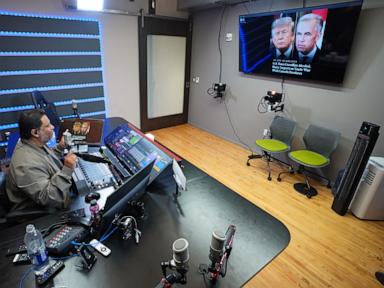
Static crackles through the small plastic speaker before the caller even speaks. Then comes a sigh. It is a heavy, tired sound that needs no translation, cutting through the frequency of a Spanish-language radio station broadcasting deep inside a Pennsylvania battleground county.
The caller is frustrated. Not angry in the way cable television pundits simulate for ratings, but exhausted in the way people get when they have worked a double shift, paid for groceries that cost noticeably more than they did six months ago, and realized that their mail-in ballot instructions arrived in English only.
Radio has always been the campfire of immigrant communities. Long before algorithms decided what news belonged in a social media feed, the local AM or FM dial was where people found their neighbors, their lost dogs, their weather warnings, and their political voice. In places like Allentown, Reading, and Philadelphia, Spanish-language talk radio serves as a vital barometer for a demographic that political campaigns often treat as a monolithic bloc while simultaneously ignoring the nuanced realities of daily life.
To understand why callers are overflowing these phone lines with grievances, you have to understand the geography of expectation.
Pennsylvania is a state of stubborn borders and sharp cultural divides. You can drive twenty minutes from a hip coffee shop in a college town and find yourself surrounded by rolling hills where the economy rises and falls on manufacturing and logistics. For many Latino voters in the Commonwealth—predominantly Puerto Rican communities with deep roots in the region—the political calculation is rarely about party loyalty. It is about dignity. It is about whether the promises made during election season translate into better schools, safer neighborhoods, and a sense that their heritage is respected rather than merely mined for polling data.
Consider what happens when a caller takes over the airwaves.
"They come around every four years," a caller named Carmen tells the host, her voice trembling slightly with the nervous energy of someone speaking to thousands of strangers. "They ask us what we need. We tell them. And then the election passes, and the potholes are still there. The rent goes up. My mother’s prescription drugs cost the same fortune they did last year."
The host nods, even though Carmen cannot see him. He has heard this exact sentiment a hundred times this month. He reflects it back to the audience, validating the frustration without manufacturing false hope. This is the magic and the burden of community radio. It does not offer spin; it offers witness.
Political analysts love percentages. They speak of margins, turnout models, and shifting demographic alignments as if voters were chess pieces moving across a sterile board. But human beings are not data points. A voter sitting in a kitchen in Berks County, listening to the radio while chopping cilantro for dinner, is weighing intangible forces. They are balancing the economic anxiety shared by working-class Americans of every background against the specific, acute worries of navigating a society where their primary language is treated as an inconvenience.
When callers voice their discontent, they are talking about the friction of daily survival. They speak of the invisible labor required to translate documents for elderly parents. They speak of the quiet humiliation of being talked past by candidates who breeze through town with high-priced consultants but never stop at the local bodega.
Yet, beneath the frustration, there is a fierce, unyielding commitment to civic participation.
People do not call radio shows to complain if they have given up. They call because they care. They call because they believe, on some fundamental level, that the system is supposed to work and that their voices are supposed to matter. That belief is both a strength and a vulnerability. It is why political campaigns invest millions in Spanish-language media buys, trying to capture the ear of an electorate that is as diverse as the Spanish language itself. A Cuban American business owner in Florida has priorities that diverge sharply from a Puerto Rican factory worker in Pennsylvania or a Mexican American landscaper in Texas. Treating them as a single entity is a tactical error born of laziness.
The radio hosts know this. They field calls from people who are fiercely proud of their heritage and equally determined to secure a stable future for their children. They hear the generational friction, too—parents who remember the struggles of the island or the mainland decades ago, talking past their college-aged children who view politics through the lens of modern social justice movements.
The studio is warm. The console is a constellation of blinking red and green lights.
When the red light flashes for the next caller, the host leans into the microphone. He does not offer a script. He offers an open ear.
And in that moment, the battleground ceases to be a abstract map colored in shades of red and blue on a cable news screen. It becomes human. It becomes a collection of living, breathing stories colliding in the static of a radio frequency, demanding to be heard before the votes are cast and long after the microphones are turned off for the night.