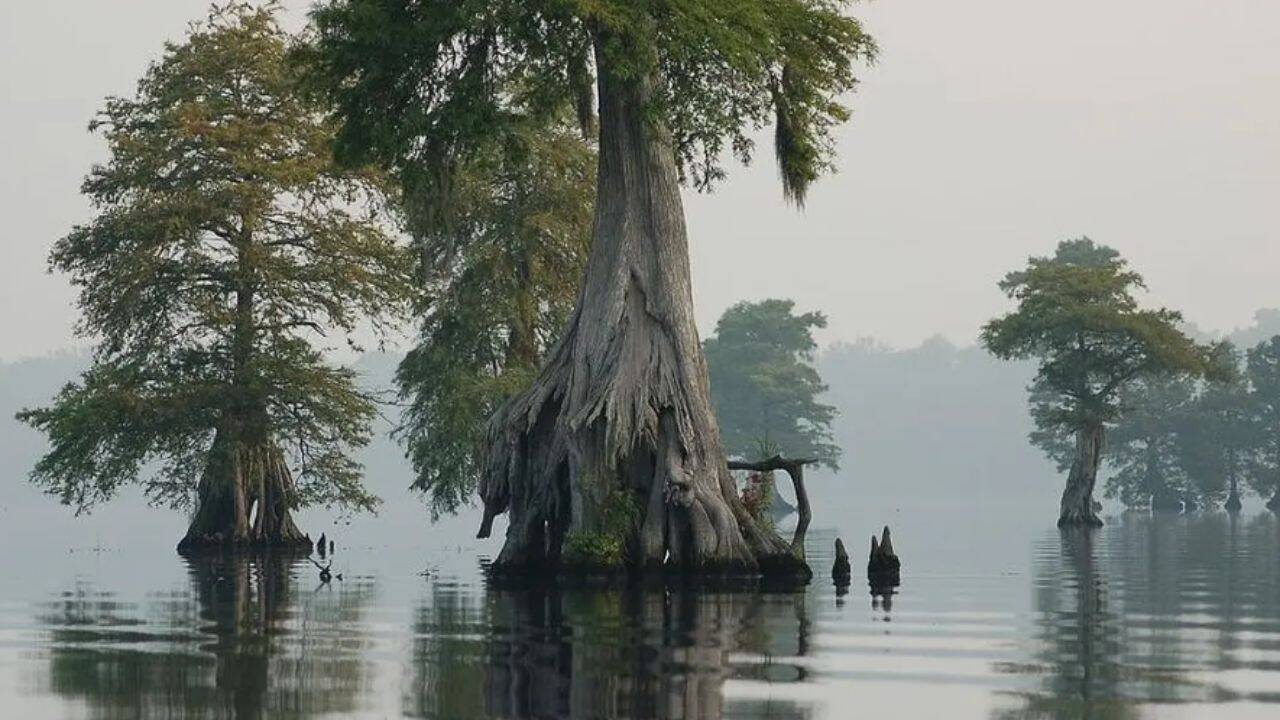
Drains are monuments to human hubris. For generations, engineers looked at sodden, impenetrable wetlands across the American landscape and saw wasted space. They dug canals, severed natural hydrology, and transformed thriving ecosystems into dry fields and scrublands. That historic mistake is now being systematically reversed in Virginia, where conservationists and state agencies have methodically re-wetted a sprawling network spanning roughly 150 miles of forgotten drainage ditches.
The mechanics of this intervention are straightforward yet profound. By blocking the arteries that bled moisture out of ancient peatlands, project managers have successfully restored water tables to their historical baselines. The financial and environmental implications extend far beyond local water management. Re-wetting these saturated soils reactivates a natural carbon sink capable of trapping approximately 200,000 tonnes of carbon dioxide equivalent.
When peatlands dry out, the damp soil that once locked away millennia of organic matter is exposed to oxygen. Microbes feast on the exposed carbon, turning a subterranean vault of greenhouse gases into an open smokestack. By plugging the ditches, Virginia is essentially slamming the lid back on that vault.
This is not a feel-good eco-stunt funded by corporate greenwashing. It is a calculated, pragmatic engineering effort rooted in hard ecological math. Yet, looking at this achievement through a purely optimistic lens misses the structural friction that makes landscape-scale restoration an uphill battle. Property rights, upstream water usage, and decades of entrenched agricultural policy mean that every single mile of re-wetted ditch represents a minor bureaucratic war.
The Mechanics of Re-Hydration
Water moves through a wetland with stubborn predictability. When colonial and industrial settlers arrived in the mid-Atlantic, they quickly realized that wet soil makes poor farmland and even worse terrain for laying rail and road infrastructure. The solution was simple. Dig a trench, funnel the water away into major river systems, and watch the water table drop.
This drainage unlocked millions of acres of rich, organic-rich earth. It also initiated a slow-motion ecological collapse. Peat is essentially compressed, half-rotted plant material that accumulated over thousands of years in oxygen-starved, waterlogged environments. As long as water keeps the oxygen out, the carbon stays put. Drop the water table by even a few inches, and the aerobic bacteria move in.
Virginia's ditch-plugging initiative relies on a deceptively low-tech toolkit. Heavy machinery installs engineered timber, sheet piling, and earthen berms at strategic bottlenecks along historical drainage networks. These barriers do not dam rivers into roaring reservoirs. Instead, they slow the outflow just enough to raise the local water table back to the surface.
Water spreads horizontally through the soil matrix once the barriers are in place. The dried peat swells, recovering its spongy capacity to hold moisture. Within months, native vegetation adapts. Cattails, sedges, and cypress trees return to reclaim their territory. The carbon oxidation stops. The sink turns back on.
The Carbon Accounting Nobody Wants to Discuss
The headline figure of 200,000 tonnes of sequestered carbon sounds impressive in a press release. Environmental bureaucrats love round numbers that look good on legislative reports. But veteran analysts know that carbon accounting in wetlands is notoriously messy.
Soil carbon dynamics do not follow a neat linear spreadsheet. When you re-wet a dry peatland, you instantly halt the massive emissions caused by peat oxidation. That is the immediate win. However, anaerobic conditions—the very state required to keep peat locked away—trigger a different chemical pathway. Microbes that thrive in oxygen-depleted water produce methane.
Methane is a far more potent greenhouse gas than carbon dioxide in the short term, packing a warming punch roughly eighty times greater over a twenty-year horizon. When you flood a drained swamp, you trade an ongoing carbon dioxide leak for a potential surge in methane emissions.
Project planners in Virginia have to walk a narrow ecological tightrope. If the water table is too high, methane emissions spike and wipe out the climate benefits of stopping carbon oxidation. If the water table is too low, the peat keeps oxidizing and releasing carbon dioxide. Finding the precise equilibrium point requires continuous monitoring, adjustable weir structures, and a willingness to tweak water levels season by season. The ecosystem is not a static machine with an off switch; it is a living, breathing metabolic system that demands constant management.
Property Lines and Upstream Politics
You cannot flood a landscape without changing where the water goes. This is the friction point that enthusiastic urban environmentalists frequently overlook. Water does not care about tax maps or fence lines. When you block a ditch that has drained a neighbor's pasture for fifty years, that neighbor tends to look at you with deep suspicion.
Much of the land targeted in Virginia's restoration footprint sits at the intersection of private agricultural holdings and public conservation easements. Convincing a landowner to let their marginal fields turn back into a swamp requires more than moral persuasion. It requires compensation, permanent easements, and ironclad legal agreements ensuring that rising water tables will not creep onto productive crop land or flood septic systems.
Upstream development further complicates the math. Suburban expansion and paved surfaces increase runoff velocity. When heavy rains hit, water rushes into the restored ditch networks faster than the revived wetlands can absorb it. Without careful catchment design, plugging old ditches can inadvertently increase flood risks for downstream communities.
State agencies have spent years negotiating these property and hydrological boundaries. Every mile of restored ditch requires dozens of sign-offs, hydrological studies, and legal compromises. The engineering is the easy part. The human element is where projects stall out.
Economic Realities of Ecosystem Services
Conservation rarely survives on goodwill alone. For a state government to pour resources into ditch-plugging and peatland management, the economic rationale must extend beyond moral obligations to future generations.
Enter the emerging market for ecosystem services. Private landowners and state agencies are increasingly positioning restored wetlands as carbon credit generators. Corporations striving to meet net-zero emissions targets are hunting for verified, permanent offsets. Peatland restoration offers a compelling product. Unlike planting tree seedlings that might burn down in a wildfire next summer, sub-surface peat carbon storage is remarkably resilient once stabilized beneath a permanent water table.
Yet, the voluntary carbon market carries its own baggage. Critics frequently point out that carbon offsets can become a license to pollute for industries that refuse to clean up their primary operations. Furthermore, verification methodologies for soil carbon are notoriously difficult to audit. Measuring how much carbon is locked in a cubic yard of muck requires exhaustive core sampling and laboratory analysis, not just satellite imagery.
Virginia’s project serves as a testing ground for whether state-backed ecological restoration can integrate cleanly into market-driven climate finance. If the monitoring protocols prove robust, this model could be replicated across the entire coastal plain from North Carolina up through the Delaware Bay. If the accounting proves leaky, it risks joining the long list of well-intentioned environmental initiatives that promised more than they could physically deliver.
The Long View on Coastlines and Resilience
Water management in Virginia is ultimately about survival against rising seas. The state's eastern flank is sinking due to post-glacial geological adjustment while sea levels climb at an accelerating rate. Saltwater intrusion is steadily creeping up tidal rivers, killing freshwater forests and turning productive farmland into ghost forests of bleached snags.
Re-wetting inland ditches creates an intentional freshwater sponge. By holding water higher on the landscape, these restored wetlands act as a buffer against both inland flooding and coastal surge. They absorb torrential downpours before those volumes can overwhelm downstream municipalities.
Nature spent millions of years perfecting a system to manage water in the coastal plain. Human ambition spent a few centuries trying to bulldoze that system into submission. What is happening across those 150 miles of Virginia ditches is not an invention. It is a reluctant surrender. We are finally admitting that fighting the water is a losing battle, and that giving room back to the swamp is the only way to keep our heads above it.


