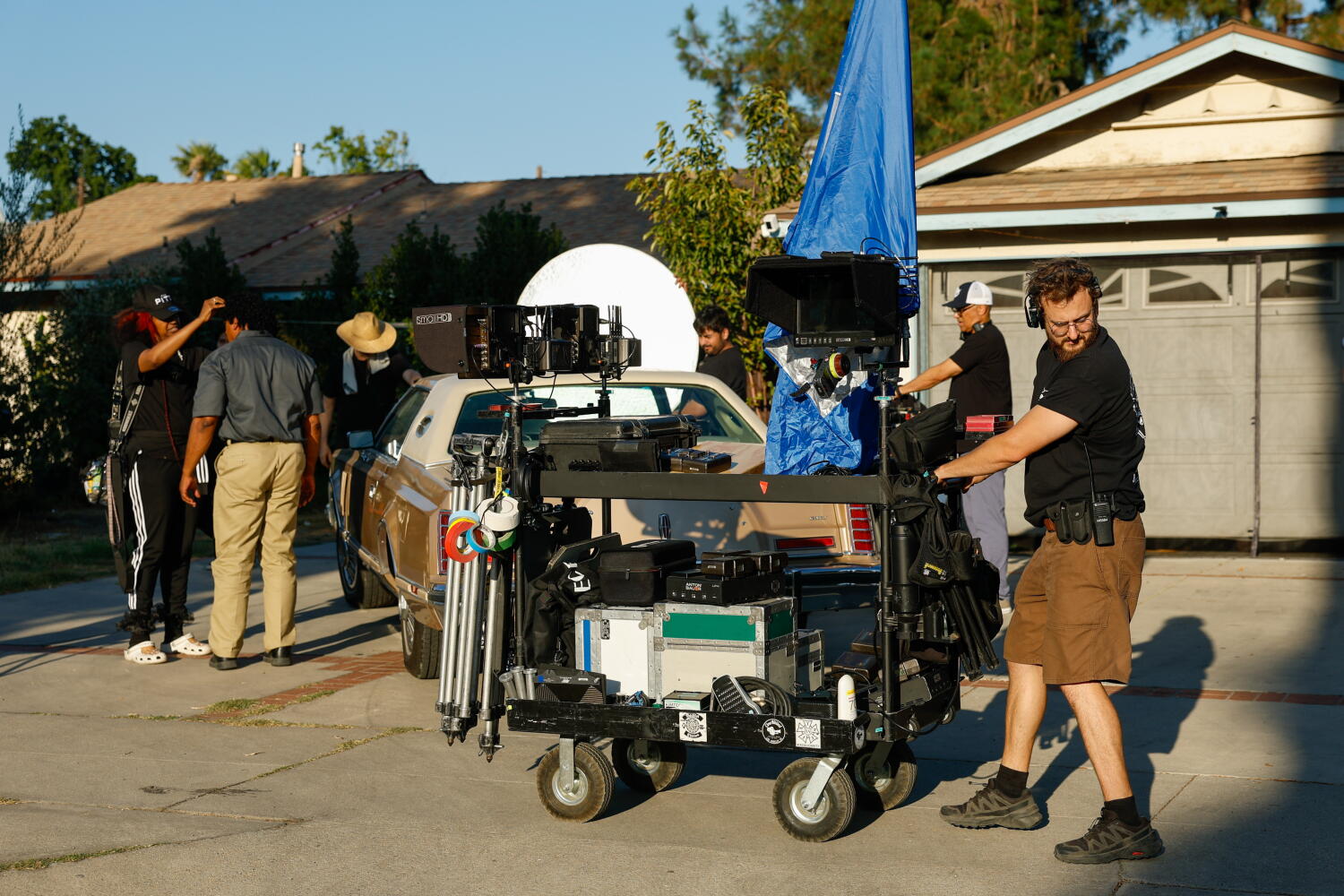
Walk onto a soundstage in Burbank at three in the morning, and you will hear a very specific kind of silence. It is not the quiet of a sleeping town. It is the hollow, expectant hush of a cathedral waiting for a congregation that has started to pray elsewhere.
For nearly a century, that silence was broken by the rhythm of hammers hitting pine, the sharp hiss of pneumatic paint guns, and the low rumble of heavy cable rolling across concrete. This was the engine room of American storytelling. When Hollywood built a world—whether it was the bustling docks of 1930s New York or the neon slicked alleys of a futuristic noir—they built it out of plywood, plaster, and sweat. The money stayed close. It paid the rent for the gaffer, bought groceries for the propmaker, and funded the pensions of the carpenters who shaped our collective dreams. You might also find this connected coverage useful: Why Hollywood Desperately Needs More Boring Movies An Industry Insider Exposes the Real Crisis Destroying Cinema.
Then the arithmetic shifted.
The numbers came out in a dry union report, stripped of poetry and stripped of panic: the United States share of studio television spending plunged from 94 percent down to 64 percent. A thirty-point drop. In the cold vocabulary of finance, it is a reallocation of capital. In the warm, bruised reality of the people who build the physical scaffolding of culture, it is an exodus. As reported in recent reports by Deadline, the results are significant.
Consider what that drop actually looks like on the ground.
Imagine a fictional gaffer named Marcus, though he could just as easily be any of the fifty thousand crew members whose phone numbers have gone quiet in Los Angeles over the last two years. Marcus has calloused thumbs, a thirty-year-old belt pouch worn black by grease, and a mortgage that depends on the cameras rolling within a fifty-mile radius of Hollywood Boulevard. Last autumn, Marcus sat in his garage staring at a disassembled C-stand, realizing his tools hadn't left their cases in four months. Not because he lost his touch. Because the production that should have been shooting on Stage 12 was currently lighting a soundstage in London, Budapest, or Toronto.
Why? The answer is as old as commerce. Tax credits.
Governments across the globe discovered a potent elixir. If you offer a studio a twenty-five or thirty percent rebate on every dollar spent within your borders, you do not just attract a film crew; you import an entire ecosystem. You fill your hotels, you employ your local caterers, and you teach your regional technicians how to run a crane. From the boardroom perspective of a media conglomerate trying to appease Wall Street after the bruising wars of the streaming gold rush, ignoring that arbitrage is financial malpractice.
Every dollar saved on a rebate is a dollar that can be used to pad a balance sheet or fund the next speculative bet on intellectual property. But money is fluid. It flows toward the lowest friction and the highest return. Talent, however, is rooted.
When production budgets pack their bags and cross oceans, they leave behind a ghost town of supporting industries. The lumber yards that supplied the set builders, the specialty costume houses that hand-stitched period lace, the local diner that stayed open twenty-four hours to feed night shoots—they all feel the draft. The thirty-percent drop in U.S. spending is not just a line item on a spreadsheet shifting from left to right. It is the literal draining of the basin that kept an entire creative workforce afloat.
There is a deeper irony here. For all our talk of digital disruption, of virtual volumes and LED walls that can project a Martian sunset behind an actor without ever leaving a warehouse, television remains remarkably labor-intensive. It requires physical bodies to move heavy things in dark rooms at impossible hours.
When a production moves abroad, it exports the physical craft but often imports the creative leadership, creating a strange, fractured hybrid industry. The director flies in first class. The local crew works twelve-hour days under American studio mandates. The profits flow back to a conglomerate headquartered in Manhattan or Burbank, while the economic footprint takes root in foreign soil.
We are watching the globalization of Hollywood happen in real time, and we are only beginning to reckon with the collateral damage.
For decades, the American entertainment industry enjoyed a natural monopoly born of infrastructure and institutional knowledge. You shot in Los Angeles because that was where the infrastructure lived. But infrastructure is no longer fixed to geography. Massive, state-of-the-art production hubs have sprouted in places that didn't have a single professional crane operator twenty years ago. They built the stages, trained the crews, and wrote the tax codes designed to siphon the water out of our well.
So what happens when the dust settles?
We are forced to confront a sobering reality. The golden goose has learned how to fly, and it prefers airspaces where the feed is cheaper. Hollywood is discovering that its greatest export was never just the content on the screen, but the complex, interconnected web of human expertise that made the illusion believable.
When you dismantle that web, piece by piece, in pursuit of short-term margin optimization, you cannot simply reassemble it with a software update. Craft takes generations to build and only a fiscal quarter to dismantle.
The stage lights in Burbank remain dim tonight. Somewhere across the Atlantic, a generator hums in the cold mist, powering a scene that once would have been built on American soil. The cameras roll. The actors hit their marks. And the world watches, entirely unaware of the invisible ocean the story had to cross just to reach the light.