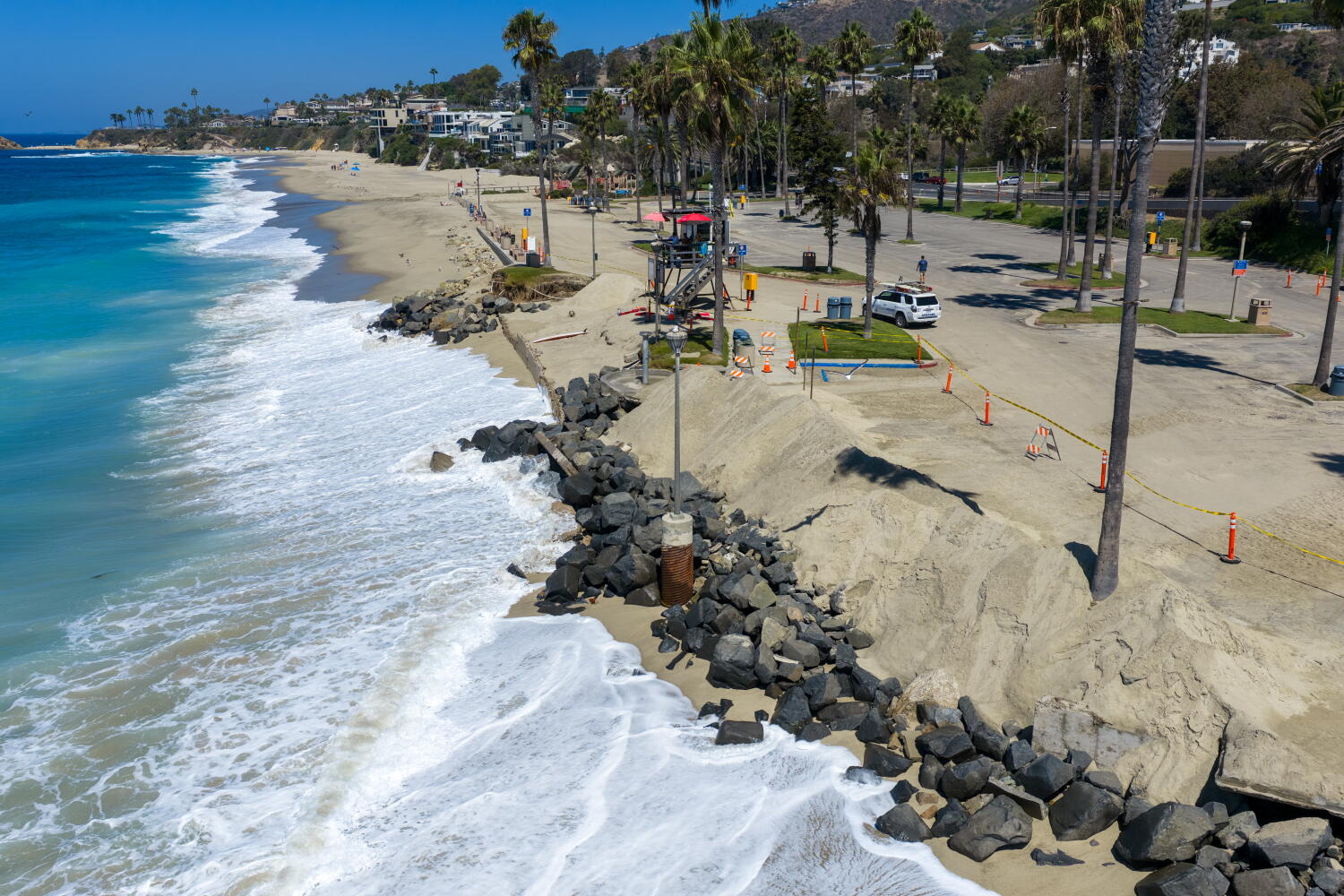
The salt always stays on your skin long after you leave Aliso Beach. It crusts on the cuffs of denim, cakes underneath fingernails, and leaves that faint, metallic tang on the lips that tells anyone who grew up along the Southern California coast exactly where you spent your afternoon.
For generations, this stretch of Orange County coastline was treated as a permanent fixture. It was an immutable playground of coarse golden sand, where bonfire smoke drifted low over the Pacific at dusk and the heavy, rhythmic pounding of the shorebreak served as the baseline soundtrack to coastal living. Families hauled oversized coolers down the steep ramp, toddlers chased receding foam, and surfers stared out at the horizon, waiting for the right set to peel off the point.
The ocean has a long memory, and it is currently calling in old debts.
Walk down to the water line today, and the physical reality of the place has shifted. The expansive blankets of sand that locals remember from childhood summers have grown thin, starved, and dangerously fragile. Step by step, high tide is creeping closer to the bluff lines, chewing away at the protective buffer that stands between the Pacific and the infrastructure of Laguna Beach.
Aliso Beach has officially become the latest shoreside community to join a desperate, high-stakes battle against relentless beach erosion.
To understand why this matters, we have to look past the casual postcard imagery and examine the mechanics of a dying shore. Coastal erosion is often discussed in sterile boardrooms and academic papers as a slow-motion geological inevitability. It is treated as a math problem involving wave energy, littoral drift, and cubic yards of imported sediment. But ask Elena Vance, a retired marine biology teacher who has lived within walking distance of Aliso for forty years, and she will tell you it feels much more like a slow eviction.
"You don't notice it day to day," Elena says, watching a set of gray-bellied waves break uncomfortably close to the seawall. "You think the tide is just exceptionally high this week. Then you realize the volleyball courts have moved back twenty feet. Then the public access stairs are dangling six feet above empty air. Suddenly, you look down and realize the ocean is standing where your favorite parking spot used to be."
Her observation is backed by hard, unyielding data. Decades of coastal development, dammed rivers that once fed natural sediment to the shore, and rising sea levels driven by changing global climates have completely disrupted the natural delivery system of sand. Beaches do not stay put on their own anymore. They are trapped in an artificial cage of concrete revetments, groins, and harbors that block the ancient north-to-south migration of sand. Without intervention, places like Aliso Beach are destined to drown beneath the rising tide, transformed from wide, welcoming expanses of recreation into narrow strips of jagged rock and churning foam.
This is where the community steps in. Not out of academic interest, but out of absolute necessity.
Consider what happens next: the city councils, the environmental engineers, and the local residents are forced to make agonizing choices about the future of their coastline. Do they build higher seawalls, which often accelerate erosion right in front of them while destroying the natural beauty of the beach? Do they pump millions of dollars into expensive sand replenishment projects, knowing that the very next major winter storm could wash all that imported sand right back out to sea?
These are not hypothetical policy debates. They are immediate, visceral dilemmas playing out in real time along the Pacific Coast Highway.
The strategy currently unfolding at Aliso Beach relies heavily on a delicate balancing act of sediment management and environmental engineering. Planners are looking at offshore sand dredging, trucking in thousands of tons of compatible grain from inland quarries, and reinforcing natural dune systems. It is an expensive, temporary bandage on a chronic, systemic wound. Every single truckload of sand is a physical testament to human stubbornness, an attempt to negotiate with an ocean that does not negotiate.
Critics often ask why we bother. If the sea wants to reclaim the land, why spend millions of dollars fighting a losing battle against the tide?
The answer lies in what these coastal communities represent. A beach is not just a collection of real estate or a convenient place to sunbathe on a Saturday afternoon. It is a shared commons. It is the one place where economic status, background, and age dissolve completely under the warmth of the sun and the roar of the surf. When a community loses its beach, it loses a vital piece of its collective identity. It severs the generational thread that ties grandparents, parents, and children to the exact same patch of earth.
When Elena Vance brings her grandchildren down to Aliso Beach now, she doesn't talk to them about littoral drift or climate models. She simply watches them dig their toes into the damp, newly replenished sand near the shoreline, searching for smooth fragments of sea glass and small, darting sand crabs.
The tide will eventually turn, and the waves will test the newly engineered defenses of the coast once again. But for tonight, the bonfires are lit, the salt air is thick and familiar, and the golden strip of Aliso Beach remains stubbornly, defiantly right where it belongs.