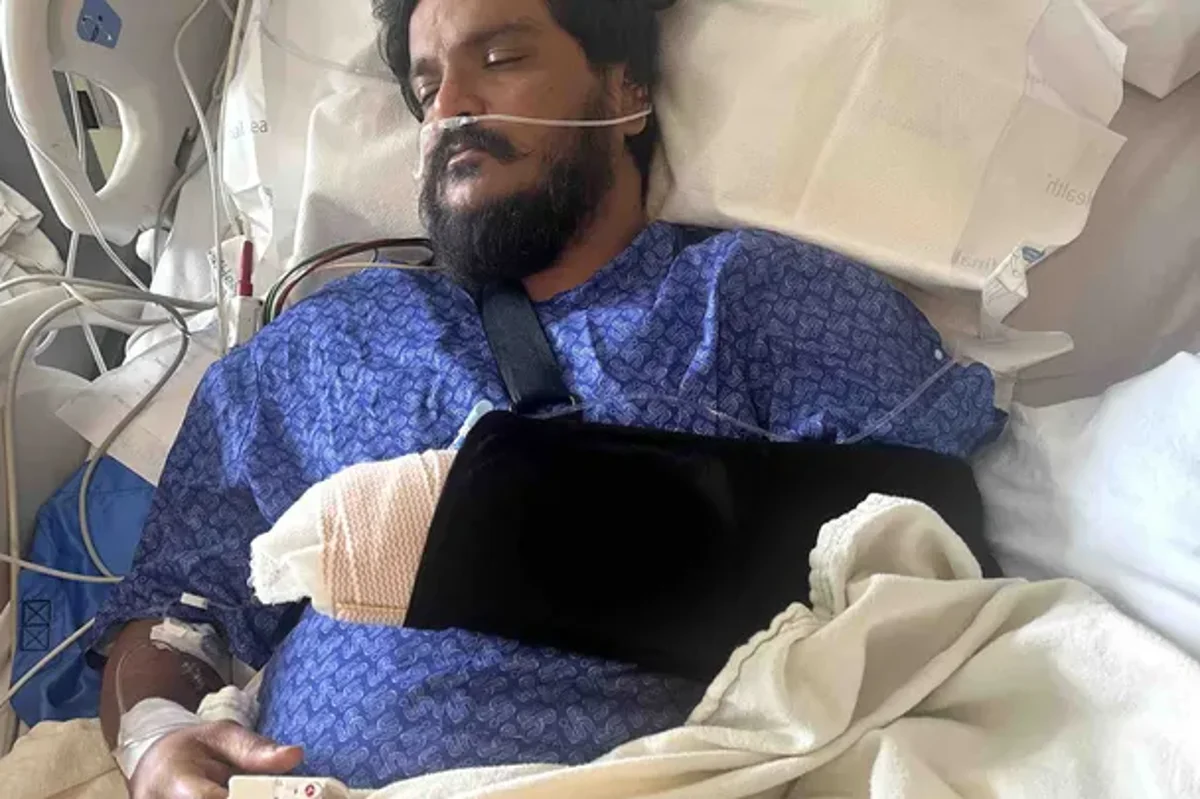
A quiet Monday afternoon at a suburban mall should never end in a pool of blood, yet that is exactly what happened at the Valley Fair Mall in West Valley City, Utah.
A man approached a mall kiosk worker, initiated a seemingly normal conversation, asked for his name, and then asked about his religion. When the worker, a Muslim man named Sohail, turned around to kindly grab a bottle of water for him, the attacker unleashed a frenzied, brutal knife attack.
Sohail was stabbed over 15 times.
This was not a random act of mall violence. According to police booking affidavits, the suspect, 48-year-old Peter Michael Larsen, openly admitted to police that he targeted the victim with the explicit intent to kill him because of his Muslim faith. He went even further, chillingly telling investigators that he "intends to kill Muslims".
This horrifying incident demands a hard look at the terrifying rise in faith-based violence, the mechanics of lone-wolf radicalization, and the incredible bravery of the everyday people who chose to run toward the danger rather than away from it.
Anatomy of an Attack
The transition from a quiet retail environment to a chaotic crime scene took only seconds.
On Monday, July 13, 2026, Sohail was working his shift at a retail kiosk inside the Valley Fair Mall. Larsen approached the counter. According to accounts shared by Imam Shuaib Din of the Utah Islamic Center, who has been supporting the victim’s family, Larsen used a classic distraction technique. He asked Sohail his name, questioned him about his religion, and asked for a bottle of water.
The moment Sohail’s back was turned, Larsen pulled out a knife and began stabbing him repeatedly.
Sohail suffered severe wounds all over his body and was left bleeding profusely on the mall floor. He was rushed to the hospital in critical condition, where he has undergone multiple life-saving surgeries targeting his hands, heart, and lungs.
We talk a lot about polarization in the abstract. But for Sohail, polarization looked like 15 stab wounds received while trying to perform a basic act of customer service.
The Bystanders Who Fought Back
If there is any light in this incredibly dark story, it lies in the immediate, split-second heroism of the mall shoppers and fellow workers.
Before police could even arrive on the scene, several bystanders chose not to be spectators. They tackled Larsen to the ground, pinned him, and wrestled the knife directly out of his hands. During the violent struggle to disarm him, bystanders struck Larsen, resulting in injuries that required him to be hospitalized before he could be booked into jail.
Let's be clear: their intervention saved Sohail's life.
Without those unnamed individuals risking their own safety to subdue an active, armed attacker, we would undoubtedly be talking about a homicide today. They didn't stop to ask about anyone's background or beliefs; they saw a human being being slaughtered and they chose to stop it.
A Pre-Planned Mass Casualty Event
When police searched Larsen and took him into custody, the details got even worse.
Investigators filed a court affidavit warning that Larsen poses a "substantial danger to the public" if released. Why? Because Larsen didn't just snap. His violent actions were fueled by deeply entrenched extremist ideologies and, according to police records, he had been planning "pre-planned mass casualty events".
Larsen has been booked into the Salt Lake County jail on charges of attempted murder and prohibited dangerous weapon conduct, where he is being held without bail.
The fact that a man with active mass-casualty ambitions was walking around a local Utah mall with a knife should terrify everyone. It highlights a gaping vulnerability in how we detect and disrupt domestic, ideologically motivated extremists before they act.
The Grim Statistics Behind the Hatred
This stabbing is not an isolated incident. It is part of an ongoing, alarming surge in Islamophobic and bias-motivated attacks across the United States.
Consider the numbers:
- The Council on American-Islamic Relations (CAIR) documented 8,683 anti-Muslim bias complaints in 2025 alone.
- This represents the highest number of bias complaints CAIR has ever recorded since they began tracking this data thirty years ago, in 1996.
- Over the last few years, we have seen horrific violence, including the fatal 2023 stabbing of a 6-year-old Muslim child in Illinois and a devastating mosque shooting in San Diego.
Civil rights advocates point out that this spike in violence is directly linked to the toxic, dehumanizing rhetoric that fills our airwaves and social media feeds. When groups of people are constantly painted as inherently dangerous or secondary citizens, unstable individuals like Larsen feel validated in acting out their violent fantasies.
How Communities Can Protect Themselves
Condemning these acts on social media is easy. Actually building safer communities takes work. If you want to take action today, there are concrete steps you can take to make your local spaces safer:
- Support the Victim: A GoFundMe campaign has been established to help Sohail cover the astronomical medical bills from his extensive surgeries. Directly supporting victims of hate crimes helps them rebuild their lives.
- Learn De-escalation and Bystander Intervention: Organizations like Right To Be offer free, virtual bystander intervention training. Knowing how to safely intervene when you see harassment can prevent situations from escalating into physical violence.
- Hold Local Leaders Accountable: Demand that local police departments and prosecutors treat bias-motivated violence with the gravity it deserves. Push for comprehensive hate crime tracking and swift, transparent prosecutions.
- Foster Interfaith Dialogue: Extremism thrives on isolation and the "othering" of communities. Building strong, visible partnerships between local churches, synagogues, temples, and mosques demystifies different cultures and creates a united front against hate.
Hatred doesn't survive well in communities where people actually know, respect, and look out for one another. The tragedy in Utah shows us the worst of humanity, but the quick actions of the bystanders show us the standard we must all live up to when crisis strikes.