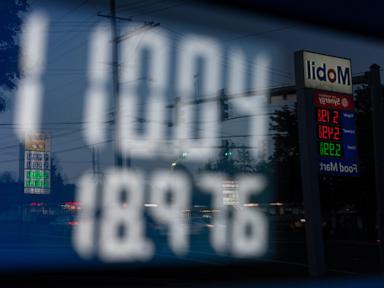
When geopolitical flashpoints erupt between the United States and Iran, public attention invariably gravitates toward the immediate threat of military escalation, diplomatic breakdown, and regional instability. Beneath the surface of these high-stakes diplomatic crises, a quieter and far more predictable mechanism operates with mechanical precision. Oil companies reap massive financial windfalls.
This transfer of wealth is not an accident of history. It is the direct result of how global energy markets price risk, panic, and structural supply vulnerability. Understanding how a regional skirmish in the Middle East transforms into billions of dollars in unexpected corporate profit requires looking past the political rhetoric and examining the plumbing of physical commodity trade.
The Mechanics of Crisis Pricing
Markets despise uncertainty more than they despise bad news. When tensions flare in the Persian Gulf, traders immediately factor a worst-case scenario into the cost of a barrel.
Consider the Strait of Hormuz. Roughly one-fifth of the world’s petroleum passes through this narrow maritime chokepoint daily. If a conflict threatens to disrupt tanker traffic through those waters, the perceived risk of immediate supply restriction causes futures contracts to spike instantly.
This price surge happens long before a single drop of actual oil production is lost. Major petroleum producers holding unhedged reserves suddenly find themselves selling the exact same barrels of crude at significantly higher spot prices. Their extraction costs remain largely fixed in the short term, meaning the entirety of the price spike flows straight into operating margins.
Geopolitical Tense Event -> Hormuz Disruption Fear -> Futures Spike -> Spot Price Inflation -> Margin Expansion
Inventory Deficits and Elasticity Failures
The public often assumes that energy corporations deliberately manipulate supply to drive up prices during international crises. The reality is more structural and less conspiratorial.
Global petroleum supply chains operate on razor-thin margins and optimized logistics. Spare production capacity is heavily concentrated within a few hands, primarily among core OPEC members. When a major geopolitical shock occurs, the market lacks the immediate elasticity to substitute lost or threatened volumes from alternate sources.
Refiners still need feedstock to run their plants. Airlines still require jet fuel. Freight networks still demand diesel. When demand remains stubbornly inelastic while panic contracts supply expectations, prices rise exponentially rather than linearly.
Independent exploration and production firms capture these inflated margins automatically. Even if a domestic shale operator in Texas or North Dakota has nothing to do with the Middle East, global pricing benchmarks like Brent and West Texas Intermediate rise together. The rising tide lifts every drilling rig, regardless of geographic location.
Historical Precedents in Modern Markets
We have seen this script play out across decades. Every time tensions escalate in the Middle East, financial statements from the major integrated energy firms record anomalous surges in quarterly net income.
During previous crises involving Iranian proxy conflicts or direct naval standoffs, institutional investors pivot heavily toward energy equities. These companies act as safe-haven assets with built-in inflation hedges. As consumer pain manifests at the gasoline pump, corporate boardrooms quietly approve expanded share buybacks and increased dividend yields.
This dynamic creates a profound disconnect between broader economic health and corporate balance sheets. While inflation bites into consumer purchasing power and transportation costs ripple through retail supply chains, upstream producers log record free cash flow.
The Hedging Illusion
Defenders of the industry often point out that major energy corporations do not simply collect spot prices at whim. Many use complex financial hedging strategies to lock in prices months or years in advance.
While accurate for some operators, hedging provides only temporary insulation. A prolonged state of elevated geopolitical risk eventually forces hedges to roll over at significantly higher market rates. Once those old, lower-priced contracts expire, the corporate entity is fully exposed to the new, higher pricing paradigm.
Furthermore, independent oilfield service providers, midstream pipeline operators, and downstream refiners experience distinct waves of profitability. Refiners, for example, can suffer if crude prices spike faster than finished product demand allows them to pass costs along to consumers. However, upstream drillers almost universally benefit from sustained geopolitical risk premiums.
Capital Allocation and Shareholder Returns
What happens to the cash generated during these conflict-driven surges tells the ultimate story of modern corporate governance. Unlike the capital expenditure super-cycles of past decades, contemporary management teams display extreme capital discipline.
Instead of pouring billions into risky wildcat drilling operations to chase fleeting high prices, executives prioritize balance sheet fortification and direct shareholder returns. Free cash flow funnels directly into equity repurchases and dividend distributions. Institutional pension funds and retail investors alike benefit from these payouts, intertwining public retirement security with the financial spoils of geopolitical conflict.
This creates a perverse economic incentive structure. While society pays an indirect tax through higher energy bills, capital markets reward the companies profiting from the underlying instability.
The financial windfall from a US-Iran confrontation is not a bug in the global commodity architecture. It is an intended, mathematically guaranteed feature of a market system that prices physical scarcity through fear and speculation. As long as the global economy remains dependent on localized chokepoints for baseline energy needs, every diplomatic standoff will carry a quantifiable, highly lucrative price tag for those who control the wells.