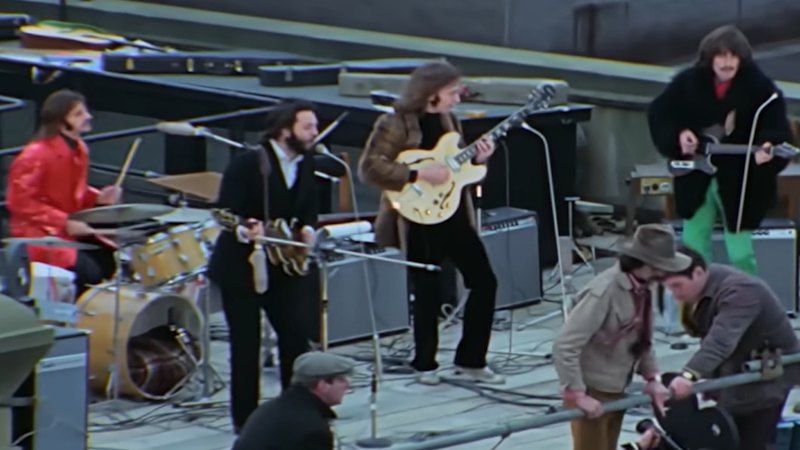
The convergence of cultural preservation and high-density urban development creates an inevitable flashpoint where commercial intent collides with community utility. Apple Corps Ltd’s recent acquisition and planned transformation of 3 Savile Row into a seven-story, immersive Beatles museum presents a classic study in structural urban friction. While public discourse focuses on the emotional optics of the project—popularly conceptualized as a literal blocking of daylight—the true conflict lies within a quantifiable matrix of spatial displacement, microclimate alteration, and structural heritage constraints.
To evaluate this dispute requires moving past sensational headlines and analyzing the precise mechanics of urban development. The friction can be deconstructed into three core pillars: structural load-bearing limitations of Grade II listed properties, localized daylight depletion as a function of urban canyon geometry, and the economic friction between legacy commercial districts and high-volume tourism management. In other news, we also covered: The Anatomy of Reality Television Exploitation A Brutal Breakdown.
The Microclimate Bottleneck: Geometric Daylight Depletion
The primary driver of local backlash centers on the physical alteration of light access. In dense metropolitan corridors like London’s Mayfair, daylight is not an ambient certainty but a strictly regulated, quantifiable commodity governed by legal frameworks such as the Rights of Light and the Building Research Establishment (BRE) guidelines.
When a structure undergoes vertical expansion or envelope modification to accommodate modern museum infrastructure—such as external mechanical, electrical, and plumbing (MEP) enclosures, elevators, or rooftop safety barriers—it alters the surrounding urban canyon geometry. The mechanics of this alteration rely on two distinct metrics: Vanity Fair has also covered this critical topic in extensive detail.
Vertical Sky Component (VSC)
This metric measures the amount of direct sky visible from the center of a neighboring window. A standard urban baseline dictates that if a new development reduces the VSC of adjacent properties to less than 27%, or to less than 0.8 times its former value, the loss of light becomes noticeable and economically detrimental to commercial occupiers. The proposed structural additions at 3 Savile Row threaten to push neighboring facades past this critical threshold.
No-Sky Line (NSL)
This boundary divides a room into areas that can see the sky directly and those that cannot. Even minor structural elevations on a rooftop to facilitate tourist access (such as reinforced glass balustrades or acoustic baffling) shift the NSL deeper into adjacent offices, increasing reliance on artificial lighting and degrading real estate valuation.
The cause-and-effect loop missed by casual reporting is structural. The museum requires a vertical extraction system to service seven floors of high-density foot traffic. Because 3 Savile Row is a Grade II listed Georgian mansion, these industrial HVAC units cannot be placed internally without destroying historic floorboards and plasterwork. The operational necessity forces these bulkheads onto the roof, directly creating the physical profile that intercepts solar paths and triggers neighborhood litigation.
The Load-Bearing Paradox of Heritage Conversions
Converting a 250-year-old residential townhouse into a mass-tourism hub involves a severe mismatch between historical engineering and modern regulatory mandates. The structural cost function of this conversion is dictated by strict load-bearing calculations.
Standard commercial office space or residential heritage properties are engineered for low-density static loads. The UK Building Regulations specify that domestic floors are typically designed for a uniform distributed load (UDL) of 1.5 kilonewtons per square meter ($1.5 \text{ kN/m}^2$). In contrast, an institutional museum space subject to heavy, moving crowds requires a structural capacity of at least $4.0 \text{ to } 5.0 \text{ kN/m}^2$.
[Historic Residential Standard: 1.5 kN/m²]
       │
       ▼ (Requires Internal Steel Exoskeleton)
[Modern Museum Mandate: 4.0 - 5.0 kN/m²]
This differential creates an engineering bottleneck. To legally permit thousands of fans to traverse seven floors, the building requires an internal steel framework to transfer the live load directly to the foundations.
- The First Limitation: Excavation in the basement—the very site where the Let It Be sessions occurred—is constrained by the underlying water table and the structural integrity of neighboring foundations on Savile Row.
- The Second Limitation: The introduction of these structural reinforcements reduces internal square footage, forcing architects to push ancillary services outward and upward, exacerbating the external daylight blockage.
Tourism Externalities and Spatial Displacement
Savile Row operates as a highly specialized, low-volume, high-margin economic ecosystem dominated by bespoke tailoring houses. The introduction of a high-volume tourist anchor shifts the district’s operational equilibrium.
| Variable | Legacy District Baseline | Museum Projection |
|---|---|---|
| Foot Traffic Density | Low volume, high dwell time | High volume, low dwell time |
| Peak Operational Hours | 09:00 – 18:00 (Weekdays) | 10:00 – 22:00 (7 Days/Week) |
| Logistical Burden | Minor courier deliveries | Continuous courier, retail, and waste logistics |
This behavioral shift introduces structural bottlenecks to the street’s functionality. The primary operational constraint is pedestrian flow management. The pavement widths on Savile Row are designed for low-density transit. A seven-story museum operating at capacity creates an immediate spillover effect, where queuing patrons disrupt the entryways of adjacent commercial establishments.
Furthermore, the acoustic profile of the area undergoes a fundamental change. The iconic 1969 rooftop concert was a singular historical disruption; the permanent institutionalization of that space implies continuous crowd noise on the roof terrace, directly impacting the quiet enjoyment required by upper-floor commercial tenants nearby.
Strategic Playbook for Urban Reconciliation
To mitigate local opposition and ensure project viability, Apple Corps Ltd must abandon purely aesthetic public relations campaigns and deploy a data-driven engineering strategy.
First, the implementation of dynamic, passive-reflective sun tracking systems (heliostats) on the building’s rear elevation can redirect sunlight into affected urban micro-canyons, neutralizing VSC deficits. Second, architectural firms must employ translucent structural materials, such as structural channel glass or specialized fluoropolymer ETFE cushions, for required rooftop safety barriers. This maintains safety compliance while permitting maximum light transmission.
Finally, the museum must enforce a strict, time-slotted, digital ticketing architecture that caps instantaneous building occupancy to numbers aligned with the street's physical carrying capacity. By flattening the arrival curve of visitors, the project can minimize pavement congestion, preserving the logistical integrity of Savile Row while monetizing its unparalleled cultural asset.