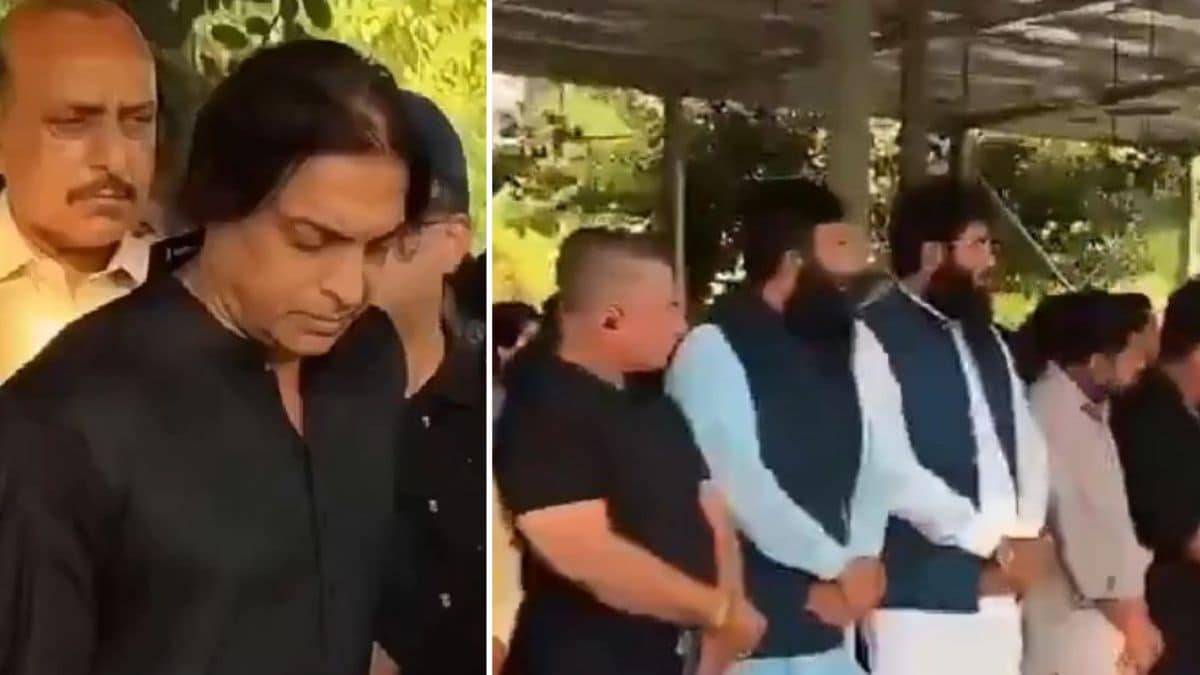
The lines between celebrity life, mainstream politics, and outlawed militant networks in Pakistan just blurred again in the most public way possible. When former international cricket star Shoaib Akhtar lost his elder brother, Shahid Akhtar, to a sudden heart attack, it should have been a private moment of grief. Instead, the funeral at the H-8 graveyard in Islamabad transformed into a massive geopolitical talking point.
Videos circulating across social media platforms soon revealed a list of mourners that turned heads globally. High-ranking figures from the proscribed terrorist organization Lashkar-e-Taiba, including its deputy chief Saifullah Kasuri, walked freely among the crowd. Alongside him was Inam ur Rehman Kamboh, the Islamabad president of the Pakistan Markazi Muslim League. This group is widely recognized by international intelligence agencies as a political front for Lashkar-e-Taiba, created to dodge international sanctions.
The sight of globally sanctioned individuals operating openly in the capital city sparked immediate outrage, especially across the border in India. While there is zero evidence suggesting Shoaib Akhtar personally invited these individuals or shares their ideology, the event highlights a troubling reality. Banned extremist elements still enjoy massive social mobility and public space within Pakistan.
The Men in the Crowd and Why Their Presence Matters
Funerals in South Asia are large public gatherings where community members, acquaintances, and public figures show up without formal invitations. It is highly likely that Shoaib Akhtar and his grieving family had no hand in managing the guest list during a chaotic time of personal loss. Yet, the presence of figures like Saifullah Kasuri cannot be brushed aside as a random coincidence.
Saifullah Kasuri is not just any local leader. He is the deputy chief of Lashkar-e-Taiba and stands accused by Indian intelligence as the mastermind behind the April 2025 terror attack in Pahalgam, which resulted in the deaths of 25 tourists. For an individual carrying that level of baggage to attend a high-profile public event in Islamabad sends a stark message about Pakistan's domestic counter-terrorism enforcement.
The other notable attendee, Inam ur Rehman Kamboh, represents the Pakistan Markazi Muslim League. The political party was essentially engineered by UN-designated terrorist Hafiz Saeed to serve as a surrogate political entity. After previous iterations like Jamaat-ud-Dawa and the Milli Muslim League faced crippling domestic and international bans, the political front rebranded. They even fielded candidates in the 2024 Pakistani general elections, attempting to insert extremist ideologies directly into the mainstream political framework.
Fresh Fuel for India and Pakistan Tensions
This public appearance comes at a time when relations between New Delhi and Islamabad are already at a historic low. Following the horrific Pahalgam attack last year, India completely shifted its diplomatic and military posture. New Delhi took the unprecedented step of suspending the decades-old Indus Waters Treaty, citing what it called "water terrorism" from across the border.
Simultaneously, the Indian military initiated Operation Sindoor, a aggressive campaign targeting militant infrastructure. Reports indicate that Operation Sindoor struck deep into terrorist facilities, including the traditional Lashkar-e-Taiba headquarters located in Muridke, while applying military pressure stretching from Rawalpindi down to Sukkur.
The strikes severely crippled the operational capability of these networks. However, intelligence reports suggest that outfits like Lashkar-e-Taiba have spent the last few months actively trying to rebuild their public image and operational bases. Kasuri himself has remained defiant, releasing fiery videos threatening retaliatory actions against India, including warnings of maritime strikes reminiscent of the 26/11 Mumbai attacks. He has also loudly protested India’s suspension of the Indus Waters Treaty, warning that putting pressure on Kashmir would lead to widespread instability.
The Open Secret of State Backing
What makes the funeral footage even more alarming for international watchdogs is how it validates long-held suspicions about the freedom these commanders possess. In separate video clips that surfaced earlier, Kasuri openly bragged about his access to state institutions. He claimed on camera that official military circles regularly invite him to events and even request him to lead funeral prayers for fallen soldiers.
When a commander from a banned organization openly claims he leads prayers for the military and walks unbothered into a high-profile funeral in the nation's capital, it dismantles the narrative that Pakistan is actively dismantling these networks. It reveals a complex social structure where extremist leaders are woven into the fabric of local communities and influential circles.
The Pakistan Markazi Muslim League itself published videos of their leadership attending the funeral prayers, using the sporting fame of Shoaib Akhtar to gain digital traction and project legitimacy. By showing up at the grief-stricken gathering of one of the country's most beloved sports icons, the group cleverly attempts to normalize its presence in everyday civil society.
Navigating the Fallout for a Sporting Icon
Shoaib Akhtar remains a household name globally, celebrated for his legendary career as the world's fastest bowler before retiring in 2011. Since leaving the pitch, he has built a successful career as an outspoken cricket commentator, working on international broadcasts and building a massive digital following. He has frequently engaged with international fans, including large audiences in India through past commentary stints.
This controversy puts the former cricketer in an incredibly difficult position. Being connected by association to a gathering featuring internationally sanctioned individuals threatens his global brand and professional relationships. For international broadcasters and corporate sponsors, the optics of these associations are incredibly sensitive, even when the public figure involved had no control over who walked through the cemetery gates.
The incident shows how difficult it is for public figures in Pakistan to completely isolate themselves from the complex network of local politics, religious fronts, and militant proxies that exist in the background. It serves as a reminder that the shadow of these banned organizations reaches deep into public life.
To understand how these entities maintain their influence despite international pressure, we can look at how they systematically transition between different names and fronts over the years.
| Historical Organization Name | Current Proxy Front | Primary Objective |
|---|---|---|
| Lashkar-e-Taiba (LeT) | Pakistan Markazi Muslim League (PMML) | Political mainstreaming and community integration |
| Jamaat-ud-Dawa (JuD) | Localized charity operations | Maintaining grassroots support through social services |
| Milli Muslim League (MML) | Integrated regional wings | Bypassing international financial and electoral bans |
International security analysts point out that as long as these groups are allowed to run political fronts and move unhindered through high-profile social events, international financial watchdogs will keep a close eye on Islamabad's counter-terrorism compliance. The visual evidence from the H-8 graveyard proves that changing the name of an organization does little to change the freedom its leadership enjoys on the ground.
Moving forward, foreign policy experts suggest that India will likely use this incident to justify its hardline stance and its ongoing suspension of bilateral treaties. For Pakistan, the challenge lies in deciding whether it will continue to tolerate the public visibility of these proxy leaders or finally enforce strict bans that keep them out of civil society and the public eye.