Hong Kong holds a bizarre ecological secret that could determine the survival of Indonesia’s critically endangered yellow-crested cockatoos. While native populations face near-extinction in their homeland due to decades of trapping, a thriving, accidental feral population in Hong Kong has become a vital genetic insurance policy. This urban colony offers a highly unexpected blueprint for international conservation efforts.
From Illicit Trade to an Urban Haven
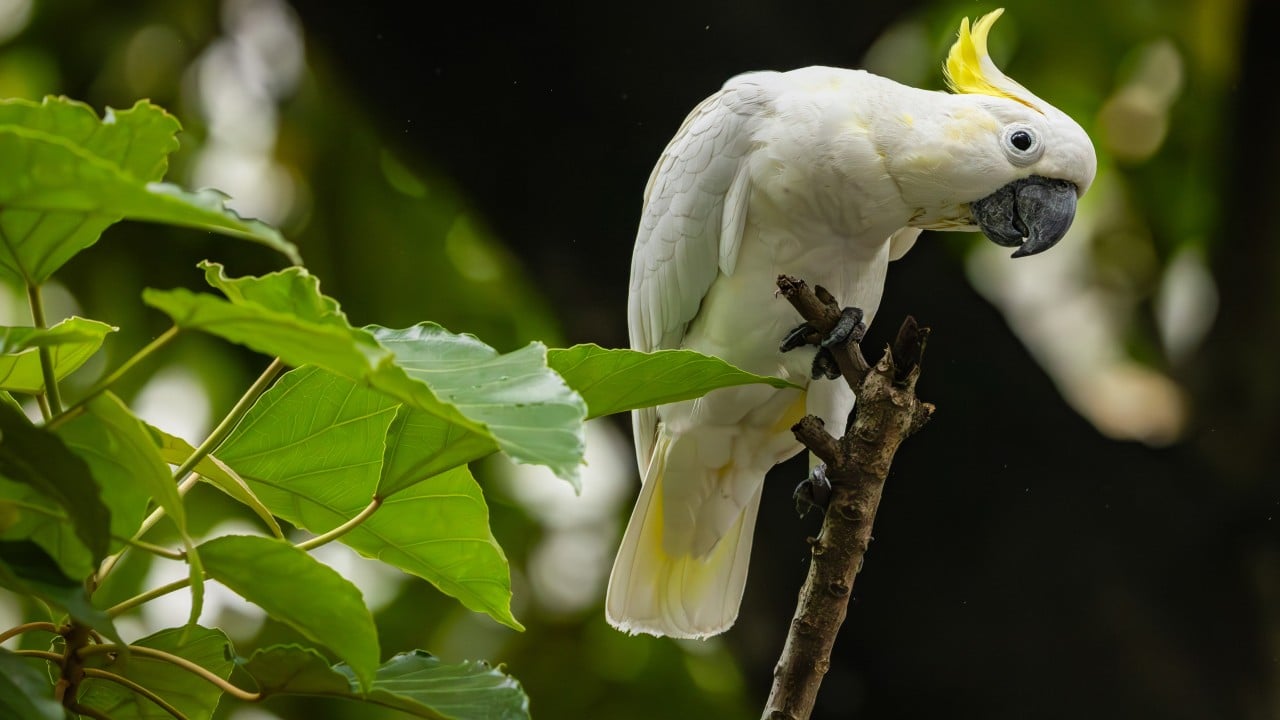
The yellow-crested cockatoo is a striking bird recognizable by its brilliant white plumage and expressive lemon-colored crest. Historically, these birds carpeted the forests of Indonesia and East Timor. Today, wild native populations have plummeted to an estimated few thousand individuals. Read more on a connected subject: this related article.
The primary culprit is the global pet trade. For generations, poachers stripped Indonesian islands of these birds to satisfy high-paying buyers overseas. Ironically, this exact trade laid the groundwork for Hong Kong's current role as an accidental sanctuary.
During the mid-twentieth century, hundreds of captured cockatoos passed through Hong Kong, a major shipping hub. Some escaped from aviaries; others were deliberately released by owners or officials during moments of political upheaval, such as the 1941 Japanese invasion. More journalism by TIME highlights related views on the subject.
Those displaced birds found refuge in the mature trees of Hong Kong Island's affluent Mid-Levels district, the Hong Kong Zoological and Botanical Gardens, and government house grounds. They did what they could not do in their heavily poached native habitats. They multiplied.
The Mechanics of Feral Success
Urban environments rarely suit endangered forest dwellers. However, Hong Kong offers a unique microclimate and structural environment that mimics their natural requirements.
- Abundant Nesting Sites: Mature exotic trees planted during the colonial era feature deep cavities perfect for nesting.
- Lack of Natural Predators: Large birds of prey and tree-climbing carnivores are largely absent from Hong Kong’s urban core.
- Legal Protection: Local laws strictly prohibit the hunting or trapping of wild birds, providing a shield the Indonesian government has historically struggled to enforce across its vast archipelago.
The Genetic Math Behind the Canopy
Academics studying the Hong Kong population have highlighted a startling statistic. The territory is home to an estimated 10% of the world's remaining yellow-crested cockatoos. This is not just a quirky local phenomenon. It is a critical buffer against total extinction.
When a species shrinks to a few isolated pockets, genetic drift and inbreeding become existential threats. If a localized disease or a massive typhoon hits the remaining Indonesian strongholds, like Sumba or Komodo, the species could vanish overnight.
Hong Kong's population operates as an independent genetic reservoir. Because these birds descended from various shipments snatched from different Indonesian islands decades ago, their combined gene pool is remarkably diverse. They are a living time capsule of the species' healthier past.
The Complexity of Relocation
The obvious solution seems simple. Catch the Hong Kong cockatoos and fly them back to Indonesia.
In practice, conservation biology is never that straightforward. Decades of living in a concrete jungle alter animal behavior. Hong Kong's cockatoos are accustomed to human noise, urban diets, and specific microclimates. Dropping them directly into a competitive, predator-heavy Indonesian rainforest could result in a high mortality rate.
Furthermore, avian diseases present a major hurdle. The urban colony has spent decades exposed to pathogens unique to East Asia. Introducing a Hong Kong bird carrying a dormant virus into an already fragile Indonesian population could inadvertently wipe out the very birds conservationists are trying to save.
Any viable reintroduction strategy requires years of quarantine, genetic screening, and gradual acclimation in large, soft-release aviaries built within secure Indonesian nature reserves.
Flaws in the Local Safety Net
Relying on Hong Kong as a permanent sanctuary is a dangerous gamble. The city is changing, and the birds face shifting pressures.
Urban development continually threatens the old-growth trees the cockatoos rely on for nesting. Property developers frequently prune or fell large trees to clear space or mitigate safety risks during typhoon seasons. Each lost tree cavity reduces the colony's reproductive capacity.
There is also the shifting legal landscape. While local regulations protect wild birds, enforcement against illegal trapping for the underground local pet market remains inconsistent. The high monetary value of a yellow-crested cockatoo ensures that poachers remain interested, even in a heavily monitored metropolis.
A New Model for Global Conservation
The situation forces a reassessment of how the world views invasive or feral species. Traditionally, non-native animals in urban environments are viewed as pests or ecological aberrations to be managed or eradicated. The yellow-crested cockatoos of Hong Kong turn this paradigm entirely on its head.
They prove that heavily modified urban landscapes can serve as accidental arks for global biodiversity. As natural habitats disappear across Southeast Asia due to logging, agriculture, and climate change, conservationists must look beyond pristine national parks.
True security for endangered species requires international cooperation that bridges the gap between urban centers and wild habitats. This means setting up formal agreements between Hong Kong research universities and Indonesian forestry officials to manage the two populations as a single, interconnected global resource.
Funding must shift toward non-traditional conservation methods. This includes creating artificial nesting boxes across Hong Kong’s concrete parks to maximize breeding output, alongside rigorous DNA mapping to identify which specific urban birds possess the genetic traits most needed back in Indonesia. The survival of the species depends entirely on transforming this accidental urban sanctuary into a deliberate, scientifically managed outpost.