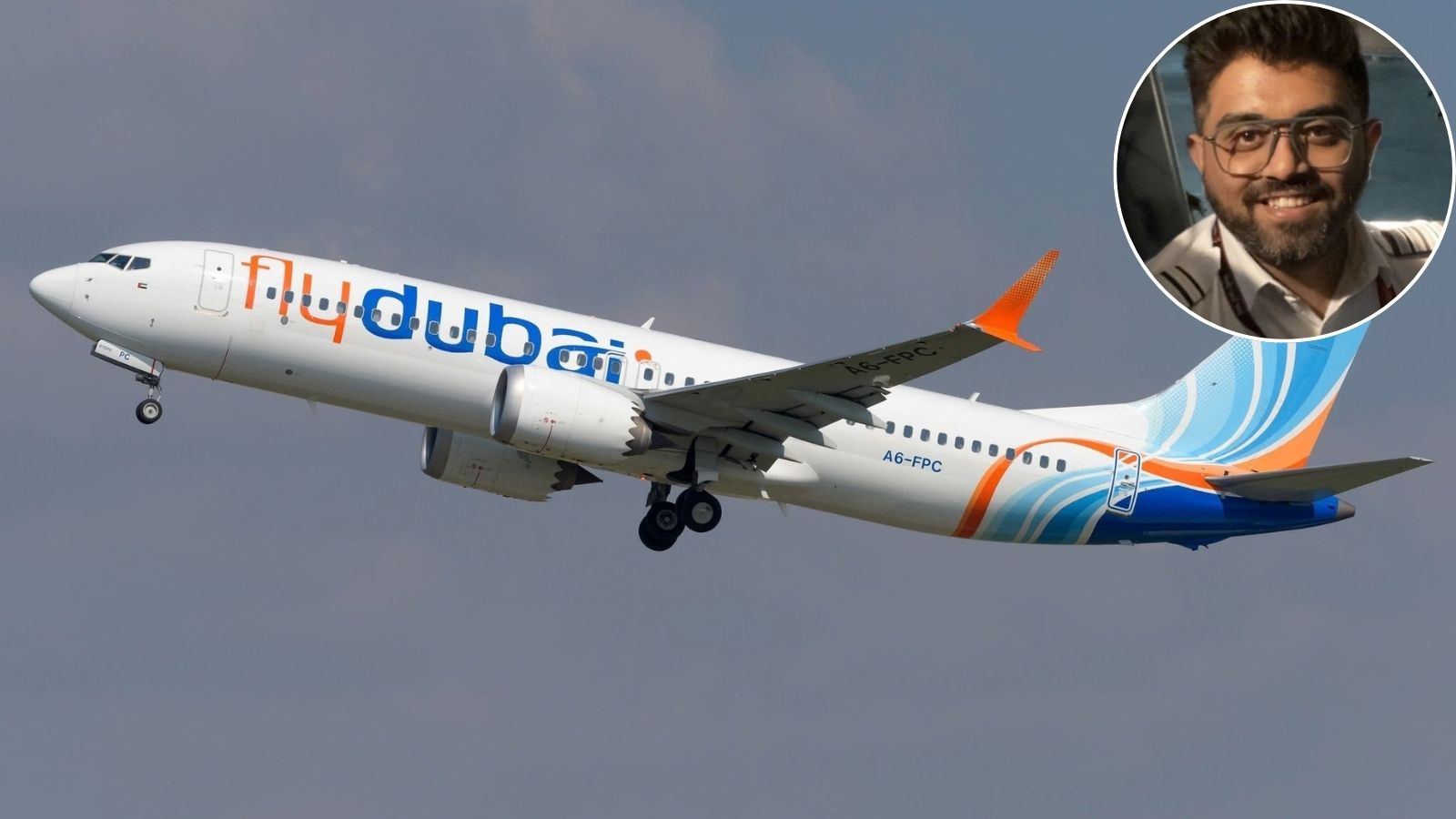
A commercial flight is supposed to be boring. You sit back, scroll through a movie, and wait to land. But on September 30, Flydubai Flight FZ1073 from Dubai to Tel Aviv shattered that illusion entirely. When the first officer turned violent inside the cockpit, striking Captain Smit Machchhar with an emergency crash axe and sending the Boeing 737 MAX plunging 17,000 feet, the aircraft turned into a battleground.
While Captain Machchhar fought desperately for his life and managed to crack open the locked cockpit door, the public quickly learned about his incredible survival. Yet, a secondary question lingered for weeks: who were the mystery pilots sitting in the passenger cabin who stepped up to grab the controls and land the damaged jet?
Breaking Down the Chaos at 34,000 Feet
The flight was roughly an hour away from its destination when the cockpit door was bolted from the inside and the co-pilot launched his attack. Captain Machchhar took brutal blows to the head and arm, watching his altimeter spin out of control as the aircraft dove toward the earth at terrifying speeds.
Realizing he was losing consciousness, Machchhar used his final reserves of strength to reach the door latch and scream for help. Passengers flooded the flight deck, overpowering the attacker, but the plane was still flying fast and uncontrolled with a wounded captain and structural damage to its tail.
This is where standard airline logistics turned into a life-saving twist.
The Deadheading Crew Who Answered the Call
Airlines frequently position off-duty flight crews in passenger seats to operate return legs or position them at other hubs. On Flight FZ1073, two reserve pilots were riding in the back: Rowan Tooth from South Africa and Henson Steven from Fiji.
When chaos erupted in the cabin, they didn't hesitate. While cabin crew members like David Kimotho and John Muchina helped tend to the bleeding captain and keep panicked passengers calm, Tooth and Steven forced their way forward.
They took over the flight deck from the frantic environment of a subdued struggle, stabilized the plunging jet, managed emergency transponder codes, and diverted the aircraft toward Prince Sultan bin Abdulaziz Airport in Tabuk, Saudi Arabia. Landing a heavy commercial airliner with a compromised rudder and adrenaline pumping through your veins requires elite composure. They pulled it off without a single fatality among the 172 passengers and crew on board.
Why Their Identities Stayed Hidden for Weeks
For nearly a month after the incident, global media focused almost exclusively on Captain Machchhar. Governments and aviation authorities kept the names of the deadheading crew quiet while security investigations, intelligence briefings, and cross-border inquiries took priority.
The veil finally lifted when the United Arab Emirates government officially recognized the entire flight crew for their extraordinary bravery. President Sheikh Mohamed bin Zayed Al Nahyan conferred the First-Class Order of Zayed II upon the crew members, bringing Henson Steven and Rowan Tooth out of anonymity and into international recognition.
What This Means for Commercial Aviation Security
Incidents like the FZ1073 emergency force airlines to re-evaluate internal cockpit protocols. The assumption that the greatest threat to a flight always comes from outside the secure flight deck has been thoroughly dismantled.
When crew members can pose an internal threat, the presence of trained professionals scattered throughout the passenger cabin acts as an involuntary safety net. Aviation security experts are now heavily debating how pilot mental health screenings, cockpit access controls, and background checks are handled across international carriers.
Captain Machchhar has stated publicly that he intends to return to flying once he fully heals, showing a deep-seated resilience that matches the actions of the colleagues who saved his flight. Flight FZ1073 could have ended as one of aviation's worst disasters. Instead, it stands as a testament to split-second human courage at 34,000 feet.