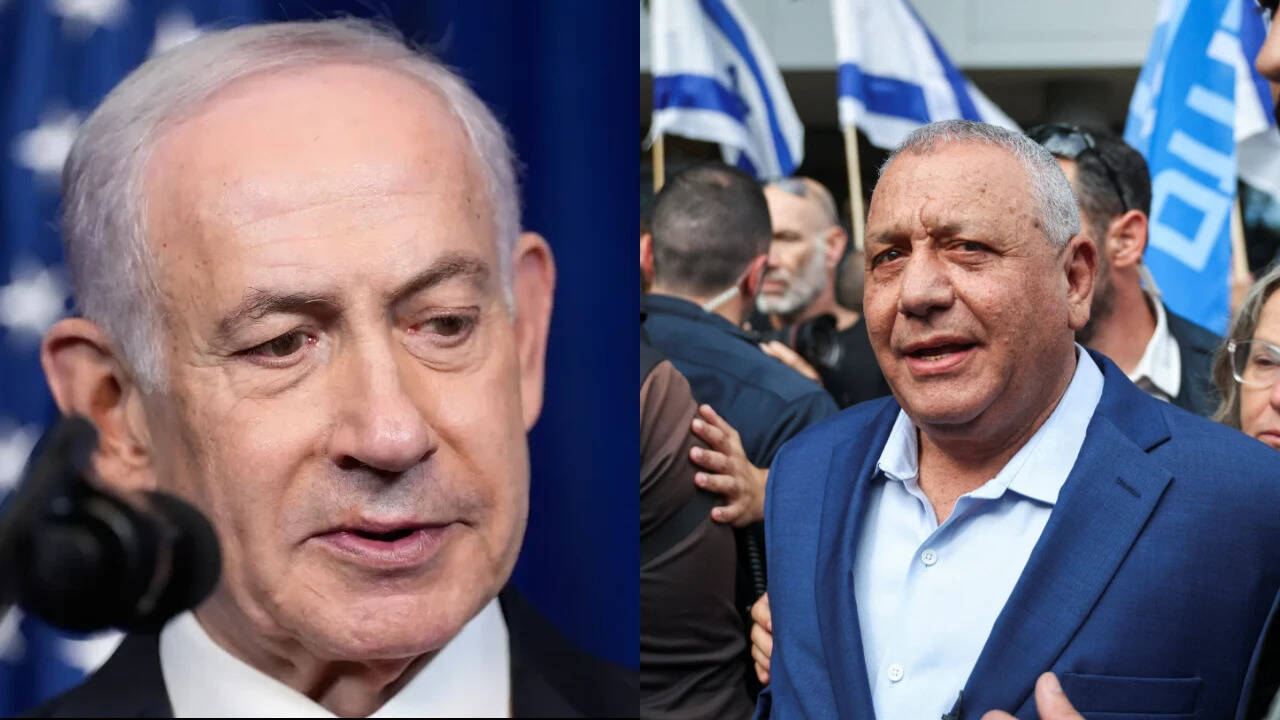
The fluorescent lights of the Knesset cafeteria hum with a familiar, weary exhaustion at two in the morning. Coffee cups pile up on laminate tables, half-empty and cold. Outside the thick glass windows of Jerusalem’s parliament building, the desert air is sharp, carrying the quiet stillness that settles over the city only in the dead of night. Inside, however, the air is thick with arithmetic.
Sixty-one. For an alternative look, see: this related article.
In a parliament of 120 seats, that single number dictates who governs, who budgets, who wages war, and who signs peace. For decades, the unspoken, ironclad rule of Israeli politics dictated that the path to sixty-one ran exclusively through Jewish Zionist parties. Arab lawmakers—representing roughly twenty percent of the nation’s citizenry—sat in the plenum, debated fiercely, drafted legislation, and voted on budgets, yet remained perpetually locked outside the rooms where governing coalitions were forged. They were participants in the democracy, certainly, yet treated as permanent outsiders to its executive power.
Then came the breaking point. Similar insight regarding this has been shared by The New York Times.
When prominent Arab lawmakers signaled a willingness to back an opposition bloc to oust Benjamin Netanyahu—Israel’s longest-serving prime minister—the tremors shook the foundations of the country’s political architecture. According to reporting by Telegraph India, this maneuver immediately tested the deepest fault lines running through Israeli society, forcing rival factions to confront an existential question about who truly holds the keys to the state's future.
To understand why a simple parliamentary calculation feels like an earthquake in Tel Aviv, Haifa, and Nazareth, you have to step away from the podiums and walk down the streets where these policies actually land.
The Architecture of an Unspoken Rule
Consider a hypothetical voter—let us call him Tariq—a civil engineer living in Haifa, a coastal city often held up as a model of Jewish-Arab coexistence. Every morning, Tariq drives past the gleaming tech hubs of Matam, pays the same income taxes as his Jewish neighbors, and worries about the exact same things: the skyrocketing cost of groceries, the safety of his teenage son walking home at night, and the chronic underfunding of municipal schools.
Yet for decades, when Tariq cast his ballot in national elections, he knew his vote carried a silent asterisk. His representatives could shout from the Knesset floor, but they would never sit at the cabinet table. They would never hold the ministries that decide where highway funds go, how police budgets are allocated to combat organized crime in Arab towns, or how housing permits are approved.
Think of the Israeli parliament like a massive, intricate suspension bridge. For seventy-plus years, engineers built and rebuilt the bridge using only cables anchored on one side of the canyon, ignoring the massive bedrock sitting directly beneath the other. The structure held, strained, swayed in the wind, and occasionally cracked, yet the builders insisted that anchoring cables to the Arab political bloc would somehow compromise the bridge's integrity.
When Arab political leaders—historically divided among themselves between secular nationalists, communists, and pragmatic Islamists—began signaling a readiness to use their parliamentary weight to unseat Netanyahu, they were not merely playing partisan chess. They were demanding that the engineers finally use the other side of the canyon.
Pragmatism Meets Historical Memory
Politics rarely shifts because of sudden moral awakenings. It shifts because of exhaustion.
By the time Arab lawmakers stepped forward with conditional offers to help topple Netanyahu’s government, the country had endured a bruising cycle of political deadlock, deep social polarization, and escalating security crises. According to political analysts cited in coverage of the standoff, the calculus among Arab leaders was driven by a stark reality: sitting on the sidelines in ideological purity had yielded diminishing returns for their constituents.
Violence within Arab communities had reached crisis levels, with municipal leaders begging for state intervention and policing reforms. Housing shortages in Arab municipalities had pushed entire generations into legal limbo, forced to build without permits and live under the constant threat of demolition orders. Meanwhile, the broader regional conflict continued to cast a long, suffocating shadow over every domestic debate.
Mansour Abbas, leader of the United Arab List (Ra'am), had previously shattered a decades-old taboo by joining a short-lived, ideologically diverse coalition government in 2021, arguing that Arab citizens needed to shift from protest politics to influence politics. That experiment proved both revolutionary and fragile. It showed that Arab votes could decide a government's fate, yet it also exposed the immense pressure such partnerships face the moment security tensions flare.
When the prospect of Arab support to oust Netanyahu resurfaced in subsequent political showdowns, the stakes were even higher. Critics from the Israeli right immediately framed the move as an existential threat, arguing that a government reliant on non-Zionist Arab parties could not legitimately make decisions on national security or military operations. Supporters of the opposition, meanwhile, found themselves caught in a agonizing bind: they desperately wanted to end Netanyahu's grip on power, yet many feared that accepting Arab parliamentary backing would hand Netanyahu his most potent political weapon—the accusation that his rivals were willing to rely on anti-Zionist votes to seize control.
The Tightrope Walk in Jerusalem
Look closely at the faces of the lawmakers involved, and you see the sheer psychological weight of this collision.
On one side stands Benjamin Netanyahu, a master tactician who has survived more political obituaries than perhaps any modern democratic leader. To his supporters, he is "Mr. Security," an indispensable statesman who has navigated Israel through treacherous diplomatic waters and transformed its economy into a global tech powerhouse. To his detractors, he is a polarizing figure whose prolonged tenure—and ongoing legal battles—have strained the nation's democratic institutions to their absolute limit.
Facing him is a fractured opposition united primarily by their desire to see him leave office, yet deeply divided over everything else: the future of the West Bank, the role of religion in public life, and, most acutely, the place of Palestinian citizens of Israel within the body politic.
Now place an Arab Knesset member—say, a veteran legislator from the Hadash-Ta'al alliance or a pragmatic representative from Ra'am—right in the center of that room.
Every word they utter is scrutinized through two competing lenses. If they offer unconditional support to an opposition leader who holds hawkish views on security, their own voters in Umm al-Fahm or Rahat accuse them of betraying their core principles and whitewashing military policies they abhor. If they withhold support and allow Netanyahu to remain in power, those same voters ask what good a parliamentary seat is if it cannot remove a government they view as hostile to their basic rights.
It is an impossible equation. Move left, and you lose legitimacy at home. Move right, and you alienate the very partners you need to pass a budget. Stand still, and nothing changes.
What Happens When the Fault Lines Shift
To grasp the true emotional core of this political standoff, you have to understand what happens to a society when a permanent minority realizes it holds the tie-breaking vote.
Imagine a family business where four brothers have argued over management for forty years, while their fifth cousin—who owns twenty percent of the shares—has always been told to wait outside during board meetings. One day, the four brothers are deadlocked two-to-two over whether to fire the longtime CEO. Suddenly, everyone turns to the cousin standing in the hallway.
The cousin isn't asking to take over the company. The cousin is simply saying: If you want my twenty percent to break your tie, we are going to talk about the leaky roof in my wing of the building, and I am sitting at the table when the budget is signed.
That is the invisible dynamic unfolding behind the dry headlines about no-confidence motions and parliamentary arithmetic.
For Jewish Israelis who oppose Netanyahu, the offer of Arab support forces an uncomfortable reckoning with the country's foundational identity. Israel defines itself as both a Jewish and a democratic state—a dual identity that has always required delicate balancing. Relying on Arab lawmakers to unseat a sitting prime minister tests whether the democratic half of that equation truly grants equal political agency to all citizens, regardless of ethnicity or religion.
For Arab citizens of Israel, the moment carries a mixture of fierce hope and profound skepticism. Many remember the optimism of the 1990s, when Yitzhak Rabin’s government relied on the external support of Arab parties to pass the Oslo Accords—a move that yielded historic budgets for Arab towns, even as it provoked furious backlash from the Israeli right that culminated in Rabin’s assassination. History in this region is never merely past; it is an active, breathing presence in every legislative committee.
The Anatomy of Political Fear
Why does this specific alignment provoke such visceral reactions across the political spectrum?
Because it exposes the deepest anxieties of both communities.
Among many Jewish voters, particularly those on the political right, there is a deeply ingrained fear that integrating Arab parties into governing coalitions erodes the national consensus on security and blurs the boundaries of state identity. When security tensions rise, or when rockets fall, loyalty is demanded in absolute terms, leaving little room for the complex, dual identity that Palestinian citizens of Israel navigate every single day—citizens of a state that is often at war with their own people.
Among Arab voters, the fear is equally sharp: the fear of being used as disposable leverage. Time and again, opposition politicians have courted Arab votes during election campaigns, promising equality, investment, and partnership, only to distance themselves the moment the ballots are counted and coalition negotiations begin. Nothing breeds cynicism faster than being treated as an acceptable partner in private while being disavowed in public.
Telegraph India’s reporting on the maneuver underscores just how precarious this balancing act remains. Offering support to oust a leader is vastly different from sustaining a stable government. Toppling a coalition requires only a single, unified vote of no confidence; governing requires passing thousands of line items, surviving daily crises, and maintaining trust when headlines turn grim.
Beyond the Arithmetic
Strip away the press releases, the late-night backroom leaks, and the fiery speeches on the Knesset plenum, and what remains is a fundamental question about the future of representative democracy itself.
Can a fractured society govern itself by pretending a fifth of its population does not exist politically? Or does true stability require the messy, uncomfortable, deeply frightening work of building coalitions across lines of historical trauma?
There are no easy answers waiting in the wings of Jerusalem. Even if an opposition bloc successfully harnesses Arab parliamentary support to bring down Netanyahu’s government, the morning after would bring an entirely new set of storms. New elections could yield yet another deadlock. A fragile replacement coalition could fracture under the weight of its own contradictions within months. And the underlying conflicts—over territory, identity, judicial power, and civil equality—would still be waiting on the table, unresolved.
Yet something irreversible happens the moment a political taboo is broken. Once the math of the Knesset demonstrates that the road to power runs through Nazareth and Rahat just as much as it runs through Tel Aviv and Jerusalem, the old boundaries can never be fully restored.
Back in the Knesset cafeteria, as the first gray light of dawn begins to filter over the Judean hills, the coffee cups are finally cleared away. The lawmakers head back toward the plenum, their suits wrinkled, their eyes heavy, carrying scraps of paper covered in scribbled numbers and crossed-out names. In a few hours, the bells will ring, the doors will close, and 120 hands will rise or stay down—proving once again that in a divided land, the distance between paralysis and transformation is measured in a single vote.