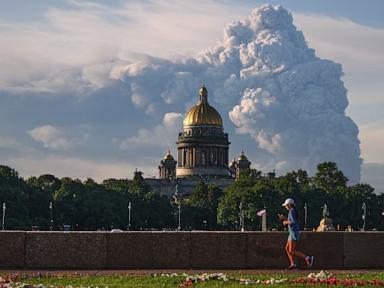
When a long-range drone slams into an oil refinery, the impact hits headlines. When those same drones start destroying giant distribution hubs for everyday consumer goods, the war changes its character entirely. Ukraine has spent weeks targeting facilities belonging to Wildberries, Russia's dominant e-commerce giant. This is not just a military campaign anymore. It is a direct assault on the economic comfort and daily routines of ordinary citizens inside Russia.
Hitting the Retail Giant Behind Russia's Amazon
Wildberries handles a massive share of domestic online commerce, functioning much like Amazon does in the West. Founded by Tatyana Kim, the country's richest woman, the company expanded aggressively after international brands fled the Russian market. It built its empire on a specific logistics model: relying on roughly two dozen colossal warehouses rather than hundreds of smaller, scattered depots.
That centralized setup made the company an efficient corporate machine. It also made it a massive, highly vulnerable target.
Ukrainian aerial strikes have pummeled around twenty of these facilities across regions stretching from Moscow to the Ural Mountains. Massive pillars of black smoke have replaced the usual routine of next-day delivery. According to industry estimates from firms like Data Insight, up to a fifth of the company's total warehouse space has sustained severe damage or destruction, with billions of dollars in merchandise going up in smoke.
Why Commercial Infrastructure Became a Battlefield
Kyiv's strategy goes past traditional military infrastructure. Ukrainian officials, including presidential adviser Mykhailo Podolyak, have argued that major retail platforms act as dual-use networks. While millions of consumers use the site for clothes, appliances, and books, Ukrainian intelligence asserts that the supply chains have also moved restricted components, tactical gear, and navigation equipment used by Russian forces.
Beyond military logistics, the financial architecture of the retail giant is tightly wound into the broader Russian economy. Wildberries carried massive debts—estimated at the equivalent of roughly 15 billion dollars—backed by major state lenders like VTB and Sberbank. By crippling the retailer's massive inventory and physical infrastructure, Kyiv aims to create a financial domino effect. When warehouses burn, the shock waves ripple straight to the major banks holding the loans and the hundreds of thousands of independent small businesses who rely on the platform to sell their goods.
The Human Cost for Small Merchants and Consumers
For an outside observer, watching distant warehouses burn might look like standard strategic warfare. On the ground inside Russia, the reality is far messier and more personal.
Hundreds of thousands of independent merchants use Wildberries to sustain their livelihoods. When a 300,000-square-meter depot catches fire, entire inventories vanish overnight. Small business owners have taken to social media to voice panic over lost revenue and potential bankruptcy. Consumers face sudden shortages of goods they took for granted.
The intent behind these strikes is explicitly psychological. Kyiv wants to shatter the illusion of normalcy for citizens who could previously ignore the conflict unfolding across the border. As analysts note, seeing black smoke rise over a local commercial hub hits closer to home than a distant military base explosion.
The Broader Gamble and Future Fallout
Tatyana Kim has publicly condemned the strikes as unjustified attacks designed to provoke panic among civilians. Meanwhile, the company is scrambling to decentralize its operations, attempting to shift toward smaller partner hubs to avoid total reliance on massive, easily targeted distribution centers.
Whether this strategy will achieve its political goals remains an open question. While economic pressure mounts on state lenders and commercial networks, some political analysts warn that targeting civilian-facing infrastructure risks hardening public resolve rather than breaking it. Hardliners in Moscow can easily use the images of burning warehouses to fuel further escalation, arguing that the conflict has expanded past military boundaries.
What started as an online shopping convenience has turned into another frontline in a grinding war of attrition. As long as the conflict drags on, the economic foundations supporting daily life in Russia will remain firmly in the crosshairs.
Why Russia's Amazon is under attack
This video provides additional context regarding the specific warehouse locations hit during the initial drone strikes and the official statements surrounding the logistics facilities.