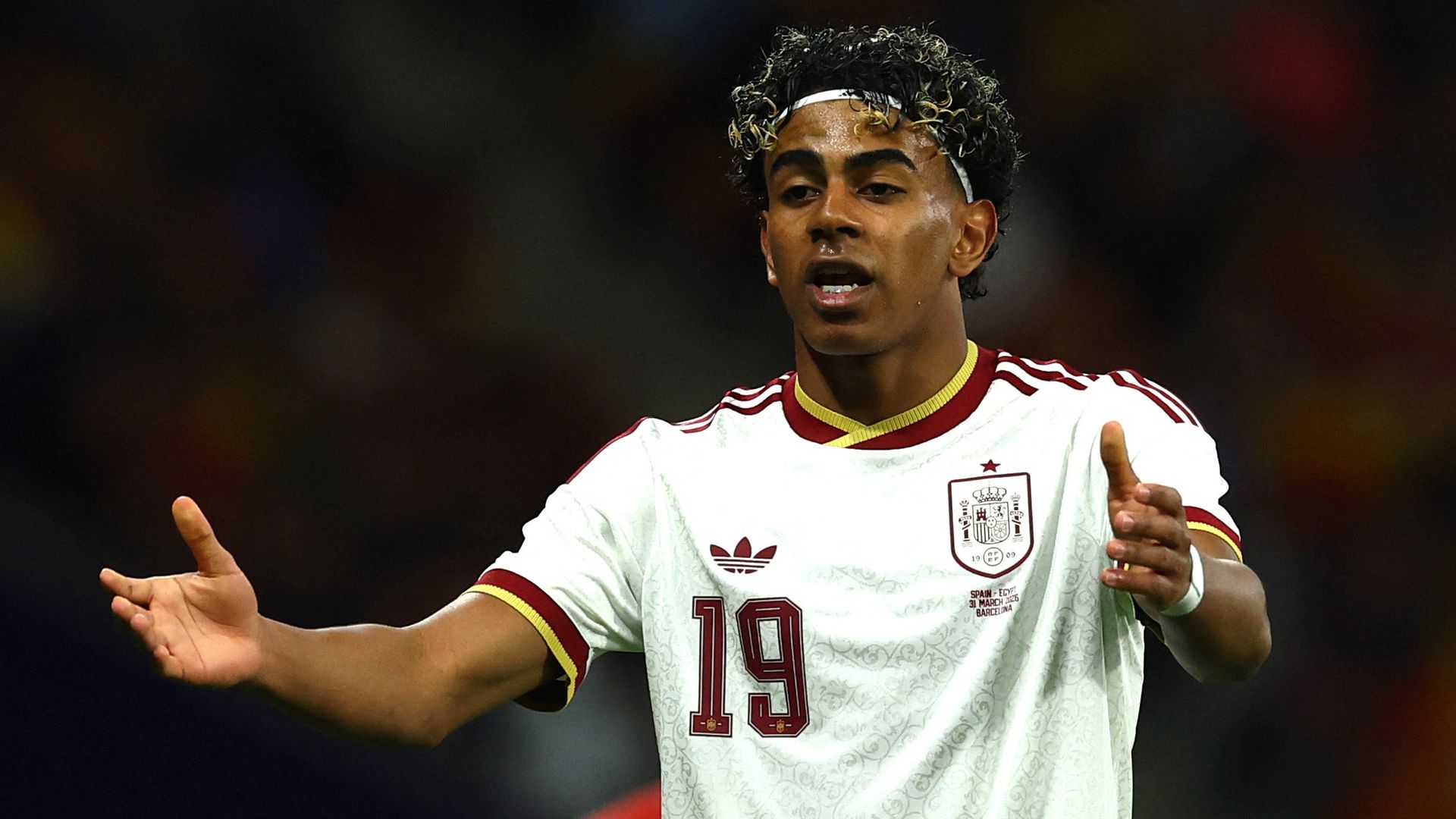
Lamine Yamal walked off the pitch during the recent friendly between Spain and Egypt not just as a teenage prodigy, but as a lightning rod for a systemic rot that European football refuses to excise. The "ignorant and racist" chants directed at the seventeen-year-old winger have sparked the usual cycle of corporate condemnation and social media outrage. However, the data reveals this is no isolated incident. It is a predictable outcome of a league and a national federation that have spent years treating racial abuse as a PR headache rather than a disciplinary priority.
The numbers tell a story of escalating hostility. In the 2023-2024 La Liga season alone, over a dozen formal complaints were filed regarding racial insults aimed at high-profile players. When a teenager like Yamal, who represents the multicultural future of Spanish excellence, becomes the target, the facade of "sporting passion" collapses. It exposes a bitter reality: Spanish football is currently failing its most valuable assets.
The Myth of the Isolated Incident
Every time a stadium erupts in monkey chants or xenophobic slurs, the official response follows a tired script. The clubs issue a statement calling the perpetrators "a tiny minority." The federation promises an investigation. Weeks later, the news cycle moves on with little to no tangible change in stadium access or fan behavior.
This "isolated incident" narrative is a lie. Real investigative work into the fan groups involved in the Egypt friendly shows a crossover with ultra-nationalist factions that have used football stands as recruiting grounds for decades. These are organized efforts to destabilize players of color, masquerading as "gamesmanship."
The psychological toll on a minor is immense. We are asking a child to carry the weight of a nation’s sporting hopes while simultaneously forcing him to ignore the fact that a section of that nation hates his heritage. Yamal’s anger is not just a reaction to words; it is a rejection of the expectation that he should remain silent and "professional" in the face of dehumanization.
Institutional Teeth are Missing
The Spanish legal framework for handling sports-related hate speech is, on paper, quite clear. Law 19/2007 aims to curb violence, racism, and xenophobia in sports. Yet, the conviction rate for these offenses remains laughably low.
Why Sanctions Fail to Stick
The breakdown happens between the reporting of the chant and the enforcement of the penalty. Usually, the process hits three walls:
- Identification Hurdles: Stadium surveillance in many older venues is insufficient to pinpoint individual mouths in a crowd of thousands.
- Legal Nuance: Defense attorneys often argue that the chants are "traditional provocations" rather than hate crimes, a distinction that judges sometimes accept to avoid harsh sentencing.
- The Collective Punishment Taboo: FIFA and UEFA have the power to dock points or force teams to play in empty stadiums. They rarely do. Money, specifically broadcast revenue, dictates that the show must go on with a full crowd, regardless of what that crowd is shouting.
When a player like Vinícius Júnior or Lamine Yamal points out the abuse, they are often gaslit by the media. Pundits suggest their "provocative" playing style—dribbling, celebrating, or smiling—invites the reaction. This is victim-blaming at its most professionalized. It shifts the burden of conduct from the harasser to the harassed.
The Economic Risk of a Toxic Brand
Beyond the moral bankruptcy of racism, there is a looming commercial disaster for Spanish football. The global market, particularly in North America and Asia, has a low tolerance for overt bigotry in their entertainment products.
If La Liga and the RFEF (Royal Spanish Football Federation) want to compete with the English Premier League for global dominance, they cannot be seen as the "racist league." Sponsors are increasingly wary of being associated with brands that cannot control their "hostile environments." We are seeing the beginning of a shift where major apparel and tech sponsors include "morality clauses" not just for the athletes, but for the leagues themselves.
The demographics of the Spanish national team are changing. The "Golden Generation" of 2010 was largely homogenous. The current crop, led by Yamal and Nico Williams, reflects a Spain that is more diverse. If the federation cannot protect these players, they risk a talent drain or a fractured dressing room where players no longer feel a connection to the badge because the badge doesn't protect them.
The Role of the Match Official
Referees are currently the most empowered and yet the most paralyzed figures on the pitch. The "Three-Step Protocol" introduced by FIFA is designed to stop games, but it is rarely implemented to its full conclusion.
- Step 1: Stop the match and make a stadium announcement.
- Step 2: Suspend the match and send players to the locker room for a period.
- Step 3: Abandon the match entirely.
In the history of top-flight Spanish football, Step 3 is a ghost. Referees fear the administrative fallout of a canceled match. They fear the riot that might ensue. Consequently, they stick to Step 1, which acts as little more than a "hush" from a teacher to a rowdy classroom. It carries no weight.
The Global Context
Spain is not alone, but it is currently the most visible offender in Western Europe. Italy’s Serie A has struggled with similar issues for years, often leading to half-hearted "anti-racism" campaigns that involve paintings of monkeys—a move so tone-deaf it made global headlines for all the wrong reasons.
The difference in Spain is the age of the target. Lamine Yamal is a generational talent. He is the youngest player to ever score in the European Championship. He is the crown jewel of Barcelona’s academy. When a country fails to protect its finest young talent, it signals a deep-seated cultural arrogance. It suggests that the talent is welcome, but the person is not.
What Real Reform Looks Like
If the authorities actually wanted to stop this, they could. It isn't a mystery. It requires moving past the "awareness" stage and into the "consequence" stage.
- Lifetime Bans: Not for a season, not for two years. A permanent removal from all sporting venues for anyone identified using racial slurs.
- Automatic Point Deductions: If a stadium-wide chant is documented, the home team loses three points. Nothing silences a crowd faster than the realization that their bigotry is relegating their own team.
- Financial Liability: Clubs should be fined a percentage of their match-day revenue, not a flat fee of €50,000, which is couch change for a club like Atletico Madrid or Sevilla.
The current system is designed to look like it’s doing something while ensuring that the status quo remains undisturbed. It is a performance. Lamine Yamal’s anger is the sound of a young man realizing that the adults in the room have no intention of changing the world for him.
The "ignorant" tag used by the media to describe these fans is a soft out. They aren't ignorant. They know exactly what they are doing. They are using the most painful words available to them to exert power over someone they perceive as an outsider. Calling it ignorance suggests they just need a history lesson. What they actually need is a permanent exit from the stadium.
Football is often called the beautiful game, but there is nothing beautiful about a seventeen-year-old having to develop a thick skin against hate before he is even old enough to drive. The responsibility doesn't lie with Yamal to "ignore the noise." It lies with the men in suits to stop the noise by any means necessary. Until a match is actually abandoned and a club is actually punished with the loss of points, these statements of solidarity are just ink on paper.
Stop the match. Empty the stands. Deduct the points. Anything less is complicity.