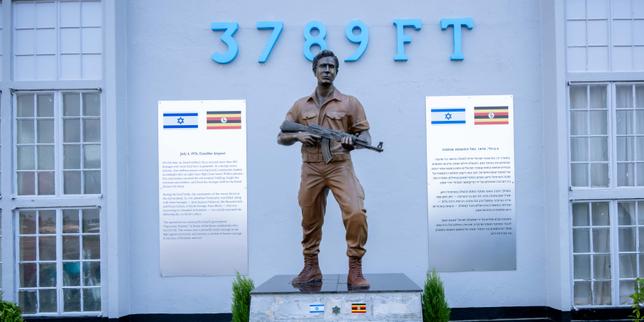
Walk past the old terminal at Entebbe International Airport and you're looking at a place that nearly severed ties between Israel and East Africa forever. Fifty years ago, that runway was the scene of a dramatic hostage rescue in July 1976—a raid that cost the life of Israeli commando Yonatan Netanyahu and marked the nadir of bilateral history. Fast forward a few decades, and the same lakeside town hosts summit meetings, defense talks, and backchannel diplomacy for Jerusalem's outreach across the continent.
Uganda isn't just another friendly capital for Israel. It's the linchpin.
When analysts talk about Israel's diplomatic push across Africa, they often point to big-picture metrics: UN General Assembly voting blocs, African Union observer battles, or booming tech exports. All of that matters. Yet if you zoom in on how those relationships actually get built on the ground, Kampala and Entebbe sit right at the center of the action.
How Uganda Anchors Israel's Return to Africa
To understand why Uganda matters so much, look at the arithmetic of multilateral diplomacy. Africa holds 54 United Nations member states—roughly a quarter of the General Assembly—along with rotating seats on the Security Council and major voices inside regional bodies. Shifting even a handful of votes or softening automatic condemnations takes years of quiet groundwork.
Uganda gives Jerusalem a reliable foothold in East and Central Africa. President Yoweri Museveni has led Uganda since 1986, restoring formal diplomatic ties with Israel in 1994 after years of estrangement. That longevity gives Israeli policymakers something rare in international politics: a predictable interlocutor with deep regional reach.
When Israeli Prime Minister Benjamin Netanyahu visited Uganda in July 2016—marking the first trip by a sitting Israeli prime minister to sub-Saharan Africa in decades—he didn't treat Entebbe as a mere photo op. He framed it as a turning point, and he returned in February 2020 for another high-profile stop. Even more telling was what happened behind closed doors during that 2020 visit, when Museveni hosted a meeting in Entebbe between Netanyahu and Sudanese leadership, helping clear diplomatic runway that eventually led Sudan toward normalization talks with Israel.
Honestly, that kind of brokerage is tough to fake. You can't buy regional convening power overnight. You build it through decades of security ties, personal rapport, and shared strategic headaches.
From Early Cooperation to Collapse and Rebuild
Anyone who thinks Uganda and Israel have always been effortless allies is missing the sharpest twists in the story.
Right after Uganda gained independence in 1962, Israel moved fast to build influence across post-colonial Africa—partly to break out of diplomatic isolation in its own neighborhood. Foreign Minister Golda Meir visited Uganda in February 1963 to sign technical cooperation agreements. Israeli advisers helped train Ugandan military units—including infantry, paratroopers, and pilots—while Israeli firms worked on construction and development projects and MASHAV, Israel's agency for international development cooperation, brought specialists and training programs into play.
Then came Idi Amin. After seizing power in 1971, Amin initially sought Israeli backing, only to clash with Jerusalem over requests for weapons and financial aid. By March 1972, Amin expelled Israelis from the country and pivoted toward Libya and anti-Israel alignment. Four years later came the June 1976 hijacking of an Air France flight to Entebbe and the Israeli commando raid on July 3–4, 1976.
Diplomatic ties didn't formally resume until 1994, under Museveni. Since then, the relationship hasn't been sentimental. It's been transactional, pragmatic, and shaped by hard security realities.
The Symbolic Weight of Entebbe
Politics runs on memory, and Entebbe carries heavy emotional freight on both sides. For Israelis, the 1976 rescue is etched into national memory—especially for Netanyahu, whose older brother Yonatan was the sole Israeli commando killed during the operation.
For Ugandans, the raid was a humiliating breach of sovereignty at the time, even as later generations viewed Idi Amin's rule through a very different lens. Using Entebbe as a diplomatic stage turns a painful historical wound into a symbol of forward motion. Still, the goodwill isn't unconditional. During the 2016 anniversary events, Museveni's long, off-the-cuff remarks drew raised eyebrows and online mockery when he briefly mixed up Israel and Palestine. Friendly ties don't erase friction; they just give both sides a reason to keep talking anyway.
Security, Agriculture, and Tech on the Ground
Grand diplomatic speeches sound great at press conferences, yet bilateral partnerships usually stick because of concrete operational needs. With Uganda and Israel, three areas do the heavy lifting: defense and intelligence, agriculture and water, and digital security.
Defense and Counter-Insurgency
Uganda sits in one of Africa's most volatile neighborhoods, facing cross-border militant threats such as the Allied Democratic Forces (ADF) operating across eastern Democratic Republic of the Congo and western Uganda. Over the years, defense cooperation has included equipment supply, military training, and upgrades, culminating in a formal defense cooperation memorandum of understanding signed in Kampala in September 2022.
Why does defense matter diplomatically? Because security cooperation creates long-term institutional habits. When militaries train together, maintain specialized gear, and share threat assessments, those links outlast single election cycles or cabinet reshuffles.
Farming, Irrigation, and Water Management
Israel's brand in African agriculture rests on managing scarce water and raising yields in tough climates. In Uganda—where farming employs a huge share of the population, yet erratic rainfall still hits vulnerable areas like Karamoja hard—irrigation, drip systems, agritech, and knowledge transfer have been steady talking points.
Let's be real, though. A pilot irrigation project or training workshop won't magically transform commercial farming across millions of smallholder plots overnight. Scaling agricultural tech requires credit access, rural roads, extension workers, and weather resilience far beyond any single bilateral program. When it works, it builds everyday goodwill; when expectations run too high, people notice the gap between demos and mass adoption.
Surveillance and Cyber Tools
This is where the relationship gets far more controversial. Investigations and reporting by outlets such as Haaretz, the Financial Times, and regional media have documented sales and use of Israeli-made digital forensics and surveillance tools in Uganda, including scrutiny around spyware and phone-extraction technologies.
Critics and human rights advocates in Uganda and abroad have raised sharp alarms that surveillance gear can be turned against opposition figures, journalists, or activists rather than strictly against violent extremists. For Israel's broader diplomatic standing in Africa, this creates a classic double-edged sword: security and cyber exports open doors with ruling governments, while drawing pushback over governance and civil liberties.
What This Partnership Gets Right—and Where It Hits Limits
If you want a sober read on Uganda's role in Israel's African strategy, skip the cheerleading and skip the conspiracy theories. Look at what's actually working and where the ceiling sits.
On the upside, Uganda gives Israel a strategic hub in a fast-growing region, a willing partner for regional diplomacy, and practical avenues for cooperation in security and agriculture. On the flip side, bilateral trade volumes between the two countries have historically been modest compared to giants like China, the European Union, or neighboring East African trading partners. And diplomatic warmth in Kampala doesn't automatically translate into identical votes from every other African capital—especially during acute conflicts in the Middle East when domestic politics and international pressure pull governments in different directions.
There's also the embassy question. Netanyahu has publicly pressed Kampala on opening a Ugandan diplomatic mission in Jerusalem—and even floated reciprocal embassy moves—while Ugandan leaders have tended to keep their options open and study the issue cautiously. That caution says a lot. Uganda values close ties with Israel, yet it isn't looking to burn bridges across the wider Arab and Muslim world or inside African institutions.
Practical Ways to Track This Relationship Yourself
If you follow East African geopolitics, foreign policy, or international business and want to separate signal from noise on Uganda–Israel ties, focus on concrete indicators rather than headlines:
- Watch official agreements and ministerial visits, not just speeches: Look for signed memorandums of understanding, defense or agricultural protocols, and follow-through on joint projects rather than broad rhetoric about "historic ties."
- Track multilateral votes and regional summits: Pay attention to how Uganda and neighboring East African states vote or abstain on key UN resolutions and how they engage in regional security talks.
- Separate commercial hype from real trade and project data: Check actual export/import figures, agricultural rollout updates in regions like Karamoja, and credible investigative reporting on security and surveillance contracts.
- Account for domestic Ugandan politics: Remember that Kampala's foreign policy decisions are shaped first by regime security, regional stability, and economic priorities at home—not by external wish lists.
In the end, Uganda's importance to Israel's outreach in Africa comes down to timing, geography, and grit. From a bitter rupture in the 1970s to high-stakes diplomacy in the 2020s, Entebbe and Kampala keep proving that in foreign policy, old battlegrounds often become the very places where new bargains get struck.