Justice moves slowly, but it moves.
In a heavily secured Provo courtroom, District Judge Tony Graf didn't blink. Twenty-four pages of handwritten notes lay open before him. After months of legal wrangling, a preliminary hearing that stretched across sweltering July days, and intense closing arguments, the decision came down like a hammer. Tyler Robinson, a twenty-three-year-old former electrical apprentice, is officially standing trial for the murder of conservative activist Charlie Kirk.
It's a case that has haunted the American political consciousness since September tenth, 2025.
If you've followed the headlines, you know the broad strokes. Kirk, the thirty-one-year-old co-founder of Turning Point USA and a massive force in mobilizing young right-wing voters, was gunned down in front of thousands while speaking at Utah Valley University. The shocking assassination tore through the political world, leaving a grieving family, a divided nation, and a mountain of legal questions. Now, with Judge Graf ruling that prosecutors have established solid probable cause on all seven counts, the state of Utah is marching straight toward a capital murder trial.
The stakes couldn't be higher. Robinson faces aggravated murder, a charge that opens the door wide for the death penalty. He also faces felony discharge of a firearm causing serious bodily injury, witness tampering, and multiple counts of obstruction of justice. He pleaded not guilty to every single charge. But a not-guilty plea is standard legal procedure. What matters now is the terrifying weight of the evidence the state has stacked against him.
The Evidence on the Table
Prosecutors aren't whispering about their case; they are shouting it from the rooftops—literally.
Utah County prosecutor Ryan McBride didn't mince words during closing arguments. He told the court that a mountain of evidence points directly to Robinson. According to investigators, Robinson staked out the campus hours before the shooting, bought food at a campus Chick-fil-A, and eventually scaled a nearby building with a bolt-action rifle.
The State's argument relies heavily on physical forensics and digital footprints. Authorities recovered the weapon on a rooftop. They claim DNA matching Robinson was found directly on the trigger and a nearby tool. Spent casings recovered at the scene matched the rifle. Even though defense attorneys raised questions about firearm forensics and the absolute conclusiveness of specific ballistic fragments, the sheer volume of corroborating material gave Judge Graf more than enough reason to push the case forward.
Then there is the human element, which is arguably even more damning.
Investigators unspooled a trail of digital confessions. Robinson allegedly left a handwritten note tucked under a computer keyboard for his roommate and romantic partner, Lance Twiggs. The note read like a cold manifesto of intent: "I had the opportunity to take out Charlie Kirk and I'm going to take it."
When Twiggs confronted Robinson directly after the shooting, the suspect allegedly broke down, cried, and admitted his guilt. According to court documents, Robinson muttered, "I am. I'm sorry," explaining that he had grown tired of Kirk's rhetoric and believed some hatred couldn't be negotiated away. Text messages retrieved from their shared communications further reinforced the prosecution's timeline.
Why the Death Penalty Remains on the Table
The fiercest battle in the courtroom isn't over whether Robinson pulled the trigger. It's about whether the state can legally execute him for it.
Under Utah law, aggravated murder requires specific statutory enhancements. Prosecutors argued that by firing a high-powered rifle into an open-air event crowded with more than three thousand people, Robinson knowingly created a grave risk of death to innocent bystanders.
Judge Graf agreed with the logic, stating that the positioning of individuals near the stage supported a reasonable inference that the shooter knew others were in harm's way.
Defense attorneys fought hard to strip the capital punishment option away. Their primary argument centered on precision. They claimed Robinson aimed strictly at his intended target and didn't put anyone else's life in active jeopardy. They also chipped away at the narrative of a clear political motive, trying to distance the defendant from organized ideological movements.
They failed. Judge Graf's ruling leaves the ultimate punishment fully on the table. If a jury decides to convict Robinson of aggravated murder, his life will hang in the balance.
The Human Cost Behind the Headlines
It's easy to treat high-profile trials like a true-crime podcast or a political football match. We dissect the DNA reports, analyze the surveillance footage, and argue about the legal thresholds of capital punishment.
Behind the legal briefs stands a shattered family.
Erika Kirk, the widow of the slain activist, attended the court sessions. Her presence served as a constant, sobering reminder of what was lost on that September afternoon. Following Judge Graf's decision, the Kirk family released a statement through representatives. They called the ruling an important milestone in their long pursuit of justice. They also highlighted the brutal reality faced by children forced to grow up without a father.
The emotional toll extends outward into the broader community. The assassination completely altered security protocols for conservative speakers and college campus events across the country. Universities are rethinking open-access policies. Political organizations are spending millions to upgrade private security details. A single bullet fired on a Utah college campus changed the operational reality of American free speech discourse.
What Happens Next in Court
The legal machine now turns toward an official trial date.
While Judge Graf has not yet cemented the exact calendar slot, the next major procedural hearing is slated for late October. Defense lawyers will spend the interim weeks filing motions to suppress evidence, challenge the DNA collection methods, and prepare for what will undoubtedly be a brutal courtroom war of attrition.
The prosecution holds a massive advantage in public sentiment and physical documentation, but criminal trials are unpredictable beasts. Juries surprise legal experts every single day. A single skeptical juror can throw a wrench into a capital case.
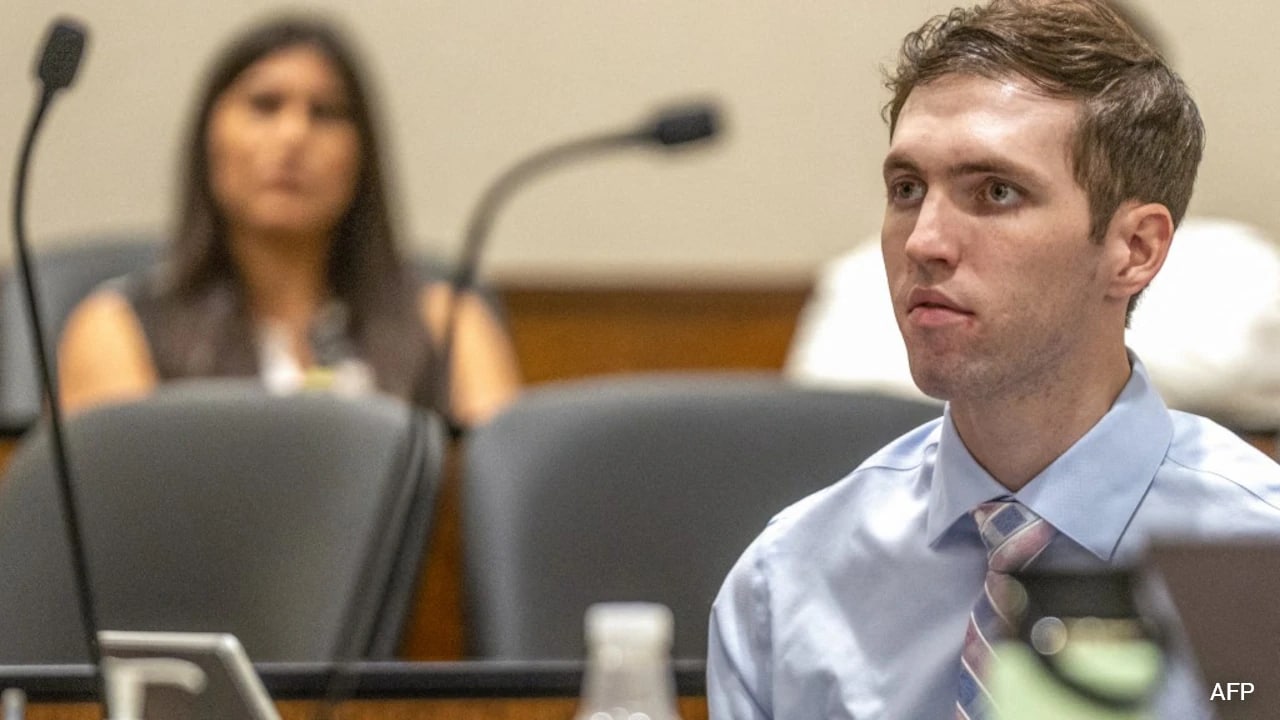
Tyler Robinson sits behind his defense team, largely impassive during recent proceedings, wearing the orange jumpsuit of a county jail inmate. His parents sit in the gallery, watching their son face the absolute maximum weight of the American justice system.
The trial won't just decide the fate of a twenty-three-year-old man. It will test how a deeply polarized society handles political violence in broad daylight. The courtroom doors in Provo are open, and the entire nation is watching.