The lights in a television studio are hotter than anyone expects. They flatten shadows, bleach out hesitation, and turn a five-second pause into an eternity that ripples across living rooms from Marquette to Monroe.
For anyone who has ever sat in a hospital waiting room in Detroit at three in the morning, or stared at a past-due utility notice on a kitchen table in Flint, politics is rarely about stage lighting. It is about math. Simple, unforgiving math. How much comes in, how much goes out, and what happens when an unexpected fever or a laid-off shift breaks the equation. Yet every two years, that quiet desperation gets compressed into ninety minutes of high-stakes theater, where two people stand behind wooden podiums and argue over who actually sees the person sitting at that kitchen table. Learn more on a connected topic: this related article.
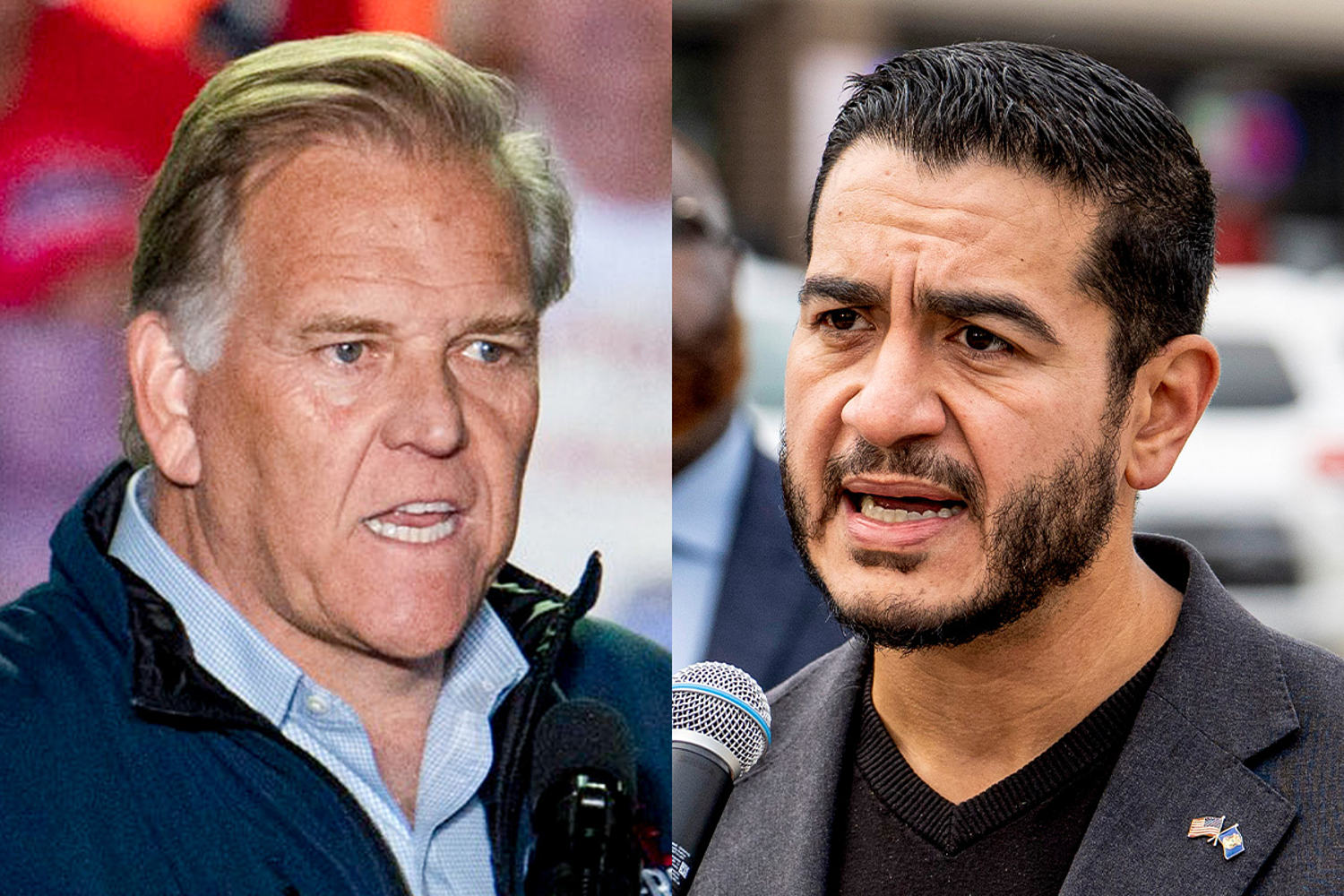
When Abdul El-Sayed and Mike Rogers stepped onto the stage for their first Michigan Senate debate, the air in the room carried the unmistakable static of a state that has spent decades being treated as a bellwether rather than a home.
On paper, the matchup looked like a textbook study in American political polarity. On one side stood Rogers, a former FBI special agent, seven-term congressman, and former chair of the House Intelligence Committee—a man whose career was built inside the machinery of national security and institutional Republican governance. On the other stood El-Sayed, a physician, epidemiologist, former Detroit health director, and progressive organizer who speaks the language of public health systems and structural reform. Additional reporting by BBC News highlights comparable perspectives on this issue.
Standard coverage of such nights tends to tally punches like a boxing scorecard. Who landed the sharper zinger on inflation? Who pivoted faster on foreign policy? Who looked more "presidential" under pressure?
That framing misses the entire point. Watching those two men trade blows over healthcare costs, manufacturing jobs, and the role of the federal government wasn't about watching two politicians argue. It was about watching two fundamentally incompatible diagnoses of why working families in Michigan feel like they are running up a down escalator.
The Anatomy of a Kitchen-Table Crisis
To understand why the sparks flew so early and so hot in that debate, step outside the studio for a moment. Consider a hypothetical family—let’s call them the Millers—living just outside Grand Rapids. Neither of them follows cable news punditry. One works in an auto-supply plant transitioning toward electric vehicle components; the other manages scheduling for a regional medical clinic.
When they turn on the debate, they aren't looking for ideological purity. They are trying to figure out why their grocery bill jumped thirty percent over four years while their health insurance deductible quietly doubled.
During the debate, Rogers and El-Sayed looked at that exact same family and saw two entirely different emergencies.
According to Mike Rogers’s framing on the debate stage, the Millers are being crushed by the weight of Washington itself. Throughout the exchange, Rogers returned repeatedly to the themes that have defined his campaign: federal overspending, regulatory mandates, and energy policies that he argues threaten Michigan’s automotive backbone. To Rogers, when the federal government borrows trillions and pushes aggressive timelines on industrial transitions, the bill eventually lands on the Millers’ doorstep in the form of higher prices at the pump, higher interest rates on a car loan, and uncertainty on the factory floor.
His background in law enforcement and intelligence shapes how he talks about power. He views security—whether at the southern border, in global supply chains, or in neighborhood streets—as the precondition for prosperity. Without order and fiscal restraint, everything else unravels. When pressed on rising costs, Rogers pointed directly at Democratic economic policies, arguing that government intervention distorts markets and punishes the very businesses that create jobs in the Great Lakes State.
Then the microphone shifted to Abdul El-Sayed, and the diagnosis flipped completely.
To El-Sayed, the Millers aren't drowning because the government did too much. They are drowning because the government stepped back and left them alone in a room with corporate monopolies. Drawing on his background as a physician and public health official, El-Sayed treats economic anxiety like a chronic illness with identifiable root causes. When he talks about healthcare, he doesn't speak in abstract budget percentages; he speaks about insulin prices, surprise hospital billing, and insurance executives denying claims to protect profit margins.
On stage, El-Sayed argued that inflation isn't merely a byproduct of federal spending—it is also a story of corporate consolidation, where a handful of massive companies control food supply chains, pharmaceuticals, and housing, raising prices because consumers have nowhere else to go. In his telling, the solution isn't shrinking the public sector; it is using federal power as a shield to protect working people from predatory pricing and to guarantee basic foundations like healthcare and clean water.
Listen closely to those two arguments back-to-back, and you begin to feel the genuine tension that makes Michigan politics so volatile. Both arguments contain an undeniable grain of lived truth. People do feel squeezed by taxes, regulations, and the dizzying pace of industrial mandates. And people do feel exploited by insurance companies, pharmaceutical giants, and stagnant wages.
The debate didn't resolve that tension. Instead, it sharpened it to a razor's edge.
Where the Past Collides With the Present
Debates rarely change minds through policy white papers. They reveal temperament. They show what happens when a candidate’s rehearsed talking points collide with an opponent who refuses to play along.
The sharpest exchanges of the night happened when the conversation turned from abstract economics to personal records—the moments where history refuses to stay neatly in the past.
El-Sayed went after Rogers’s post-congressional career, specifically his work in the private sector and cybersecurity consulting after leaving the House of Representatives in 2015. In El-Sayed’s narrative, leaving public office to work with corporate boards and defense contractors represents the exact revolving door in Washington that leaves ordinary Michiganders behind. It is a classic populist critique: how can you fight the system when you cashed checks from it?
Rogers didn't flinch. Having spent years interrogating witnesses and navigating partisan battles in Washington, he countered by framing his private-sector experience as an asset rather than a liability. He argued that understanding how businesses actually operate—how cyber threats target American infrastructure and how companies make hiring decisions—is precisely what career activists and academic theorists lack.
Then Rogers turned the spotlight back onto El-Sayed’s tenure in Detroit city government and his progressive policy platform. Rogers painted El-Sayed’s proposals—particularly around healthcare overhaul and green energy transitions—as financially reckless experiments that would spike taxes and bankrupt small businesses. In Rogers’s telling, El-Sayed represents an ideological wing of the Democratic Party detached from the practical realities of rural and suburban Michigan.
Watch how the dynamic worked. Each man tried to turn the other’s greatest credential into his greatest flaw.
Rogers’s decades of institutional experience became, in El-Sayed’s hands, evidence of being an entrenched insider. El-Sayed’s background as a reform-minded doctor and public servant became, in Rogers’s hands, evidence of being an untested idealist who had never had to meet a payroll or balance a federal budget.
It is an old collision in American politics—the institutionalist versus the reformer—played out under modern media conditions where every soundbite is clipped and weaponized within seconds.
The Invisible Stakes Beneath the Podiums
What makes a Senate race in Michigan carry such heavy psychological weight isn't just the seat itself. It is the geography of the state.
Michigan is not a monolith; it is a patchwork of competing realities held together by two peninsulas and a shared history of making things. Drive two hours in almost any direction and the economic landscape shifts beneath your tires. You move from the dense, diverse neighborhoods of Wayne County to the sprawling suburban subdivisions of Oakland and Macomb, out into the agricultural stretches of the Thumb, up through the tourism-dependent towns along Lake Michigan, and across the Mackinac Bridge into the rugged, resource-driven communities of the Upper Peninsula.
A U.S. Senator has to represent all of them at once. And in that first debate, you could see both candidates struggling with the sheer scale of that balancing act.
Take the future of the auto industry—a subject that hangs over every political conversation in Michigan like clouds over Lake Huron.
During the debate, both candidates pledged loyalty to Michigan autoworkers, yet they offered fundamentally different roadmaps for survival. Rogers hammered against federal electric vehicle mandates, warning that forcing the market faster than consumer demand or charging infrastructure can handle puts domestic automakers at a mercy they cannot afford, potentially handing the advantage to foreign competitors like China. For a union worker in a transmission plant wondering whether their facility will even exist in ten years, that warning hits a raw nerve.
El-Sayed approached the same threat from the opposite direction. He argued that the global shift toward clean energy and electric vehicles is happening whether Washington acknowledges it or not—and that retreating from federal investment means surrendering the future of manufacturing to overseas rivals. To him, the answer isn't clinging to yesterday’s engine technology; it is ensuring that the new plants, battery factories, and supply chains are built in Michigan with strong union protections and public investment.
Notice the dilemma for the voter watching at home. One candidate warns that moving too fast will destroy your job today. The other warns that moving too slow will destroy your job tomorrow.
Neither fear is irrational. Both are rooted in the painful memory of factories closing, towns hollowing out, and promises made by distant politicians that evaporated the moment the cameras packed up.
The Weight of Trust in a Skeptical Age
There is a moment in almost every intense debate where the scripted lines fall away and you see the human fatigue underneath. The voice tightens slightly. The smile becomes a fraction stiffer. You remember that behind the titles—Doctor, Congressman, Agent, Director—are two people trying to convince millions of strangers to hand them six years of immense power.
Trust is the scarcest currency in modern politics. People have been burned too many times by smooth rhetoric and broken pledges. When voters look at a debate stage today, they aren't just evaluating policy proposals; they are running a background check on character. They are asking a simpler, harder question: When things go wrong—when a crisis hits that nobody predicted—who do I trust to pick up the phone?
That is why the biographical contrast between Rogers and El-Sayed matters so much, and why both campaigns leaned into it so heavily during their first face-off.
Rogers offers the reassurance of familiarity and command. His supporters look at a man who wore a badge, served in Congress during major national security crises, and understands the mechanics of how legislation actually gets passed in a divided Senate. In an era that feels chaotic—marked by global instability, border pressures, and economic unpredictability—there is a powerful appeal to someone who projects steadiness and traditional authority.
El-Sayed offers the urgency of disruption and empathy. His supporters look at a man who stood on the front lines of public health in Detroit, who understands data and systemic inequality, and who refuses to accept that sky-high medical bills or polluted water are just the inevitable cost of doing business. In an era where traditional institutions often feel broken or unresponsive, there is an equally powerful appeal to someone willing to challenge the status quo from the ground up.
Yet both strengths carry their own shadows—the exact doubts that keep undecided voters awake at night. Can someone steeped in Washington’s old ways truly break the gridlock that frustrates millions? And can someone pushing sweeping systemic change navigate the messy, incremental compromises required to govern a deeply divided country?
The debate didn't give easy answers to those questions, because no ninety-minute broadcast ever could. What it did instead was strip away the polite veneer of early campaign season and lay bare the real choice on the table.
After the Studio Lights Go Out
Eventually, the closing statements ended. The moderators thanked the candidates, the microphones were unclipped, and the stage emptied out. Within minutes, partisans on both sides declared victory, clipping the sharpest exchanges to feed into social media algorithms designed to reward outrage over reflection.
But back in those living rooms across Michigan, the television screens went dark, and the real world remained exactly as it was before the broadcast began.
The utility bill was still sitting on the counter. The shift at the plant still started at six in the morning. The prescription at the pharmacy counter still cost more than it should.
A debate is not an ending; it is an X-ray. It shows where the fractures are, where the pressure builds, and how two very different leaders respond when there is nowhere left to hide. As the campaign stretches forward across town halls, union halls, diner booths, and county fairs, the sparks from that first night won't fade—they will only multiply, forcing an entire state to decide not just which candidate won an argument, but which version of the future they are willing to risk living in.