The cargo hold of a Boeing 777 crossing the Atlantic does not usually smell like lavender shampoo and burnt chicken jerky. It usually smells like jet fuel, cold metal, and the quiet, collective anxiety of baggage handlers. But Flight 414 was different. In crate 14B, wedged between a surplus of luggage and a crate of delicate porcelain, sat Barnaby.
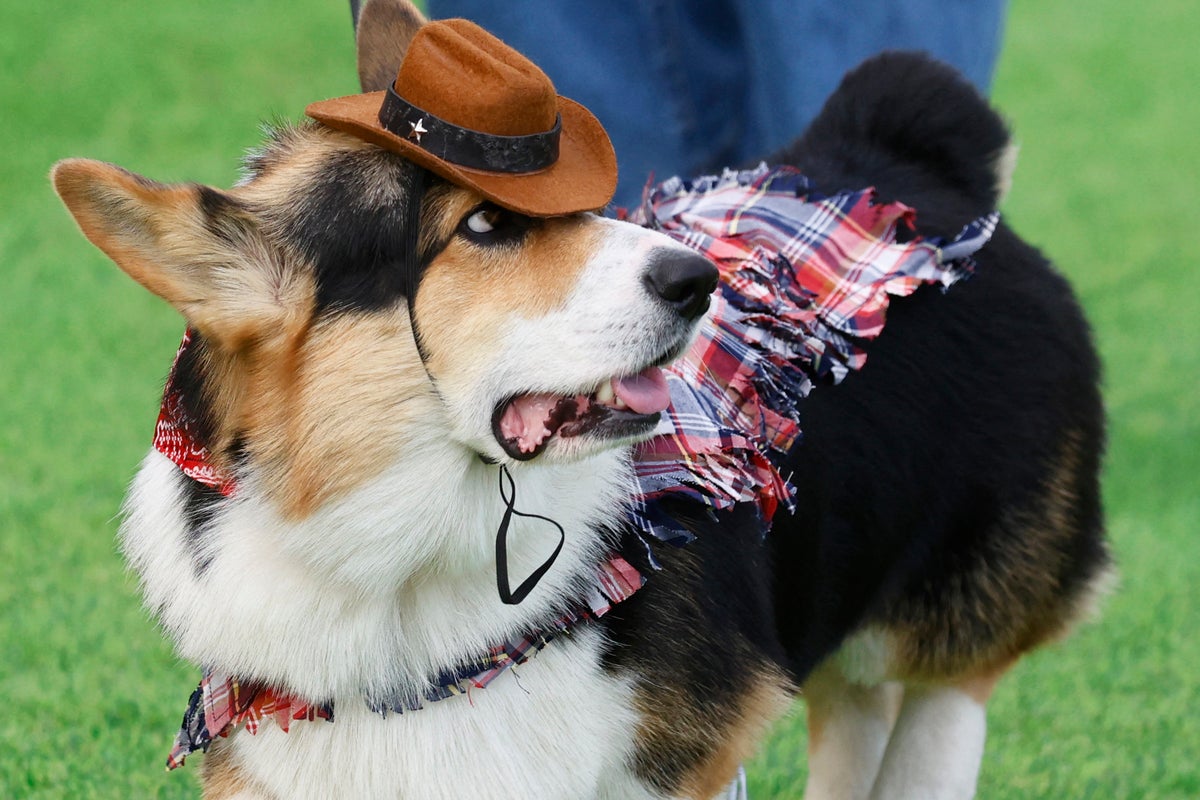
Barnaby is a Pembroke Welsh Corgi with ears like satellite dishes and a stub of a tail that has never quite learned to stay still. He had flown forty-two hundred miles from a quiet suburb in Manchester, England, crossing an ocean not for a vacation, but for twelve seconds of absolute glory on a rubberized stage in Southern California. Building on this topic, you can also read: Why Hong Kong Style Living Actually Works For Your Health.
When you tell someone that dogs are flying across international time zones for a costume contest, they usually laugh. They picture a frivolous afternoon of rich people dressing up their pets. They picture absurdity. They miss the entire point.
Because what happens when you gather four hundred short-legged, long-backed herding dogs from Tokyo, London, Sydney, and Ohio is not a comedy sketch. It is a masterclass in human longing. We spend our lives building walls, inventing borders, and dividing ourselves by ideology and geography. Then someone straps a pair of homemade fairy wings onto a thirty-pound low-rider with a barking problem, and suddenly twenty thousand strangers are weeping tears of pure, unadulterated joy. Observers at ELLE have also weighed in on this trend.
Consider what happens next. The jet lag hits. The dogs are disoriented. The owners are fueled entirely by adrenaline, instant coffee, and a terrifying amount of hot glue.
Let me introduce you to Sarah, a hypothetical composite of the dozens of handlers I watched pacing the backstage concrete last autumn. Sarah spent six months hand-sewing a replica of a Victorian sailing ship to fit over her corgi’s barrel-shaped ribcage. The masts wobbled. The sails sagged. The dog, a stoic tri-color named Winston, looked less like a tall ship and more like a very confused bread loaf with rigging.
Did Sarah care that people thought she was eccentric? No. She cared that Winston’s left ear kept slipping out of his sailor's hat.
We need these moments of collective silliness because reality is remarkably heavy. The news cycle is a slow, grinding machinery of anxiety. Inflation, geopolitical dread, the crushing weight of modern existence—these things do not take weekends off. But a corgi waddling across a stage dressed as a tiny pirate ship while a DJ plays the theme from Pirates of the Caribbean? That stops the clock.
For three hours, the grand arena becomes a sanctuary.
Let us talk about the science of the bark. It is easy to dismiss the loudest bark contest as mere noise, a decibel-meter stunt designed for social media algorithms. But listen closer. A corgi bark is a genetic artifact. These are not lapdogs bred to sit silently on velvet cushions. They are cattle drivers. Their ancestors spent centuries nipping at the heels of stubborn livestock ten times their size, shouting orders across Welsh pastures.
When a modern corgi lets loose at full volume—a sharp, piercing, chest-rattling yip that vibrates right through the rubber soles of your sneakers—you are hearing the ghost of the industrial revolution echoing through a fifty-centimeter frame. It is history yelling at a microphone.
The crowds go wild. Decibel meters spike. The winner is crowned not with gold or diamonds, but with a plastic tiara that costs four dollars at a party supply store and a sash that smells faintly of peanut butter.
And then, the silence returns.
The private jets spool down. The commercial flights back to Manchester and Tokyo begin boarding. The hot glue cools. The cardboard boxes are packed flat, sliding into the trunks of sedans with a soft rustle.
Sarah packs up the rigging of her toy ship, folding the miniature sails with the careful reverence of a curator archiving a historical artifact. Winston is already asleep, snoring softly against her left ankle, completely indifferent to the fact that he did not win the grand prize. He got a piece of cheese and a belly rub. To a dog, that is a dynasty.
We pack our bags too. We drive back to our apartments, our spreadsheets, our deadlines, and our quiet kitchens. We plug our phones into chargers, scrolling through blurry photos of dogs dressed as hot dogs, astronauts, and royal guards. We smile. Sometimes, we laugh out loud in an empty room, startling the cat.
The magic does not last, of course. It was never meant to. It was an interlude, a brief suspension of gravity in a world that pulls too hard downward. But the residue remains.
Somewhere over the middle of the Atlantic right now, another cargo hold is settling into altitude. Inside it, a dog with oversized ears is dreaming of a rubber stage, a roaring crowd, and a crown made of felt. And for a little while longer, that is enough to keep the dark at bay.