Donald Trump just dropped a foreign policy bombshell that has seasoned diplomats staring in disbelief. Speaking at the G7 summit in Evian, France, the US president openly suggested that Israel should step back and let Syria invade Lebanon to take care of Hezbollah. It sounds wild because, historically, it is. But Trump thinks it makes perfect sense.
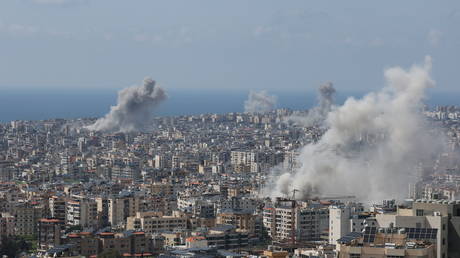
"If Israel can't do the job without killing everyone else, he'll do the job," Trump told reporters, referring to Syria's new president, Ahmed al-Sharaa. He didn't hold back his criticism of Israeli Prime Minister Benjamin Netanyahu either, explicitly stating that he's sick of seeing entire apartment buildings flattened in Beirut just to target a single fighter.
This isn't just standard rhetoric. It highlights a massive, growing rift between Washington and Jerusalem over the future of the Middle East, specifically because Israel’s aggressive campaign in Lebanon is threatening to wreck Trump's shiny new peace deal with Iran.
The Real Reason Trump Is Frustrated with Israel
The timing of these remarks isn't accidental. The US and Iran just agreed to a 60-day extension of their interim ceasefire, which includes opening the critical Strait of Hormuz after a brutal 15-week conflict. This deal is Trump’s priority. He wants a historic agreement with Tehran, and he wants it signed on Friday in Geneva without any distractions.
Israel, however, is a massive distraction right now. Hours before the US-Iran framework was announced, Israeli jets bombed central Beirut in response to what Trump called a "very minor" drone attack. That strike nearly blew up the entire diplomatic negotiation.
Trump is looking at the big picture, and he thinks Israel's strategy is sloppy, slow, and overly destructive. "They should have been able to do the job faster," Trump complained. By dragging out the war in Lebanon and killing thousands of noncombatants, Israel is throwing a negative spotlight on the broader US-Iran grand bargain.
Enter Ahmed al-Sharaa: Trump’s New Favorite Strongman
To understand why Trump thinks Syria is the answer, you have to look at how much Damascus has changed since the fall of Bashar al-Assad in December 2024.
The new Syrian president, Ahmed al-Sharaa, is a former rebel leader who used to head an Islamist militant group. He isn't a traditional Western ally, but he has been playing the diplomatic game beautifully since taking power. Trump openly praised him in Evian, noting that Sharaa has protected American interests and joined the coalition against ISIS. "He's not a Boy Scout, but he's done an amazing job of pulling it together," Trump remarked.
More importantly, Sharaa hates Hezbollah. During the Syrian civil war, Hezbollah forces fought alongside Assad to slaughter Syrian rebels. Sharaa and his government have no love for the Iranian proxy. Since taking over Damascus, the new Syrian government has actively worked to cut off Hezbollah’s supply lines running from Iran through Syrian territory.
Trump's logic is basic: Syria hates Hezbollah, Syria shares a border with Lebanon, so let Syria do the dirty work.
Why a Syrian Invasion of Lebanon Is a Total Non-Starter
Trump's plan sounds clean on paper, but it completely ignores reality on the ground. Syrian officials quickly moved to distance themselves from the idea. A presidential advisor explicitly told media outlets that rumors of a Syrian intervention in Lebanon are entirely false.
Syria simply cannot afford another war. The country is still in ruins after more than a decade of civil war. Sharaa is currently trying to rebuild a devastated economy, secure his own borders, and unify a deeply fractured population. Pushing the rebuilding Syrian military across the border into the Lebanese meat grinder would be suicidal for his new regime.
Furthermore, getting involved in Lebanon means getting dragged into a multi-sided sectarian conflict that could easily spill back into Syria. Damascus wants stable trade ties with Beirut right now, not a massive military occupation.
The Strained Reality of US-Israeli Relations
Trump didn't stop at tactical critiques; he went straight for Israel’s dependency on US power. Reminding the world of his leverage, he stated plainly that without him and the United States, "Israel would have been blown off the face of the earth, 100 percent."
This public pressure exposes how far apart the two allies are regarding regional strategy. The United States has shifted to a heavy diplomatic track, using military actions as a temporary bridge to secure deals with Iran. Israel, meanwhile, refuses to back down. Netanyahu's government has explicitly stated they will not support the US-Iran memorandum of understanding because they believe Hezbollah must be completely dismantled by force, regardless of Washington's diplomatic timeline.
Moving Forward in a Fractured Middle East
Don't expect Syrian troops to march into Lebanon anytime soon. Sharaa is smart enough to know his limits, and Israel is highly suspicious of its neighbor, regardless of who is running Damascus.
Instead, look for a sharp increase in quiet intelligence sharing. While a full-scale Syrian military operation in Lebanon won't happen, the US will likely pressure Syria to tighten the screws even further on Hezbollah’s logistics. Expect Washington to provide tracking data, intelligence, and logistical aid to help Sharaa block Iranian weapons shipments through Syrian borders.
For observers trying to navigate this messy geopolitical landscape, the immediate focus shouldn't be on Trump's wild troop deployment ideas. Watch the arms pipeline instead. The real indicator of whether this strategy works will be if the US holds back specific precision weapon shipments to Israel to force compliance ahead of Friday's formal signing in Geneva. Monitor the border checkpoints between Syria and Lebanon; that's where the real pressure on Hezbollah will be applied.