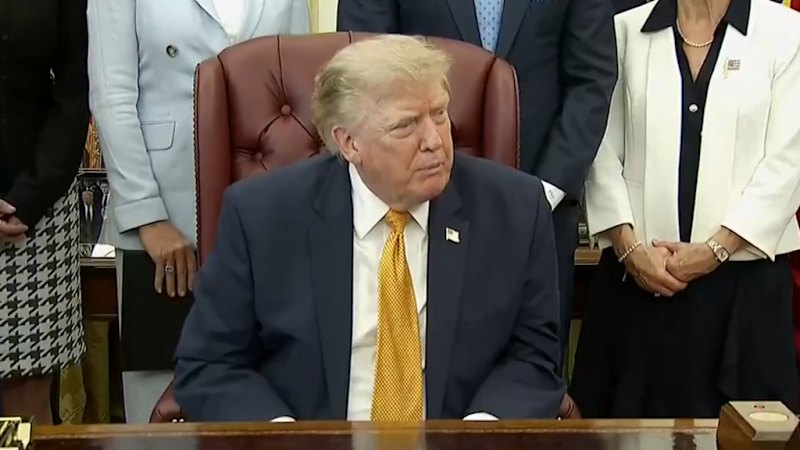
Donald Trump didn't hold back during a recent Oval Office session. When a journalist tried to press him with a follow-up inquiry regarding U.S. Attorney Jeanine Pirro and the dropped vandalism charges over the Lincoln Memorial reflecting pool, the president shut it down instantly. "You're fake news. Don't ever talk again," he fired back.
This explosive confrontation highlights a wider truth about modern political communication. The friction between the White House and the press corps isn't just standard theater anymore. It has morphed into a raw, unfiltered battle of narratives where every exchange carries high political stakes.
The Conflict Over the Reflecting Pool Case
To understand why tempers flared so intensely, you have to look at what triggered the president's anger. Over the weekend, Trump took to social media to blast Jeanine Pirro, the U.S. Attorney for the District of Columbia, accusing her of folding like an umbrella.
The Department of Justice had just dismissed criminal charges against former Olympic canoeist David Hearn and others involved in an alleged attempt to vandalize the newly renovated 15 million dollar reflecting pool. Prosecutors realized through later documentation that the pool's liner damage stemmed from a flawed contractor installation rather than vandalism.
Trump disagreed strongly, calling it a pure case of vandalism. When reporters cornered him in the Oval Office to ask if Pirro's job was in jeopardy because of the dropped case, he lashed out.
Why Media Clashes Keep Escalating
You've probably noticed that presidential press interactions feel more combative than they used to. Politicians realize that fighting with journalists plays well with specific voter bases. It projects strength and paints the media as an opposing political actor.
When a leader tells a reporter not to speak, it signals total dominance over the room. Critics view it as a direct threat to a free press. Supporters view it as a punchy rejection of biased reporting. Both reactions ensure the clip goes viral within minutes.
The Reality of White House Press Access
Access has always been a tool of control. Presidents decide who gets called on and who gets frozen out. Yet, public shouting matches represent a different tier of media relations.
- Reporters chase accountability and direct answers on policy reversals.
- Administrations push back against narratives that portray them as fractured or disorganized.
- Audiences consume these filtered moments entirely through short video clips online.
This dynamic leaves very little room for nuanced policy discussion. Complex legal arguments regarding contractor flaws and prosecutorial discretion get swallowed by viral soundbites.
Ultimately, these high-stakes verbal clashes are here to stay. They drive the news cycle and define how power is performed on camera. If you want to understand modern politics, watch how the questions get asked, and watch even closer how they get shut down.
Watch the Oval Office press exchange
This video captures the raw footage of Donald Trump addressing reporters in the Oval Office during a policy and signing event, showcasing the exact environment where these intense media exchanges unfold.
http://googleusercontent.com/youtube_content/1