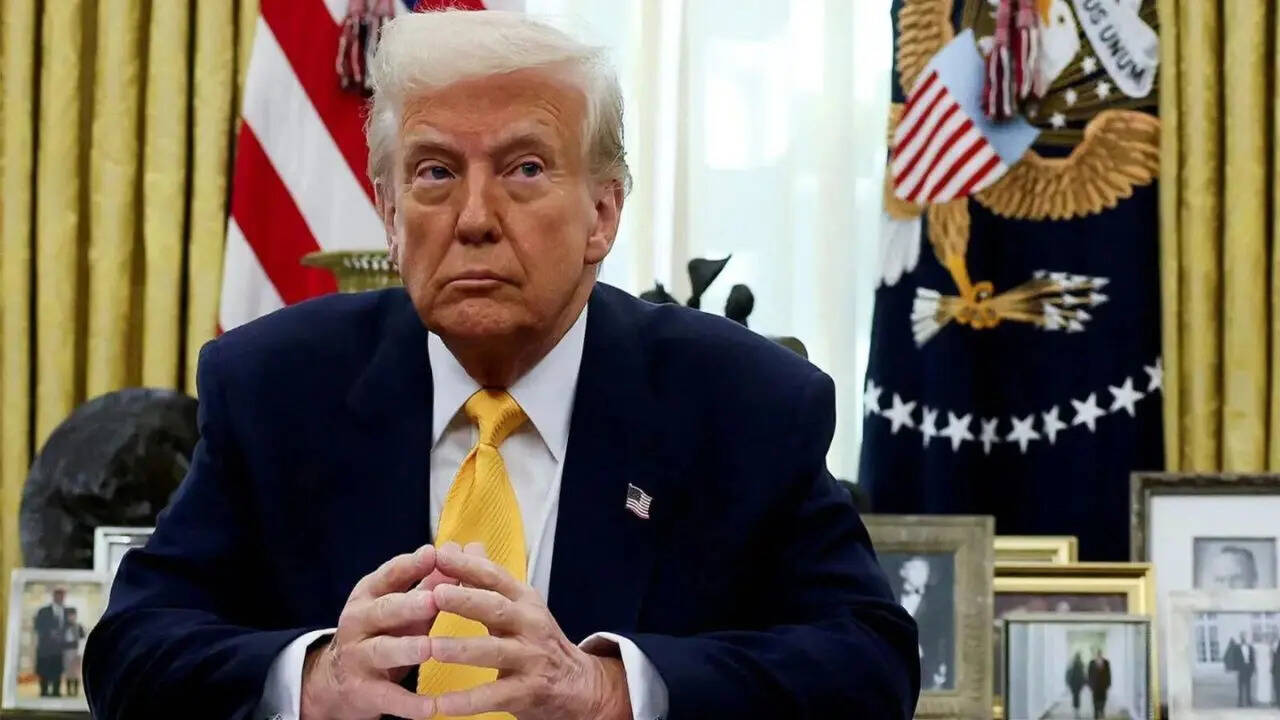
Donald Trump just made it clear that the war with Iran is far from over, even if the "big bombs" have paused for a moment. Posting on Truth Social late Monday, the President claimed that Operation Midnight Hammer—the massive joint U.S.-Israeli air campaign from last June—didn't just damage Iran's nuclear capabilities. He says it "obliterated" them into what he calls nuclear dust.
But there's a catch. Now that the smoke has cleared and a shaky ceasefire is in place as of April 2026, Trump is warning that cleaning up the mess or verifying the destruction is going to be a "long and difficult process." He’s basically telling the world that while the sites are gone, the radioactive headache is just beginning. Don't forget to check out our earlier coverage on this related article.
The reality of Operation Midnight Hammer
When Trump talks about "obliteration," he’s referring to the 12-day war in June 2025 and the subsequent 40-day campaign that ended earlier this month. We aren't just talking about a few precision strikes. Reports indicate that the U.S. and Israel dropped over 30,000 munitions across Iran.
The goal was simple: turn the Fordow and Natanz enrichment plants into craters. Trump's "nuclear dust" comment isn't just colorful language; it's a reference to the pulverized remains of centrifuges and the enriched uranium they once housed. If you want more about the history here, TIME provides an excellent breakdown.
- The Scale: Israel alone conducted 10,800 strikes on 4,000 targets.
- The Result: Trump claims the material is now buried under tons of twisted steel and reinforced concrete.
- The Problem: You can't just send in a cleanup crew with shovels. Digging out enriched material from a collapsed underground bunker is a logistical and radiological death trap.
Why digging it out is a nightmare
You might wonder why we need to "dig it out" at all. If it's buried, isn't it neutralized? Not exactly. Trump’s administration has been pushing for the physical transfer of Iran's uranium stockpile to U.S. soil—a demand Tehran has flatly rejected.
The technical difficulty here is staggering. Most of Iran's enrichment happened deep underground to protect against exactly this kind of air strike. When those mountains collapse inward from bunker-busters, they create a chaotic mix of rubble and radioactive isotopes.
If you try to excavate that, you're looking at:
- Massive Radiation Leaks: Disturbing the "dust" can release plumes into the atmosphere.
- Structural Instability: The sites are now essentially unstable mines.
- Chemical Hazards: Uranium hexafluoride (UF6) reacts violently with moisture in the air to create hydrofluoric acid.
Honestly, it’s a mess that no engineer wants to touch. Trump is using this complexity as leverage in the Islamabad peace talks, essentially saying that since the U.S. "obliterated" the sites, only the U.S. has the capability to safely manage the remains.
The political theater of nuclear dust
Trump isn't just talking to scientists; he's talking to his base and his critics. He took a massive swing at "Fake News CNN" and other networks on Monday, accusing them of failing to give the "great aviators" credit.
By calling it "nuclear dust," he's framing the conflict as a total victory. It’s a branding move. If the program is "dust," it sounds final. It sounds like something that can't be rebuilt. But experts are skeptical. Satellite imagery from Planet Labs PBC shows the Pilot Fuel Enrichment Plant at Natanz is indeed rubble, but "obliterated" is a strong word when you're dealing with subterranean tunnels that might still be intact.
What this means for the Islamabad talks
Right now, the U.S. delegation—led by JD Vance and Jared Kushner—is in Pakistan trying to hammer out a permanent deal. The "dust" issue is a huge sticking point.
Trump wants the material moved. Iran wants the U.S. blockade on the Strait of Hormuz lifted and reparations for the strikes. It’s a classic deadlock. Iran’s foreign ministry says they have no plans to hand over a single gram of material, "dust" or not.
Meanwhile, global oil prices are swinging wildly because of the uncertainty around the Strait. If Trump decides the "digging" process isn't moving fast enough, he’s already threatened to go after Iran’s power plants and desalination sites next.
The immediate next steps
If you're following this, don't expect a quick resolution. Here is what actually happens next in the real world:
- Watch the Ceasefire: The two-week window is incredibly fragile. Any Israeli movement in Lebanon could shatter it instantly.
- IAEA Access: Keep an eye on whether International Atomic Energy Agency inspectors are actually allowed into the "dust" sites. If they can't get in, Trump's claims remain unverified.
- Supply Chain Impacts: The blockade on Iranian ports is still active. This is hitting global shipping hard, and you'll likely see the effects at the pump and in grocery prices by next month.
Trump says the N-sites are gone. But in the world of nuclear geopolitics, things are never truly gone—they just become a different, more dangerous kind of problem.