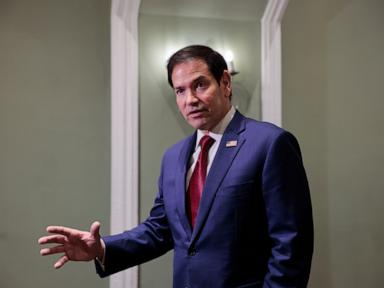
Donald Trump and Secretary of State Marco Rubio are traveling to a Texas port to inspect an oil tanker carrying Venezuelan crude, a high-visibility photo opportunity designed to showcase the administration's aggressive energy and foreign policy shifts. While cable news will focus on the political theater of the visit, the real story sits in the hull of that ship. For decades, American refineries along the Gulf Coast were specifically engineered to process the exact type of thick, sulfurous sludge pumped out of Venezuela's Orinoco Belt, making this docking less about diplomatic posturing and more about cold, hard industrial chemistry.
The Chemistry of Gulf Coast Refineries
You cannot simply swap one barrel of crude oil for another. Oil is not a uniform commodity, and the global market divides it primarily by density and sulfur content.
Light, sweet crude—the kind produced in abundance by the American shale boom in the Permian Basin—flows easily and requires minimal processing to turn into gasoline. Heavy, sour crude—the hallmark of Venezuelan production—is thick like molasses and loaded with sulfur and heavy metals. If you pump Venezuelan crude into a refinery built for West Texas Intermediate, you will ruin the equipment within days.
During the 1980s and 1990s, major American energy companies invested tens of billions of dollars into Gulf Coast facilities in Texas and Louisiana. They installed massive, complex units called delayed cokers and hydrocrackers. These multi-billion-dollar steel towers use extreme heat and pressure to crack long, heavy hydrocarbon chains into high-value diesel, jet fuel, and gasoline.
Because heavy crude trades at a steep discount compared to light crude, refineries equipped to handle it enjoy massive profit margins. They buy the cheapest, dirtiest raw material on the market and turn it into the most expensive refined products.
When U.S. sanctions choked off Venezuelan imports in 2019, Gulf Coast refiners were suddenly starved of the exact feedstock their facilities were built to consume. They had to scramble, buying inferior substitutes from the Middle East or paying premium prices for heavy Canadian crude piped down from Alberta. Seeing a tanker of Venezuelan crude pull up to a Texas dock represents the restoration of a supply chain that industrial engineers spent forty years perfecting.
The Geopolitical Tightrope
Marco Rubio’s presence alongside Trump signals that this visit is about far more than refinery utilization rates. For years, Rubio has been one of Washington's most vocal hawks regarding the regime in Caracas, advocating for maximum pressure, strict sanctions, and diplomatic isolation to force democratic reforms. Standing on a Texas pier next to a shipment of Venezuelan oil requires a delicate political balancing act.
The administration has to explain how importing Venezuelan crude aligns with a hardline foreign policy. The framing relies on a specific set of economic and strategic arguments:
- Energy Security and Domestic Prices: Bringing heavy crude back to Texas lowers input costs for American refiners, which helps keep diesel and gasoline prices stable for domestic consumers and freight operators.
- Denied Revenue to Adversaries: Under previous sanctions regimes, Venezuelan oil did not stay in the ground. Instead, it was sold at massive discounts to independent "teapot" refineries in China, transported via a shadow fleet of aging, uninsured tankers with disabled transponders.
- Controlled Channeling: By permitting specific cargoes to enter the United States under tightly regulated licenses or debt-repayment structures, Washington argues it is starving Beijing of cheap energy while forcing Caracas to operate within transparent, American-monitored financial channels.
Critics argue this approach still provides an economic lifeline to an authoritarian government that has repeatedly broken electoral promises. Whether the proceeds go toward paying down legacy debt owed to American oil service companies or sit in restricted escrow accounts, the physical movement of the oil legitimizes the state-run oil company, Petróleos de Venezuela (PDVSA). Rubio’s attendance is meant to neutralize that criticism before it gains traction among conservative lawmakers, signaling that the hawks are on board with the strategy.
What Happens When a Heavy Tanker Docks in Texas
The logistics of offloading a vessel carrying Venezuelan crude are notoriously difficult, even without the added security headache of a presidential visit. Most of these shipments arrive on Aframax or Suezmax tankers, massive vessels capable of hauling anywhere from 500,000 to one million barrels of oil.
Because the Texas coastline is relatively shallow, the largest supertankers cannot pull directly into many inland ship channels. Often, the cargo must undergo ship-to-ship transfers—a process known as lightering—miles offshore in the Gulf of Mexico before smaller vessels can navigate the Houston Ship Channel or the Sabine-Neches Waterway to reach the refinery terminals in Beaumont, Port Arthur, or Corpus Christi.
Once the ship is tied to the dock, the physical properties of the oil present immediate challenges. Heavy Venezuelan crude is so viscous that at ambient temperatures, it barely flows through a pipeline.
Heating the Cargo
To get the oil off the ship, the tanker’s internal heating coils must continuously pump steam through the cargo holds, keeping the crude at temperatures often exceeding 130 degrees Fahrenheit. Without constant heat, the oil turns into a semi-solid mass that will seize up industrial pumps.
Testing and Blending
Before a single drop enters the refinery’s storage tanks, independent inspectors draw samples to test the API gravity and sulfur content. Venezuelan crude is frequently diluted at the point of origin with lighter hydrocarbons—often imported naphtha—just to make it thin enough to flow through pipelines to the export terminal. Texas technicians must verify the exact chemical makeup of the blend so refinery operators can adjust the temperatures and pressures in their distillation towers accordingly.
The Illusion of American Energy Independence
The image of a foreign oil tanker docking in Texas often confuses voters who have heard politicians declare that the United States is energy independent. In reality, the U.S. is a net exporter of petroleum products, producing more crude oil than any nation in history. Yet it remains one of the world’s largest importers of crude oil.
This apparent contradiction comes down to the mismatch between what the U.S. pumps out of the ground and what its refineries are built to process.
| Crude Type | Primary Source | API Gravity | Best Use | U.S. Refinery Fit |
|---|---|---|---|---|
| Light Sweet | Permian Basin (Texas/NM) | High (38–45) | Gasoline, light plastics | Poor fit for older Gulf Coast cokers |
| Heavy Sour | Venezuela / Western Canada | Low (10–22) | Diesel, jet fuel, asphalt | Optimal fit for Gulf Coast cokers |
Because American shale fields produce almost exclusively light, sweet crude, the U.S. exports millions of barrels of its own oil every day to buyers in Europe and Asia whose simpler refineries can easily process it. Simultaneously, American refineries import millions of barrels of heavy, sour crude from Canada, Mexico, Iraq, and now Venezuela to keep their complex Gulf Coast machinery running at peak efficiency.
Upgrading existing Gulf Coast refineries to run purely on domestic light shale oil would cost tens of billions of dollars and actually reduce the nation's output of diesel and jet fuel—the very fuels that power the trucking, agricultural, and aviation sectors. The tanker in Texas is physical proof that energy security is not about closing the borders to foreign oil; it is about maintaining access to the specific grades of crude that keep the domestic industrial base humming.
The Shadow Fleet Factor
To understand why Washington is willing to tolerate Venezuelan crude hitting Texas docks again, you have to look at what happened on the open ocean over the last seven years. When the U.S. imposed sweeping sanctions on PDVSA, the oil did not stop flowing. It simply went underground.
A massive, unregulated maritime network emerged to move sanctioned crude from Venezuela, Iran, and Russia to buyers in Asia. Operators bought up elderly tankers destined for the scrapyard, registered them through opaque shell companies in jurisdictions with lax oversight, and turned off their Automatic Identification System (AIS) transponders.
These vessels frequently engage in dark ship-to-ship transfers in international waters off the coasts of Malaysia and Singapore, blending Venezuelan crude with oil from other origins to obscure its provenance before delivering it to Chinese ports.
This shadow trade created two major problems for Washington:
- Environmental and Maritime Risk: Hundreds of poorly maintained, uninsured supertankers are sailing through global shipping lanes, creating a ticking time bomb for a catastrophic oil spill that no legitimate insurer would cover.
- Erosion of Dollar Dominance: Transactions for shadow-fleet oil are routinely settled outside the Western financial system, bypassing the U.S. dollar and weakening the primary mechanism of American sanctions enforcement.
By bringing a portion of Venezuelan exports back into legitimate, regulated trade lanes bound for Texas, the administration attempts to pull volume away from the shadow fleet. Every barrel processed in Corpus Christi or Port Arthur is a barrel that is not being shipped to a competitor in Asia on an uninsured ghost ship.
What Comes Out of the Barrel
When Trump and Rubio stand in front of the cameras, they will likely talk about jobs, national security, and American dominance. Behind them, the pipelines connected to that tanker will be feeding a massive industrial machine that dictates the cost of moving goods across the United States.
Heavy crude yields a much higher percentage of middle distillates—specifically ultra-low-sulfur diesel—than light shale oil. Diesel is the lifeblood of the real economy. Trains, cargo ships, eighteen-wheelers, bulldozers, and farm tractors all run on diesel. When heavy crude supplies tighten, diesel inventories drop, and the cost of shipping groceries, lumber, and manufactured goods spikes nationwide.
The Gulf Coast refining complex is the most sophisticated energy manufacturing hub on the planet, capable of turning the lowest-grade, heaviest crude into the cleanest-burning transportation fuels available. Watching a president and his top diplomat inspect a Venezuelan tanker in Texas is a reminder that in the global energy market, geology and industrial engineering ultimately dictate foreign policy.