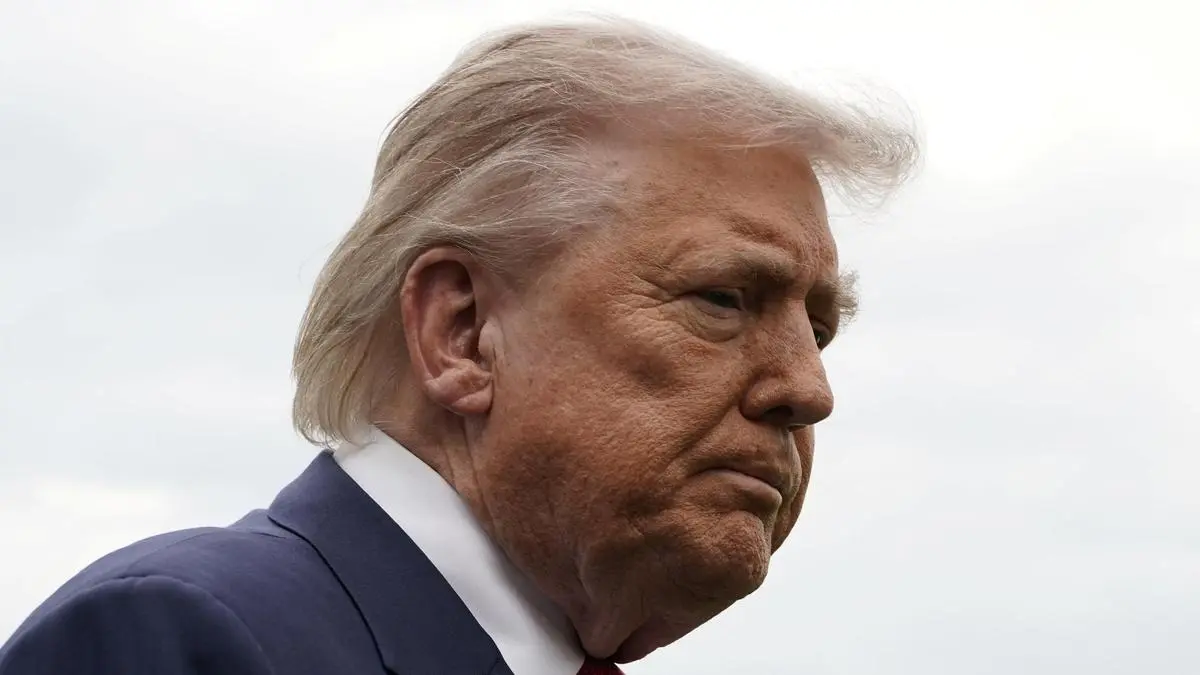
Mainstream media outlets are currently vibrating with the same exhausted narrative: Donald Trump’s rejection of Iran’s latest ceasefire proposal is a "missed opportunity" for peace. They paint a picture of a reckless administration blowing off a golden ticket to regional harmony just days before a high-stakes visit to Beijing.
This analysis is not just lazy; it is fundamentally illiterate regarding how power functions in the Middle East.
The "ceasefire" being peddled by Tehran isn't an olive branch. It’s a survival mechanism. When a regime built on the export of chaos suddenly wants to hit the pause button, they aren't looking for peace. They are looking for a re-arm. By walking away from a bad deal, the administration isn't inviting war; it’s finally acknowledging that the previous decade of "de-escalation" was actually a decade of funded expansion for Iranian proxies.
The Myth of the Good Faith Actor
The core fallacy of the current outrage is the belief that Iran’s proposal was a serious starting point. In reality, these proposals are tactical maneuvers designed to fracture the Western-Arab coalition.
Look at the mechanics of the "latest proposal." It demanded an immediate lift of secondary sanctions in exchange for a temporary freeze in enrichment—a deal that gives Tehran hard currency today for a promise they can break tomorrow. I’ve watched diplomats fall for this trap since 2015. They treat international relations like a neighborhood dispute that can be settled with a polite conversation. It’s not. It’s a game of resource exhaustion.
Iran is currently feeling the squeeze of a shrinking economy and internal dissent. Their "ceasefire" is an attempt to buy breathing room without dismantling the infrastructure of their influence. If you give a bully a five-minute break to catch his breath, he doesn't stop bullying you; he just hits harder in the sixth minute.
The China Trip: It’s Not About Iran, It’s About Leverage
The timing of this rejection is being framed as a "diplomatic blunder" ahead of the China trip. The "experts" claim Trump should have walked into Beijing with a peace deal in his pocket to show he’s a "statesman."
Wrong.
Entering Beijing with a weak ceasefire deal would have signaled to Xi Jinping that the U.S. is desperate for stability at any cost. That is the worst possible position to be in when negotiating trade and maritime security. By rejecting the Iran deal, Trump is signaling to the CCP that the United States is comfortable with friction.
China relies on Iranian oil, but more importantly, they rely on a stable global energy market. By refusing to play ball with Tehran, the U.S. forces China to decide: do they want to continue backing a pariah state that keeps the Persian Gulf on edge, or do they want to negotiate a broader security framework with the only power capable of projecting force in those waters?
Why "Stability" is a Trap
The foreign policy establishment loves the word "stability." It sounds responsible. It sounds safe. In reality, "stability" in the Middle East has often meant "maintaining a status quo where bad actors can operate with impunity because we’re too afraid of the alternative."
The rejection of this ceasefire is an embrace of constructive instability.
When you refuse a bad deal, you create a vacuum. Yes, it’s uncomfortable. Yes, oil prices might twitch in the short term. But this discomfort is the only thing that forces actual change. The Abraham Accords didn't happen because everyone sat around a campfire and sang songs. They happened because the regional players realized the old "stability" was dead and they needed a new security architecture that didn't include Tehran.
The Math of Enrichment and Proxy Funding
Let's look at the numbers the pundits ignore.
- Iran’s current inflation rate is hovering near 40%.
- Proxy groups like Hezbollah are facing unprecedented budget cuts.
- Domestic unrest in Iran is no longer an "if" but a "when."
Accepting a ceasefire now would be an economic bailout for the Islamic Revolutionary Guard Corps (IRGC). It would provide the liquidity needed to pay the salaries of militants from Yemen to Lebanon.
If you are a CEO and your competitor is about to go bankrupt, you don't offer them a partnership. You wait. You let the market—or in this case, the geopolitical reality—do the work for you. The "peace" being offered is a high-interest loan that the West would eventually have to pay back in blood.
Counter-Intuitive Reality: Tension Prevents War
The most dangerous moments in history aren't when two powers are glaring at each other across a border. The most dangerous moments are when one side thinks the other is too weak to fight back.
The "lazy consensus" says that being "tough" on Iran leads to war. History says the opposite. Appeasement leads to miscalculation. When the U.S. draws a hard line, it creates a predictable environment. Tehran knows exactly where the "no-go" zones are.
When you sign a fuzzy, loophole-filled ceasefire, you invite the other side to test the boundaries. They push a little here, a little there, until someone overreacts and then you have a full-scale conflict. A rejection is a clear "No." And in the world of high-stakes power politics, a "No" is often the most peaceful word you can say.
The Beijing Playbook
When Trump lands in China, he won't be looking for a pat on the back for being a "peace seeker." He’ll be looking to trade.
The U.S. position is now: "We aren't going to fix the Iran problem for you, China. If you want your oil shipments to be safe, you need to help us squeeze the bad actors."
This is a masterclass in shifting the burden of security. For decades, the U.S. has provided free security for the global commons, allowing China to grow its economy on the back of American naval protection. By creating a bit of "managed chaos" around Iran, the U.S. is making that security much more expensive for Beijing.
Addressing the "People Also Ask" Nonsense
You’ll see these questions all over the search engines:
- "Will rejecting the ceasefire start World War 3?" No. Iran is a rational actor focused on regime survival. They aren't going to commit suicide over a rejected deal.
- "Does this hurt U.S. credibility?" Only with the people who think "credibility" means "always saying yes." Real credibility is doing what you said you’d do—maximum pressure.
- "Is there a better way?" Not as long as the IRGC controls the purse strings. You cannot negotiate with a party whose stated goal is your destruction.
The Hard Truth About Diplomacy
Diplomacy is not an end goal. It is a tool. Sometimes the best use of that tool is to put it back in the box and wait for better conditions.
The "peace" being mourned by the media today was a mirage. It was a deal designed to fail, structured to benefit a regime that uses the global financial system to fund terror. If the price of a headline-grabbing "breakthrough" is the long-term strengthening of an adversary, it is a price too high to pay.
The administration isn't "missing a chance" for peace. They are refusing to buy a lemon.
The critics want a ribbon-cutting ceremony. The realists want a functional world order where threats are actually neutralized rather than just postponed. If you can’t tell the difference between a ceasefire and a surrender, you shouldn't be writing about foreign policy.
Stop asking when the "fighting" will end and start asking when the "funding" will stop. Until the answer to the latter is "now," any ceasefire is a fraud.
The trip to China isn't a search for a middle ground. It’s a demonstration of who holds the cards. By walking away from Tehran's table, Trump just doubled his stack before sitting down with Xi.
Those who want "peace at any price" usually end up with neither peace nor the money.
The world is a cold, transactional place. Reverting to a posture where American interests aren't traded for empty promises is the only way to ensure the U.S. remains the one setting the terms. Anything else is just a slow-motion retreat.
Stay mad. It won't change the physics of the situation.