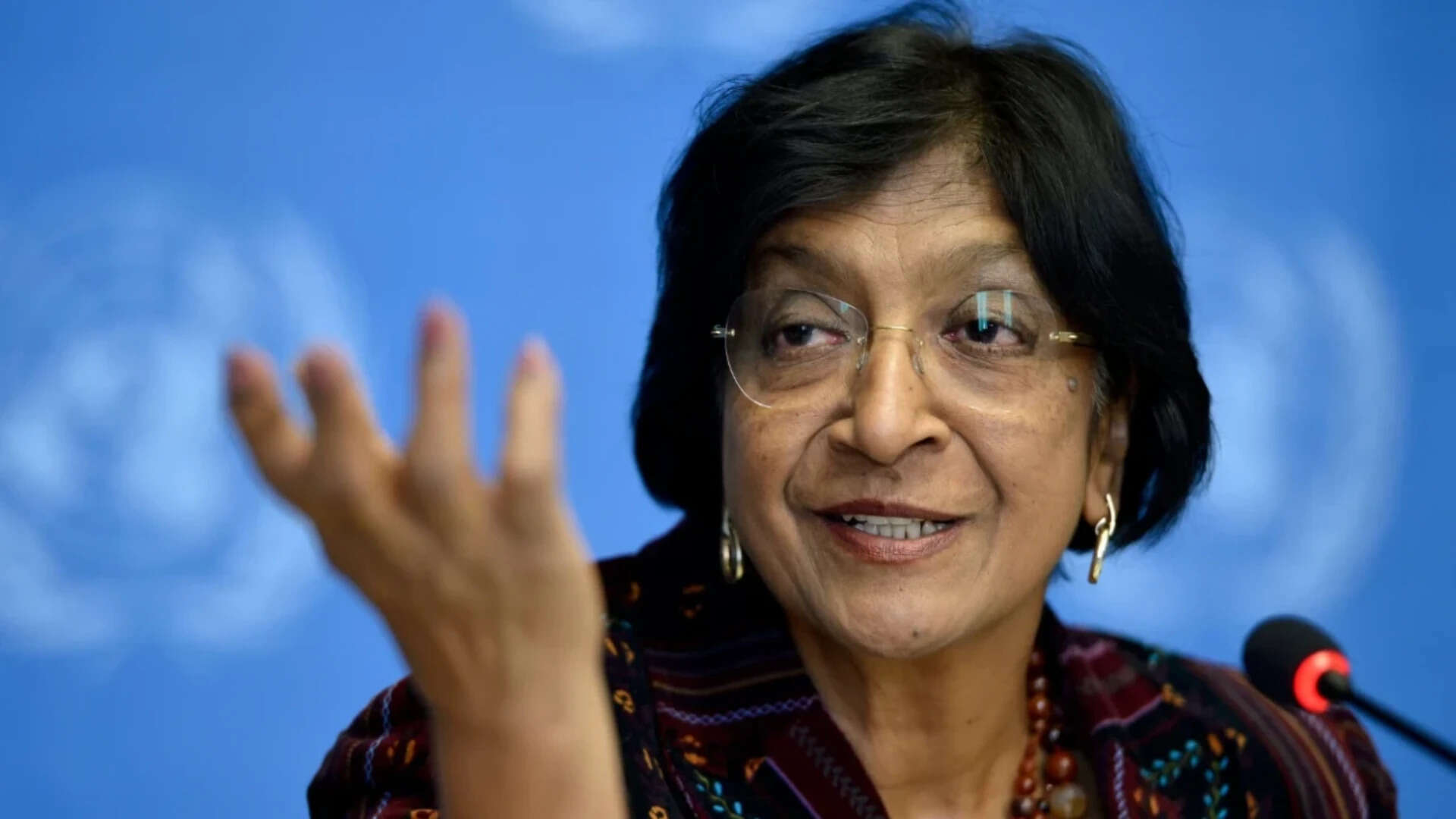
Every October, the global political circus finds a new way to spiral, but the 2026 Nobel Peace Prize rollout hit a completely different gear. When the Norwegian Nobel Committee handed its prestigious medal to Navi Pillay, an 85-year-old South African jurist and former UN High Commissioner for Human Rights, the reaction from Washington was swift, angry, and entirely predictable.
Donald Trump didn't just disagree with the choice. He took to social media to amplify scathing attacks branding Pillay an "America hater", while simultaneously launching fresh broadsides against the committee for looking past him yet again. If you’ve followed American politics for the past decade, you already know that missing out on the Nobel Peace Prize remains a raw nerve for Trump. Every snub triggers an explosive public relations battle, but this one carried extra geopolitical baggage.
Who Is Navi Pillay and Why Did She Win?
To understand why the latest diplomatic brawl erupted, you have to look past the superficial Twitter outrage and examine who Pillay actually is. Born in South Africa with Indian Tamil roots, Pillay spent decades deep in the trenches of international law. She served as a defense lawyer for anti-apartheid activists—including Nelson Mandela's inner circle—before stepping onto the international stage as a judge for the International Criminal Court (ICC) and the UN human rights chief.
The Nobel Committee didn't pick her name out of a hat. They awarded her the 2026 prize specifically for her relentless efforts to promote international law and hold perpetrators of war crimes and genocide accountable. Recently, her work involved high-profile investigations regarding Gaza, which immediately put her on a collision course with right-wing administrations in both the United States and Israel.
The Reshared Attack That Sparked the Firestorm
Shortly after the announcement, Trump reshared a fiery post on Truth Social that didn't hold back any punches. The post claimed Pillay was an "unabashed hater of America and Israel," accusing her of celebrating terrorists and running a biased, phony investigation against Israeli military actions. It argued that handing her the prize was an insult to global diplomacy, especially when compared to diplomatic efforts like the Abraham Accords.
Trump himself piled on, complaining that Norway and international bodies continually cheat the United States out of recognition. He argued he deserved multiple prizes for stopping foreign conflicts, echoing a grievance he has aired repeatedly since Barack Obama won the honor in 2009.
Meanwhile, Pillay handled the immediate fallout with a sharp sense of humor. Speaking at an academic conference at the historic Nuremberg Court in Germany just hours after learning of her win, she joked to an erupting audience, "If you clap a little bit more, I may share this prize with Trump". It was a masterclass in deflection, contrasting sharply with the intense grievance coming out of Mar-a-Lago.
The Real Story Behind the Nobel Snub Culture
Why does this specific award drive such intense polarization year after year? The tension points to a deeper fracture in global governance. On one side, international institutions like the ICC and the UN human rights apparatus view accountability, war-crime tribunals, and universal legal frameworks as the bedrock of peace. On the other side, populist leaders view these exact institutions as politically motivated, unaccountable globalist boards that unfairly target democratic allies while ignoring real atrocities.
When Pillay took aim at the US sanctions targeting the ICC or pushed for hard accountability in global conflict zones, she positioned herself right in the crosshairs of American nationalist politics. Trump's reaction wasn't just about a shiny gold medal or a cash prize worth millions of Swedish crowns. It was a proxy war over who gets to define international justice.
The friction between populist executive power and entrenched international jurists isn't going away anytime soon. As long as global bodies hand out prizes to figures who spend their careers investigating state actors, expect the pushback from Washington to remain loud, personal, and entirely unfiltered.
Navi Pillay wins the Nobel Peace Prize
This video provides an in-depth look at Navi Pillay's Nobel Peace Prize victory and the immediate geopolitical fallout involving Donald Trump and the International Criminal Court.


