Donald Trump just told a room full of reporters that the wars in Ukraine and Iran might wrap up on a "similar timetable." If you're looking for a clear strategic roadmap, you won't find it in that answer. When asked point-blank which conflict would see a resolution first, the President didn't offer a date or a metric. He offered a shrug.
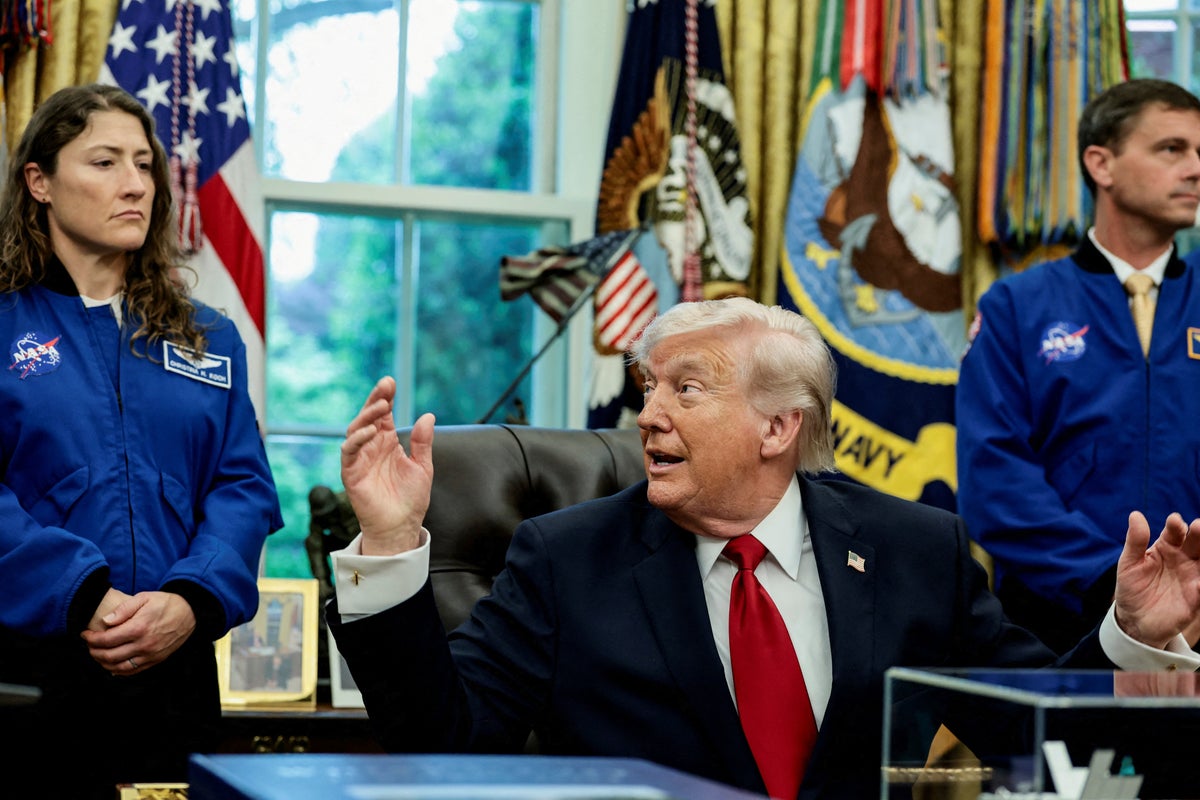
It’s a classic Trump moment. He’s leaning on his relationship with Vladimir Putin to solve two of the most explosive crises on the planet simultaneously, but the details are becoming increasingly blurry. In a recent Oval Office session, the President seemed to lose the thread entirely, mixing up the two countries while describing his conversations with Putin. For those following the actual mechanics of these wars, the idea that they’re on the same track isn't just optimistic—it’s arguably detached from the facts on the ground. For another perspective, consider: this related article.
The confusion behind the similar timetable theory
During the exchange, Trump noted that he’d spoken with Putin about both fronts. He claimed the Russian leader "would like to be of help" regarding the situation in Iran. Then came the twist. "I said, 'Before you help me, I'd like to end your war,'" Trump recounted, referring to Ukraine. But in the follow-up, he stumbled, briefly attributing the tactical issues of the Strait of Hormuz to the Ukrainian landscape before correcting himself.
This isn't just a "senior moment" for the late-night clips. It reveals a worldview where all global conflicts are just different rooms in the same house. To Trump, if he settles the "big" deal with Putin, the rest of the dominoes fall. But that ignores the reality of 2026. Related coverage regarding this has been provided by Reuters.
- The Ukraine Reality: After years of grinding attrition, the war in Ukraine has hit a stalemate that air power and "deals" haven't yet broken. Putin isn't looking for an exit; he’s looking for a surrender that the European coalition won't allow.
- The Iran Reality: Operation Midnight Hammer and the joint U.S.-Israeli strikes have decimated Iranian infrastructure, but the regime is dug in. They’ve choked the Strait of Hormuz, and as of this week, oil prices are still oscillating around $90 a barrel.
Comparing these two is like comparing a marathon to a cage match. One is a territorial war of endurance; the other is a high-stakes, explosive confrontation over nuclear capability and global energy supply.
Why the Putin connection won't solve Iran
Trump’s reliance on Putin as a mediator for Iran is a massive gamble. It assumes Moscow has the leverage—and the desire—to tell Tehran to back down. But look at the data. Russia has been a primary beneficiary of the chaos in the Middle East. Every drone Iran sends to Russia for use in Ukraine is a drone the U.S. has to worry about in the Persian Gulf.
Russia and Iran have built a symbiotic military relationship that a few phone calls from the White House won't dismantle. While Trump insists he has "all the cards," the Iranians are currently holding the "screw of global oil prices," as one Tehran official recently put it. They aren't looking for a "good deal" in the way a real estate developer understands it. They’re looking for survival.
The 60 day clock is ticking
The President is fast approaching a legal wall. Under the War Powers Act, he needs Congressional approval to keep the Iran operation going beyond the 60-day mark. He’s been telling the American public that the job will be finished "shortly," but "shortly" is a moving target.
In April 2026, the American electorate is getting restless. The costs have already topped $25 billion for the Iran conflict alone. Trump’s "similar timetable" comment feels less like a strategic prediction and more like a way to buy time. If he can link the two wars, he can justify the lack of progress in one by citing "negotiations" in the other.
What you should watch for next
The rhetoric is moving fast, but the outcomes aren't. If you're trying to figure out where this actually goes, don't look at the Oval Office soundbites. Look at the Strait.
- The Blockade: Watch if the U.S. actually agrees to the Iranian proposal to lift port blockades in exchange for reopening the Strait. If Trump takes this deal, it’s a sign he’s feeling the heat from energy prices more than he’s letting on.
- The European Coalition: Watch the "coalition of the willing" in Western Ukraine. If Europe moves in with air power independently of Trump’s "deal" with Putin, the President’s leverage evaporates.
- The Nuclear Threshold: Iran still has nearly 1,000 pounds of highly enriched uranium. No "timetable" matters if that material moves.
Stop waiting for a single "peace day" for both wars. It’s not coming. Instead, track the specific movements of the Tomahawk missile shipments to Ukraine and the naval movements in the Mediterranean. Those are the only metrics that matter right now. If the administration can't keep the names of the countries straight in a presser, you've got to do the heavy lifting of tracking the details yourself.
Keep your eye on the upcoming deadline for the War Powers Act. That's when the "maybe" in Trump's timetable has to become a "must."