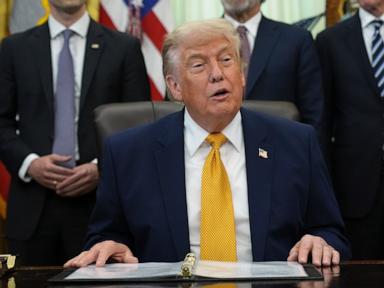
The media theater surrounding presidential visits to heavy manufacturing plants is a tired script that everyone keeps reading anyway. Donald Trump stepping onto the factory floor at the Mack Trucks facility in Macungie, Pennsylvania, is being billed by mainstream outlets as a strategic economic pivot. They tell you he is attempting to put the inflation and high gas prices of the recent Iran conflict behind him ahead of the midterms. They point out that Joe Biden did the exact same thing years ago, waving from the cab of an electric garbage truck.
Both sides are selling you a beautifully manufactured illusion.
The media focuses entirely on the political horse race: whether freshman Republican Representative Ryan Mackenzie can hold Pennsylvania’s 7th Congressional District against challenger Bob Brooks. They treat the Macungie plant like a giant, blue-collar stage prop. But if you strip away the teleprompters, the carefully staged tickets, and the campaign-style optics, you find an uncomfortable reality that neither political party wants to voice. High-tariff economic nationalism and heavy-handed domestic subsidies are failing the very industry they claim to protect.
The Global Shell Game Behind American Iron
The central myth of the presidential factory visit is that these facilities represent independent, purebred American industrial might. Trump famously announced a 25% tariff on heavy foreign trucks to protect companies like Peterbilt, Kenworth, Freightliner, and Mack Trucks from outside competition.
Here is what the politicians ignore while standing under the American flag: Mack Trucks is not an independent American entity. It is a subsidiary of the Volvo Group, a massive transnational corporation based in Gothenburg, Sweden. Furthermore, a massive stake in Volvo is held by Geely, a Chinese automotive conglomerate.
Imagine a scenario where a president stands in a factory to declare economic warfare on global supply chains, while the very roof over his head is financed by the global capital markets he condemns. I have spent decades analyzing supply chains and manufacturing infrastructure. You cannot wall off an assembly line from the global economy when the underlying component architecture, steel markets, and corporate ownership are explicitly international.
When Washington imposes a 25% tariff on heavy trucks or doubles down on steel tariffs, it does not magically supercharge domestic growth. Instead, it triggers a cascade of retaliatory measures and distorts input costs. Heavy duty trucks require massive volumes of specialized steel and imported electronics. By raising the cost of raw materials via tariffs, policy makers end up squeezing the margins of the domestic manufacturers they intend to shield.
The False Promise of the 1979 Benchmark
Every major news outlet covering the Pennsylvania visit loves to cite the same Bureau of Labor Statistics data point: American manufacturing employment peaked in 1979 at nearly 19.6 million jobs, and today it hovers around 12.6 million. The lazy consensus implies that this drop is a tragedy caused entirely by bad trade deals and weak politicians.
This is an analytical failure. The decline in manufacturing headcount is not proof of American industrial decay; it is proof of exponential productivity gains driven by automation and advanced industrial engineering.
U.S. Manufacturing Metrics: 1979 vs. Present Day
--------------------------------------------------
Year    Manufacturing Jobs    Total Output Value
1979    19.6 Million          $1.5 Trillion (adj.)
2026    12.6 Million          $2.8 Trillion (adj.)
We are producing far more goods with significantly fewer people. The modern assembly floor requires precision robotics, advanced CNC machining, and automated logistics networks. When politicians promise to bring back the sheer volume of 1979 factory floor jobs, they are promising an impossibility. No amount of economic protectionism can reverse the efficiency of automated torque wrenches or robotic welding arms.
By centering the national economic debate on job headcount rather than industrial velocity and technological integration, both parties are preparing workers for a world that no longer exists.
Why Federal Contracts Won't Save the Rust Belt
To sweeten the political pot right before the presidential motorcade rolled in, local officials proudly announced a $47 million federal contract for military heavy dump truck production at the nearby Mack Defense facility in Allentown. This follows a previous multi-million-dollar contract for armored vehicles.
Relying on defense spending to prop up commercial manufacturing sectors is an unsustainable economic strategy. Federal defense procurement operates on completely different principles than the open commercial market:
- Cost-Plus Distortions: Defense contracts routinely insulate companies from real-world market pricing, leading to bloated overhead structures that make civilian vehicle lines less competitive globally.
- Artificial Demand Cycles: Military spending fluctuates based on geopolitical flashpoints and congressional budget fights, creating boom-and-fast-bust cycles for local workforces.
- Capital Misallocation: Engineering talent and capital investments are diverted toward highly specialized, low-volume military hardware instead of scalable commercial vehicle platforms.
Relying on the Pentagon to act as a permanent jobs program ensures that a plant becomes dependent on state funding rather than market demand. The moment a defense appropriation bill gets stalled in a hostile house committee, the local economy takes the hit.
The Voter Approval Fallacy
Pundits love pointing to the AP-NORC polls showing that only about one-third of U.S. adults approve of current economic stewardship. They treat this number as a simple report card on the sitting president.
The deeper truth is that working-class voters are exhausted by the identical industrial policies of consecutive administrations. Biden went to the same Mack Truck facility to push heavy environmental regulations and state-directed electric vehicle mandates. Trump goes to the same facility to push aggressive tariffs and nationalist rhetoric.
The net result for the trucker or the assembly worker? Persistent inflation, unstable energy costs, and an industry caught in a regulatory tug-of-war every four years. One administration forces the factory to retool for electric garbage trucks; the next administration shifts the focus back to diesel and defense contracts. This constant whiplash destroys corporate predictability and prevents long-term capital deployment.
Stop asking whether a presidential visit can save a swing district. The real question is how much longer American manufacturing can survive being used as a partisan battleground.