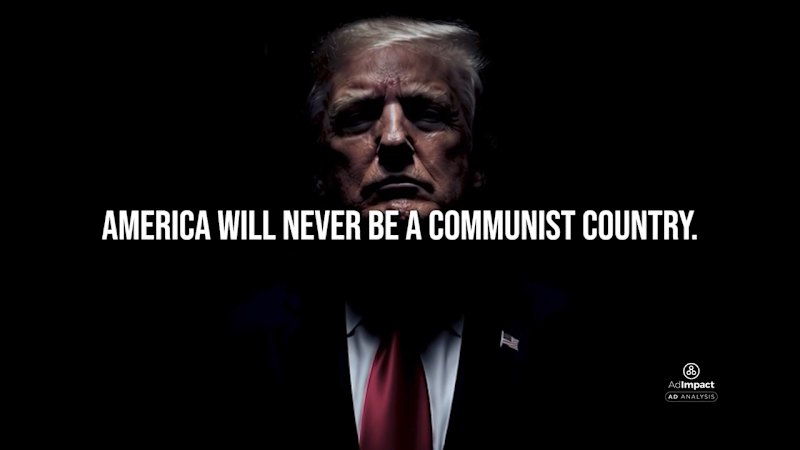
You don't usually see a White House back down this fast. When the Trump administration rolled out a series of television spots funded by federal dollars in late 2026, the backlash was immediate, fierce, and bipartisan.
The commercials featured soaring rhetoric, clips from past campaign trails, and heavy focus on Donald Trump’s executive agenda, all stamped with an unexpected disclosure at the end: "Paid for by the U.S. Government". Critics didn't wait to call foul. Lawmakers, ethics watchdogs, and legal groups lined up to argue that public cash was being funneled directly into partisan propaganda right before the midterm elections. For another look, consider: this related article.
Weeks later, the strategy hit a brick wall. Trump announced he would stop using federal funds for the spots and pivot to paying for them through his super PAC, MAGA Inc.
What Was Actually in the Ads
To understand why this snowballed into a massive controversy, you have to look at what was flashing across cable screens. The administration didn't launch dry bureaucratic reminders about tax deadlines or public health guidelines. They aired cinematic, high-production spots that looked and felt indistinguishable from traditional campaign material. Further analysis on this matter has been shared by The New York Times.
One 30-second spot featured black-and-white footage of Trump paired with a voiceover vowing to defeat communism, socialism, and Marxism in America. Another repurposed a 2024 campaign video complete with dramatic background music and explicit framing of political battles. A later ad featured sweeping nighttime drone shots of Mount Rushmore tied to his Fourth of July remarks about America's 250th anniversary.
Every single one of these spots wrapped up with the standard disclaimer: paid for by the U.S. government.
The White House defended the blitz tooth and nail. Officials insisted the spots were routine public service announcements intended to highlight national achievements. They pointed to historical precedent, noting that past administrations from both parties had used federal funds to advertise major legislative wins or policy rollouts.
The Legal Firestorm
Federal law draws a very sharp, bright line when it comes to public money. Statutes like the Purpose Statute and various anti-propaganda provisions in annual appropriations bills explicitly ban federal agencies from spending tax dollars on publicity or propaganda efforts designed to aid a political party or candidate.
Watchdog groups like Citizens for Responsibility and Ethics in Washington (CREW) and Public Citizen sprang into action, filing formal complaints with the Federal Communications Commission, the Federal Trade Commission, and agency inspectors general. They argued that the spots violated federal appropriations laws by diverting money from agencies like Customs and Border Protection to fund self-aggrandizing political messaging.
Lawmakers on both sides of the aisle raised sharp questions. While defenders of the administration shrugged it off as standard executive branch communication, critics from the Democratic caucus—alongside quietly uneasy Republicans—recognized a dangerous precedent. If any sitting president can tap agency budgets to air polished biographical commercials weeks before an election, the boundary between official government communication and state-sponsored campaign media effectively ceases to exist.
The Pivot to Super PAC Funding
Faced with mounting lawsuits, congressional pressure, and severe public friction, the administration executed a swift reversal.
Trump announced on social media that he would no longer tap federal coffers for the patriotic spots. Instead, the bill would be picked up by his political war chest, drawing from the hundreds of millions amassed by MAGA Inc. The White House quickly aligned with the decision, confirming that future ad buys would rely entirely on political donations rather than public appropriations.
Yet, the about-face left several loose ends dangling. Administration officials failed to clarify whether taxpayers would see any reimbursement for the estimated $1.5 million already spent airing the initial wave of controversial spots. Critics also questioned how transparency would be enforced to guarantee that political funds were truly footing the bill moving forward.
The episode highlights a recurring tension in modern American politics. The line between governing and campaigning has always been blurry, but using active agency budgets to broadcast a president's personal political narrative pushed that boundary past the breaking point. The ads may have moved off the taxpayer ledger, but the debate over executive overreach is far from settled.