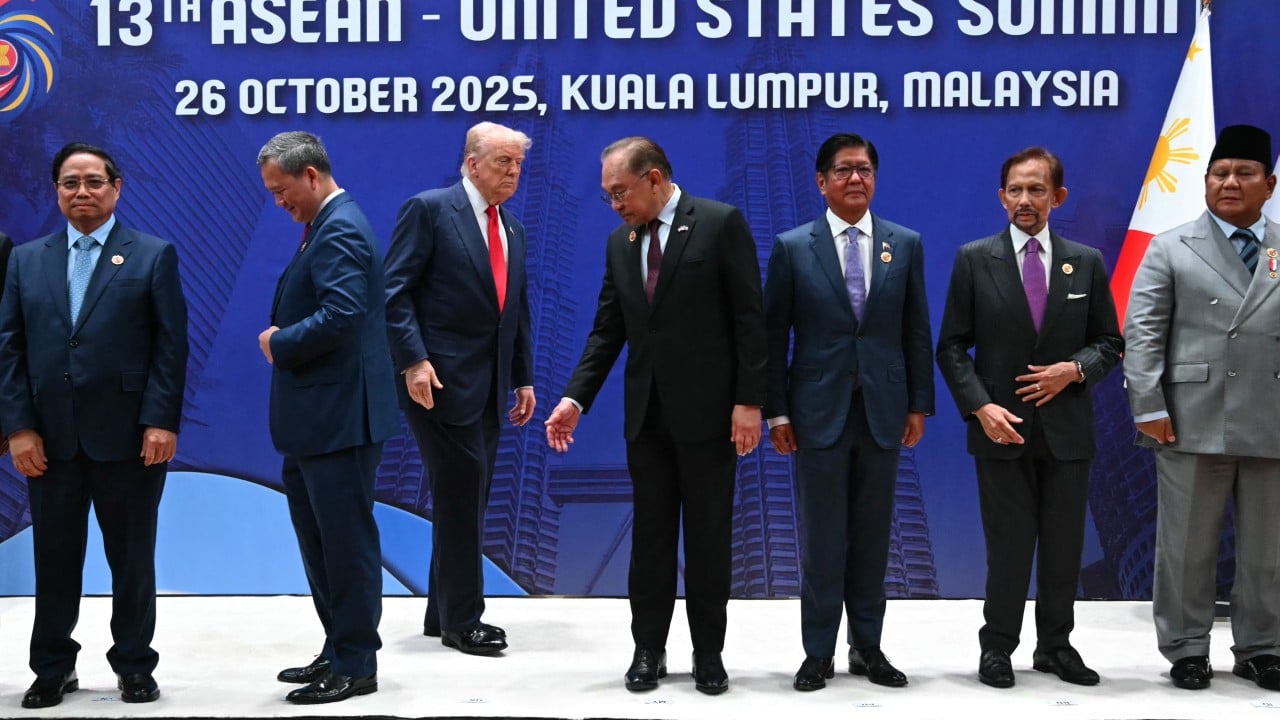
Donald Trump’s brief, transactional appearance at the Association of Southeast Asian Nations summit in Manila laid bare a profound shift in American foreign policy. The United States has abandoned its long-standing role as the guarantor of institutional stability in Southeast Asia, replacing multilateral diplomacy with a series of bilateral trade demands and military hardware sales.
Regional leaders spent months preparing for the summit, hoping to secure firm commitments on freedom of navigation, supply chain resilience, and balanced economic integration. Instead, they received a reality check. Washington views the region not as a cohesive strategic partner, but as a collection of individual storefronts.
The Cost of Absence
Multilateral diplomacy requires showing up. For decades, American presidents used regional summits to reassure middle powers that Washington remained invested in their collective sovereignty.
When the executive office treats these gatherings as optional stopovers or transactional arenas, the structural balance of power tilts immediately. China does not miss these meetings. Beijing sends high-level delegations equipped with long-term infrastructure funding, low-interest state loans, and comprehensive trade pacts.
Southeast Asian capitals do not want to become economic vassals of any single superpower. They actively seek American counterweights. But when American engagement is reduced to transactional demands—demanding immediate market access while offering few domestic trade concessions in return—the strategic math changes for governments in Jakarta, Hanoi, and Kuala Lumpur.
Bilateral Deals as a Strategic Wedge
During his brief stopover, the American administration highlighted a major trade agreement with Thailand and expanded defense commitments with the Philippines. On paper, these represent concrete victories for domestic manufacturing and defense exports.
The underlying reality is far more complex.
By prioritizing bilateral arrangements over regional frameworks, Washington actively undermines the central pillar of Southeast Asian diplomacy: ASEAN centrality.
    TRADITIONAL MULTILATERAL MODEL            TRANSACTIONAL BILATERAL MODEL
+------------------------------------+    +------------------------------------+
|  U.S. engaged via regional bloc   |    |  U.S. deals directly with states   |
|  (ASEAN) to build unified consensus|    |  (Thailand, Philippines, etc.)     |
+------------------------------------+    +------------------------------------+
                 |                                         |
                 v                                         v
+------------------------------------+    +------------------------------------+
|  Strengthens collective leverage   |    |  Fragments regional solidarity;     |
|  against external aggression       |    |  leaves smaller nations exposed    |
+------------------------------------+    +------------------------------------+
When individual nations negotiate isolated terms with a superpower, their collective bargaining power evaporates. Thailand gets tariff relief on select agricultural products. The Philippines secures bilateral security guarantees. Meanwhile, the broader regional bloc is left fragmented, unable to present a unified front on pressing issues like South China Sea maritime claims or unified digital trade standards.
The Real Price Tag
This approach carries immediate and long-term costs for the region.
First, it forces middle powers into uncomfortable choices. Smaller nations rely on multilateral institutions specifically to avoid being bullied by larger economies. When the primary alternative to Chinese expansionism is an unpredictable American bilateral demand, regional governments adapt by hedging their bets.
Second, it creates significant policy volatility. Bilateral deals struck with an executive pen can be reversed just as easily by a future administration or a changing legislative branch. Regional economic planners require decades of predictability for major infrastructure and supply chain investments, not short-term commercial announcements.
Third, defense hardware sales do not equal a coherent security architecture. Selling advanced fighter jets or radar systems to individual nations increases local military capacity, but without coordinated regional intelligence sharing and diplomatic alignment, it does little to deter broader territorial encroachments.
The Fallacy of Short-Term Gains
Proponents of this foreign policy model argue that direct, transactional negotiations deliver faster, more tangible results for American workers than sprawling multilateral talks that drag on for years without clear consensus.
That argument holds up only if you measure diplomatic success by the next quarterly balance sheet rather than the next quarter-century of geopolitical stability.
When Washington treats strategic alliances as purely commercial relationships, it strips American foreign policy of its primary competitive advantage: moral and institutional authority. China can always build roads faster and offer cheaper loans. The unique value of the United States lay in its willingness to sponsor a rules-based order where smaller nations had an equal seat at the table.
Adapting to the New Reality
Southeast Asian leaders are not naive. They recognize that the era of open-ended American security guarantees and generous trade access has ended.
In response, regional capitals are diversifying their portfolios. They are deepening economic ties with Japan, South Korea, Australia, and the European Union, constructing a web of middle-power alliances designed to buffer against both Chinese assertiveness and American unpredictable transactionism.
The price of attendance in Southeast Asia is no longer just showing up to sign a photo-op contract. The real price is long-term commitment, institutional respect, and a willingness to offer genuine economic partnerships that benefit both sides of the Pacific. Without those elements, isolated summit appearances will produce plenty of press releases, but very little enduring leverage.



